By: “DragonKingKarl” Karl Stern (Patreon)
Professional Wrestling Historian: Author of DragonKingKarl's Pioneer Era Pro Wrestling Omnibus

Professional Wrestling For Dummies Book Review: Bryan Alvarez and Gene Selassie Get Wrestling History Right
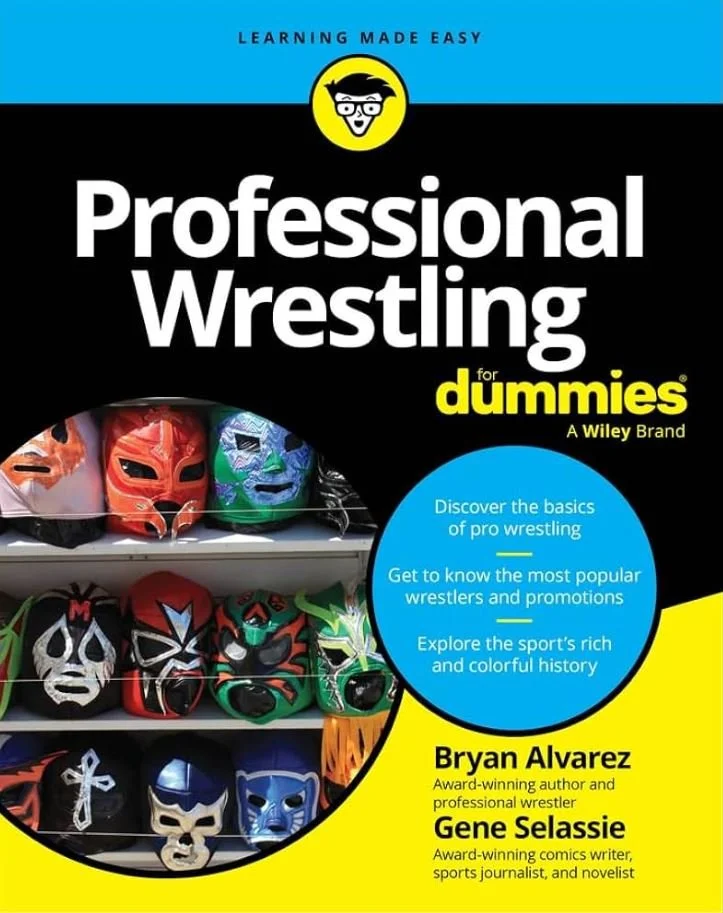
Professional Wrestling For Dummies by Bryan Alvarez and Gene Selassie is one of the most comprehensive and accessible introductions to professional wrestling I've encountered, and I say that as someone who has spent decades researching and writing about the history of the business. In fact, despite my own extensive background in wrestling history, this book managed to teach me a few things I didn't know. And that, my friends, is no small accomplishment.
Before we get too far into this review, however, I need to make something perfectly clear.
This is absolutely not an impartial review.
I was personally involved in the editing process for Professional Wrestling For Dummies, particularly its extensive history sections. I reviewed significant portions of the manuscript, offered corrections and suggestions, and had the opportunity to see firsthand how much effort went into making this book as accurate and informative as possible.
So, if you're looking for a completely detached review from somebody with no connection to the project, this isn't it.
On the other hand, if you're interested in hearing from someone who actually saw how the sausage was made, so to speak, then I have some interesting things to tell you.
And, yes, I absolutely recommend buying this book.
[BUY PROFESSIONAL WRESTLING FOR DUMMIES ON AMAZON — HERE]
Wrestling Is a Lot More Complicated Than You Think
One of the things I've tried to accomplish over the years with my work at When It Was Cool, my DragonKingKarl podcasts, and my research into the pioneer era of professional wrestling is to help people understand that the history of this business is considerably more complicated than the simplified version we've often been told.
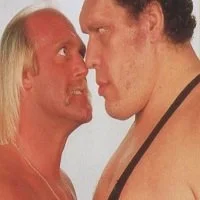
Professional wrestling didn't begin with Hulk Hogan slamming Andre the Giant.
It didn't begin with Vince McMahon taking the WWF national.
It didn't even begin with the formation of the National Wrestling Alliance in 1948.
The story stretches back well into the nineteenth century, through carnival athletic exhibitions, legitimate wrestling competitions, theatrical presentations, powerful promoters, traveling champions, and an ever-evolving mixture of sport and entertainment.
What we recognize today as professional wrestling is the result of an extraordinarily long and fascinating evolution and one of the great strengths of Professional Wrestling For Dummies is that Bryan Alvarez and Gene Selassie make a genuine effort to explain that evolution in a way that is understandable to newcomers without insulting the intelligence of longtime fans.
That's not nearly as easy as it sounds.
The book, published by Wiley under its famous For Dummies brand, clocks in at 336 pages and covers an impressive amount of territory. It introduces readers to the fundamentals of professional wrestling, its terminology, in-ring mechanics, major promotions, history, international variations, legendary personalities, and memorable moments.
WWE, WCW, ECW, AEW, New Japan Pro-Wrestling, and the fascinating world of lucha libre all receive attention.
But it's the historical perspective that especially impressed me.
Harry Hill: The First Vince McMahon?
Here's where things get particularly interesting for those of us who study professional wrestling's earliest years.
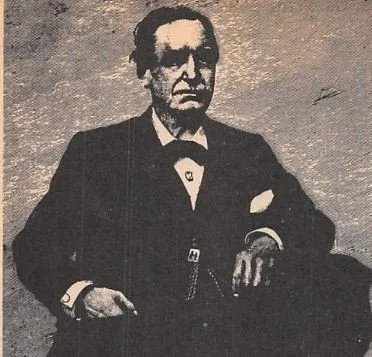
One of the most gratifying aspects of this book is its acknowledgment of pioneer-era wrestler and promoter Harry Hill, a figure who deserves considerably more recognition than he normally receives.
Long before Vince McMahon, before the Gold Dust Trio, and before the territorial wrestling system developed into the structure familiar to twentieth-century fans, promoters were already experimenting with the business model that would ultimately define professional wrestling.
Harry Hill is an especially fascinating example.
Hill operated in nineteenth-century New York, where his establishment became associated with sporting exhibitions, wrestling, boxing, entertainment, and the promotion of athletic personalities.
He understood something that promoters would continue to capitalize on for generations: people would pay to see compelling athletic personalities compete, especially when the presentation offered excitement, spectacle, and the possibility of something extraordinary happening.
Does that sound familiar?
While the comparison is obviously imperfect, I've long viewed Harry Hill as something of an early Vince McMahon-type figure. He was a promoter who recognized the commercial potential of presenting athletic competition as entertainment. He was operating in a completely different world, under different circumstances, but some of the fundamental promotional instincts were already there.
For me, seeing Harry Hill acknowledged in a mainstream professional wrestling reference book is a significant step forward. Too many wrestling histories essentially begin with the people who were famous in the twentieth century and work backward only as far as necessary. But wrestling history didn't begin when somebody started filming it for television.
The people who built the foundations of this industry deserve to have their stories told, too.
And I appreciate that Professional Wrestling For Dummies makes room for some of those foundational figures.

Even I Learned Something — Especially About Lucha Libre
Now, I'm not going to pretend I know everything about professional wrestling. Nobody does. However, after spending decades researching the business, especially its earliest history, I like to think I have a pretty solid grasp of how professional wrestling developed.
I've written and recorded extensively about nineteenth-century wrestlers, promoters, championships, the development of worked matches, and the personalities who shaped the industry long before television became part of the equation.
So when I pick up a general-interest professional wrestling book, I usually expect to encounter a lot of information I'm already familiar with.
That wasn't entirely the case here.
I genuinely learned things from this book that I didn't previously know.
In particular, I found the material concerning Mexican lucha libre to be outstanding.
American fans often have a rather narrow understanding of lucha libre. They know about the colorful masks, the spectacular high-flying moves, and perhaps legendary personalities like El Santo, Blue Demon, or Mil Máscaras.
But lucha libre is an entire wrestling culture unto itself, with traditions, personalities, rivalries, promotions, and historical developments that don't always fit neatly into the American wrestling narrative. That's exactly why I found the book's treatment of Mexican wrestling so refreshing.
It doesn't simply treat lucha libre as an exotic variation of American professional wrestling. Instead, it gives readers an opportunity to appreciate it as an important and distinctive branch of the larger professional wrestling family.
The chapter devoted to lucha libre was one of my personal favorites.
I also appreciated the book's willingness to look beyond North America altogether, including Japanese professional wrestling, often known as puroresu, as well as wrestling in Europe and Canada.
Professional wrestling doesn't belong exclusively to WWE, to American promoters, or to any one particular style. It is a worldwide phenomenon, and its history is richer when we recognize that.
If you're someone who has followed wrestling for forty or fifty years and thinks there isn't much left to learn, I suspect this book might surprise you, too.
Lance Storm: The Most Serious Editor in Professional Wrestling History?
Now, let me tell you about one of the more entertaining aspects of being involved with this project.
In addition to my participation, two notable professional wrestling personalities, Lance Storm and Tom Lawlor, also helped with the editing and review process.
Lawlor brought his own valuable perspective as someone who has competed in both professional wrestling and mixed martial arts.
I particularly want to talk about Lance Storm.
If you watched professional wrestling during the 1990s and 2000s, you probably remember Storm from his time in ECW, WCW, and WWE.
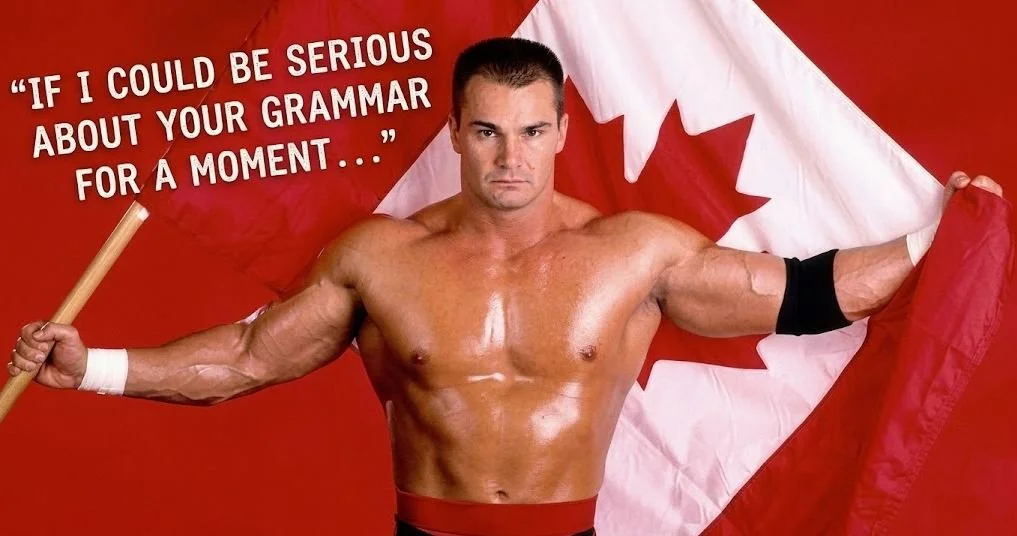
You may also remember that Lance Storm's wrestling character was, shall we say, a rather serious fellow.
He wasn't exactly known for running around the ring wearing a lampshade on his head.
One of his most memorable catchphrases was:
"If I can be serious for a minute..."
Well, ladies and gentlemen, I have some news for you.
Apparently, Lance Storm can be serious for considerably longer than a minute.
During the editing process, I had the opportunity to read through numerous corrections, observations, and suggestions from Storm. And when I say numerous, I mean NUMEROUS.
If Lance thought something wasn't quite right, he was going to tell you.
If a detail could be expressed more precisely, he was going to point it out. If a statement about WCW or ECW needed additional context, well, you had better make yourself comfortable because Lance Storm was about to explain exactly what needed correcting.
I found myself chuckling more than once as I worked through his meticulous observations.
Here was the same Lance Storm wrestling fans remembered as the stone-faced, no-nonsense Canadian technician, apparently approaching the editing of a wrestling reference book with the same seriousness he brought to the ring.
I'm fairly certain if there had been a championship belt for manuscript corrections, Lance would have insisted that the title lineage be documented properly before agreeing to accept it.
And you know what?
Thank goodness he did.
All joking aside, Storm's contributions were tremendously valuable.
He spent considerable time working in both ECW and WCW, experiencing two of the most fascinating and often chaotic promotions in wrestling history from the inside. That sort of firsthand experience is impossible to replicate simply by watching old videotapes or reading wrestling newsletters.
Storm knew the people, the atmosphere, and the realities behind the scenes. His careful scrutiny of the WCW and ECW material helped steer the book toward greater accuracy and reliability.
Professional wrestling history is filled with stories that have been repeated so many times that people eventually accept them as established facts, even when the reality is more complicated. Having someone involved who actually experienced the events being discussed can be invaluable.
So, yes, Lance Storm may very well be every bit as serious in real life as his wrestling persona suggested. But when it comes to producing a dependable wrestling reference book, that's exactly the sort of person you want checking your homework.
If Lance Storm tells you something needs to be corrected, my advice would be to get out your red pen and pay attention.
Bryan Alvarez and Gene Selassie Deserve Credit
Of course, none of this would have happened without the two authors who brought the project together. Bryan Alvarez is familiar to virtually anyone who has followed professional wrestling journalism over the last several decades.
Through his work with the Wrestling Observer and Figure Four Weekly, Bryan has spent years analyzing, reporting on, and discussing the wrestling industry. His experience gives him a broad understanding of both wrestling's past and its modern business landscape.
Gene Selassie, meanwhile, brings his own background as a wrestling journalist and author, including his previous work on Avengers For Dummies.
Together, they've tackled a subject that is actually much more difficult to summarize than it first appears.
How do you explain professional wrestling to someone who has never watched a match, while simultaneously offering enough worthwhile material to interest someone who has followed the business for half a century?
How do you explain the difference between legitimate wrestling competitions and predetermined professional wrestling without burying a new reader under a hundred years of historical complications?
How do you summarize WWE, WCW, ECW, Japanese wrestling, Mexican wrestling, the territorial era, and the modern industry in a single volume?
And how do you do all that while keeping the book entertaining?
That's a pretty tall order.
Yet I think Alvarez and Selassie have succeeded in creating something that is both approachable and informative. The book doesn't demand that readers already understand wrestling terminology or industry history. It starts with the basics and builds from there. But importantly, it doesn't stop at the basics.
There is enough depth here to reward fans who already have considerable knowledge of the subject and that's what makes it something more than merely an introductory guide.
Wrestling History Matters — And Getting It Right Matters Even More
One of the reasons I was pleased to be involved with Professional Wrestling For Dummies is that I believe wrestling history deserves to be treated seriously. That doesn't mean it has to be boring. Quite the opposite.
The history of professional wrestling is filled with larger-than-life characters, outrageous personalities, brilliant promoters, questionable business practices, legitimate athletic accomplishments, rivalries, scandals, triumphs, and tragedies. In many cases, the actual history is far more fascinating than the fictional storylines presented on television. But separating fact from fiction can be surprisingly difficult.
Wrestling spent generations deliberately blurring the lines between reality and entertainment. Promoters exaggerated attendance figures. Wrestlers embellished their accomplishments. Championship lineages were revised, rewritten, and sometimes outright invented.
Stories were passed from wrestler to wrestler, from promoter to promoter, and eventually from one generation of fans to the next.
Some of those stories are true. Some are partially true and some probably weren't true the first time somebody told them. That's why careful research, cross-checking, and informed editing matter. It's also why I appreciated the number of knowledgeable people involved in this project.
Between the authors, the editorial contributors, and experienced wrestlers like Lance Storm and Tom Lawlor, there was a sincere effort to get things right. Does that mean every sentence in a 336-page wrestling book is beyond debate? Of course not. If you put ten professional wrestling historians in a room, you might get twelve different opinions about some obscure championship controversy from 1905.
And I might be responsible for three of them.
But what matters is that the book takes the subject seriously enough to make a genuine effort at accuracy. That's something I respect.
So, Who Should Buy Professional Wrestling For Dummies?
In my opinion, this book works on several different levels. If you're a new wrestling fan, it provides an excellent starting point for understanding the industry without becoming overwhelmed. If you're a longtime wrestling fan, it offers a broader historical and international perspective than you might expect from the For Dummies label. If you're interested in wrestling history, there is material here that deserves your attention, including recognition of personalities and developments that are too often overlooked.
And if you have a family member or friend who loves professional wrestling but doesn't necessarily have an extensive library of wrestling books, this would make an excellent gift. Frankly, I think it's the sort of reference book that belongs on the shelf of any serious wrestling fan. Not because it claims to settle every debate in wrestling history. Not because it contains every obscure fact about every territory, title, and performer.
No single book could possibly accomplish that.
But because it succeeds in presenting an extraordinarily complicated subject in an organized, entertaining, and useful way.
[GET YOUR COPY OF PROFESSIONAL WRESTLING FOR DUMMIES HERE — BUY NOW]
Final Verdict: A Book Worth Supporting
I began this review by admitting that I am not an impartial observer. I helped edit significant portions of Professional Wrestling For Dummies, especially the historical material, and I am proud to have been involved.
But I also want to make one final point. I wouldn't recommend a book simply because my name was associated with the project. I've spent far too many years researching professional wrestling history, correcting misconceptions, and trying to preserve the stories of the men and women who built this industry to endorse something I didn't believe had genuine value. And I believe this book does.
Bryan Alvarez and Gene Selassie have produced a useful, entertaining, and surprisingly wide-ranging examination of professional wrestling. The history sections are especially welcome, the international coverage is excellent, and the lucha libre material alone gave me some new things to think about.
I was particularly pleased to see early figures like Harry Hill receive acknowledgment, and I found the entire editing process to be a fascinating experience. Even Lance Storm's relentlessly precise observations — which occasionally made me laugh as I read through them — ultimately reinforced something important.
The people involved cared about getting the story right.
And for a subject as frequently misunderstood, misrepresented, and mythologized as professional wrestling, that's a pretty big deal.
If you've enjoyed my wrestling history work here at When It Was Cool, listened to the DragonKingKarl series, or simply have an appreciation for the remarkable history of this strange and wonderful business, then I strongly encourage you to pick up a copy.
You'll be supporting the work of people who genuinely care about professional wrestling, and you might just discover something you didn't know.
I certainly did.
And after all these years, that's one of the greatest compliments I can pay a wrestling book.
Professional Wrestling For Dummies by Bryan Alvarez and Gene Selassie is available now from Wiley. I highly recommend adding it to your wrestling library.
[BUY PROFESSIONAL WRESTLING FOR DUMMIES ON AMAZON — HERE]
Professional Wrestling For Dummies by Bryan Alvarez and Gene Selassie
Publisher: Wiley / For Dummies
Publication Year: 2026
Length: 336 pages
Paperback ISBN: 9781394417308
Disclosure: Karl Stern participated in the editing and review process for portions of this book. This article reflects his personal opinions and is not intended to be an independent or impartial review. This article also contains Amazon affiliate links. When you purchase through these links, When It Was Cool may earn a commission at no additional cost to you.

If you found this article interesting, please consider becoming a Patreon supporter. That is how When It Was Cool keeps our website and podcasts online, plus you get lots of bonus content including extra podcasts, articles, ebooks, and much more. Check out our Patreon Page to see what's up!