By: “DragonKingKarl” Karl Stern (Patreon)
Professional Wrestling Historian: Author of DragonKingKarl's Pioneer Era Pro Wrestling Omnibus

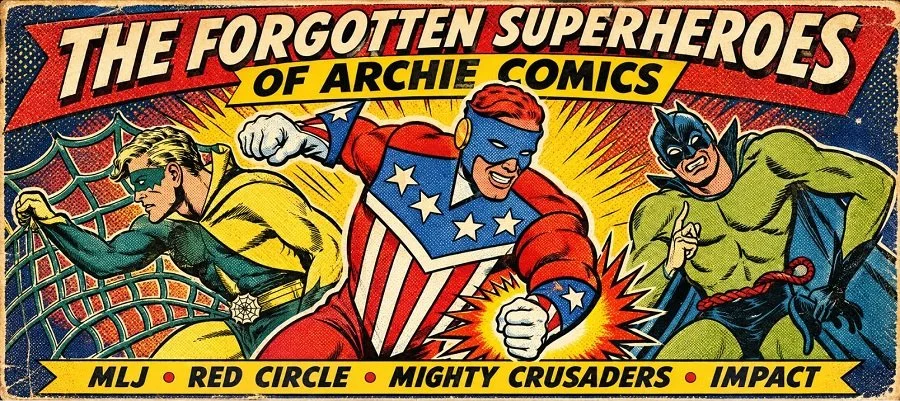
The Forgotten Superheroes of Archie Comics: The Complete History of MLJ, Red Circle, the Mighty Crusaders, and Impact Comics
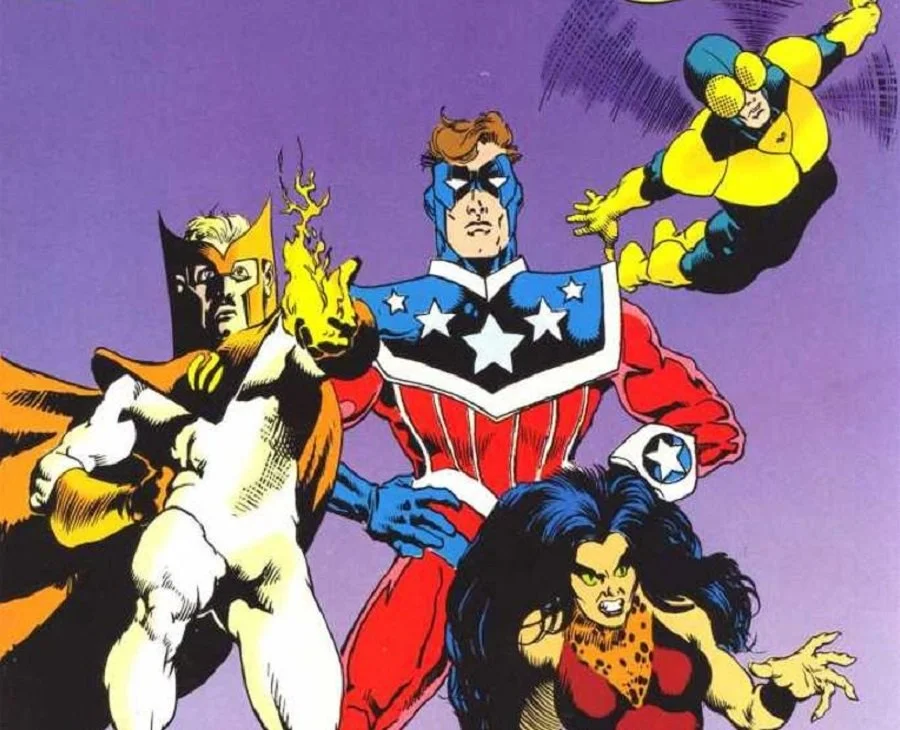
From the Golden Age of comic books to the 1980s superhero revival, the Remco action figures, and two surprising partnerships with DC Comics, the superheroes of Archie Comics have one of the most fascinating and overlooked histories in American comics.
Long before Archie Andrews was chasing Betty and Veronica around Riverdale, the company that would become Archie Comics was publishing some of the most colorful, unusual, and historically important superheroes of the Golden Age of comic books.
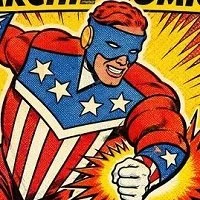
In fact, one of the most important superheroes in comic book history came from this company, and he wasn't named Superman, Batman, or Captain America. He was The Shield, a red, white, and blue patriotic superhero who arrived more than a year before Marvel's famous Captain America.
Over the decades, this remarkable collection of superheroes would include The Black Hood, The Comet, The Hangman, The Fly, The Web, The Jaguar, The Fox, and many others. They would fight Nazis during World War II, embrace the campy superhero craze of the 1960s, return in darker and more sophisticated adventures during the 1980s, become a short-lived toy line, and even find themselves operating within the DC Comics Universe.
Along the way, they would appear under a bewildering assortment of publishing names: MLJ Comics, Archie Adventure Series, Mighty Comics, Red Circle Comics, Impact Comics, and Dark Circle Comics.
Their team would be known as both the Mighty Crusaders and simply the Crusaders.
The characters themselves would frequently undergo dramatic changes, with new people assuming familiar superhero identities, altered origins, redesigned costumes, and occasionally entirely different personalities.
For readers who enjoy the deep history of comic books, particularly the forgotten corners of the Golden Age and the superhero revivals of the 1970s and 1980s, the history of the Archie superheroes is an absolute treasure trove.
And their story begins in 1939.
MLJ Comics: Before Archie Andrews, There Were Superheroes (1939–1941)
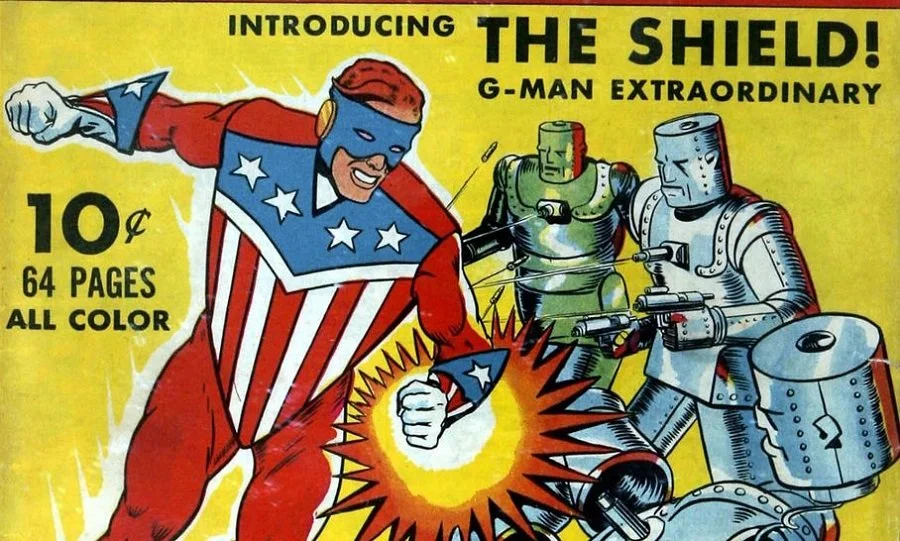
The company that eventually became Archie Comics began publishing comic books in 1939 under the name MLJ, derived from the surnames of its founding publishers: Maurice Coyne, Louis Silberkleit, and John L. Goldwater.
Superman had debuted in Action Comics #1 in 1938, and Batman had followed in Detective Comics #27 in 1939. The superhero business was suddenly exploding, and publishers everywhere were searching for characters who might become the next big sensation.
MLJ entered the marketplace with Blue Ribbon Comics #1, cover-dated November 1939.
Its early anthology titles included Blue Ribbon Comics, Top-Notch Comics, Pep Comics, and Zip Comics.
These books introduced a remarkable stable of costumed adventurers, including Steel Sterling, The Wizard, The Fox, The Black Hood, and eventually The Shield.
Although these characters shared a publisher, they were not originally conceived as one tightly organized superhero universe. Like many Golden Age heroes, they developed independently, often reflecting the creative preferences of the writers and artists working on their individual features.
Some were conventional crimefighters. Others possessed extraordinary scientific abilities. Still others were violent vigilantes who seemed more closely related to the pulp heroes of the 1930s than the increasingly family-friendly superheroes who would follow.
That variety would become one of the defining characteristics of MLJ's superhero library.
The Shield: The Patriotic Superhero Who Beat Captain America
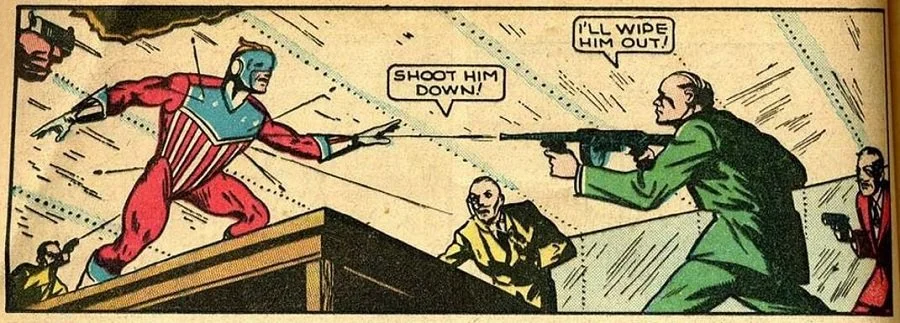
First appearance: Pep Comics #1 (January 1940 cover date)
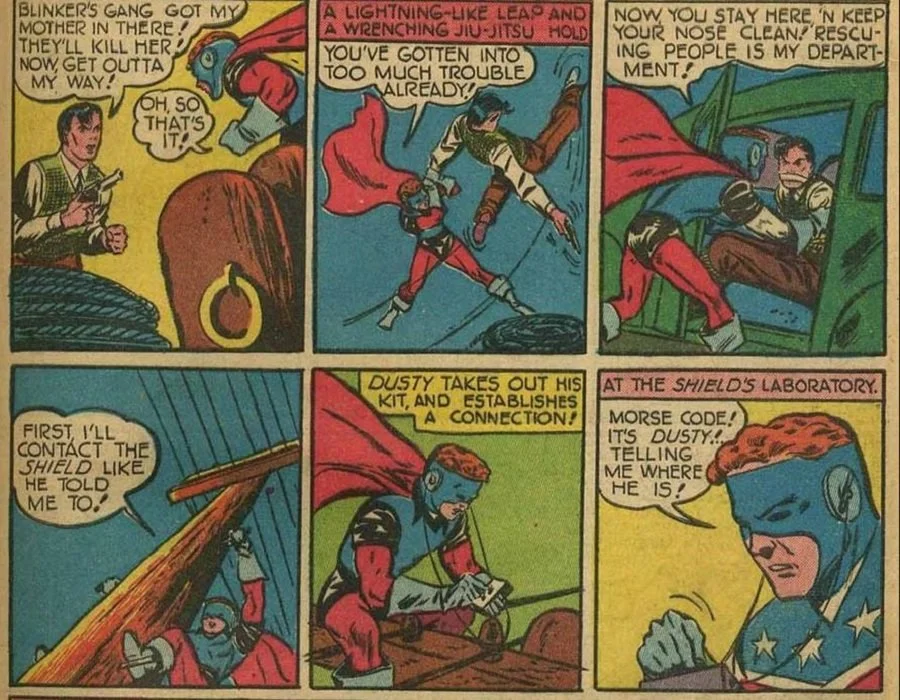
If there is one character whose historical importance deserves considerably more recognition, it is The Shield.
Created by writer Harry Shorten and artist Irv Novick, The Shield debuted in Pep Comics #1, which carried a January 1940 cover date but reached newsstands in late 1939.
His appearance preceded Captain America's debut in Captain America Comics #1, cover-dated March 1941, by more than a year.
The original Shield was Joe Higgins, the son of a scientist whose experimental work had been sabotaged by enemy agents. Joe eventually developed a chemical formula that granted him remarkable physical abilities.
His costume was an unmistakable declaration of American patriotism, incorporating the colors and imagery of the United States flag.
At a time when the world was approaching the catastrophe of World War II, The Shield represented an emerging type of superhero: the costumed patriotic champion.
Unlike Batman, whose adventures generally involved urban criminals, or Superman, whose abilities placed him almost beyond humanity, The Shield was particularly well suited to stories involving spies, saboteurs, and threats to national security.
The character became one of MLJ's most prominent early attractions.
He appeared regularly in Pep Comics and shared Shield-Wizard Comics with another MLJ hero, The Wizard.
The Shield even acquired a young sidekick, Dusty, following the increasingly popular superhero-and-sidekick formula.
But the most interesting aspect of The Shield's history is that Joe Higgins would not remain the only person to wear the costume.
Lancelot Strong: A Completely Different Shield
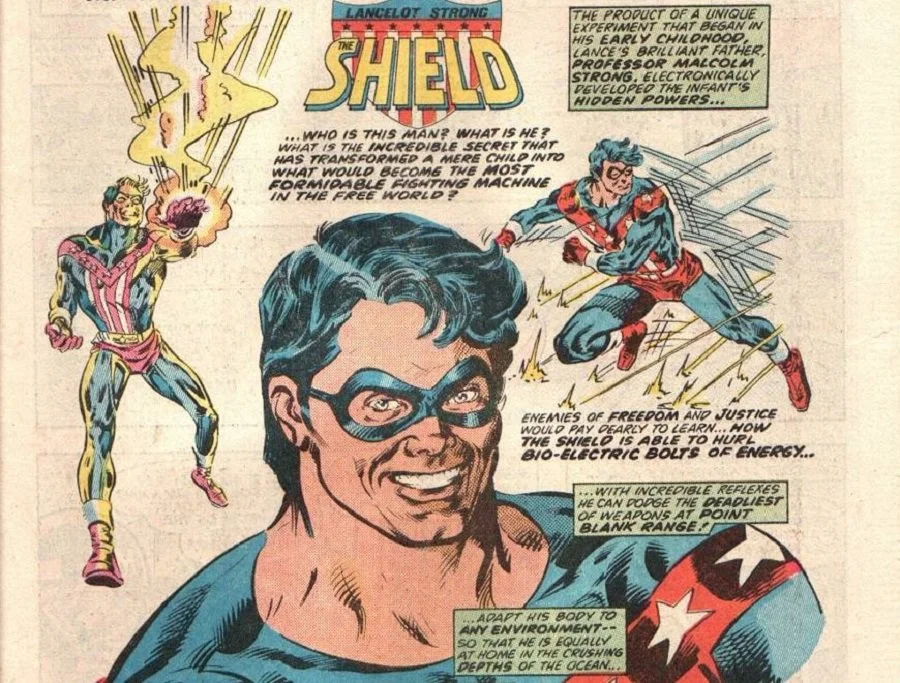
In 1959, Archie introduced a new patriotic hero in The Double Life of Private Strong #1.
Created by the legendary Joe Simon and Jack Kirby, this character was Lancelot Strong, whose origin involved extraordinary powers and a military identity.
Although he used the Shield name, Strong was not simply Joe Higgins with a revised costume. He was a substantially different character.
The series lasted only two issues, but Lancelot Strong remained important to later Archie superhero continuity.
During the Red Circle revival of the 1980s, publishers had a potential continuity problem: two different heroic Shields already existed.
Rather than permanently discard one, the company found ways to incorporate both into its larger superhero mythology.
Later revivals introduced additional bearers of the Shield identity, including different members of the Higgins family and entirely new interpretations.
In the 2015 Dark Circle relaunch, the company took an especially dramatic approach by introducing Victoria Adams, a mysterious female Shield whose story was connected to American history stretching back to the Revolutionary War.
The Shield therefore became less a single immutable character and more a superhero legacy.
It is one of the most fascinating examples of a patriotic superhero evolving with the changing political and cultural landscape of America.
Love Forgotten Comic Book History?
So do we! When It Was Cool celebrates the forgotten superheroes, classic comics, vintage toys, and pop culture memories that deserve to be remembered. If you enjoy our deep dives into the past, consider supporting our work on Patreon. Your support helps keep these stories alive!
The Comet: One of the Golden Age's Most Shocking Superheroes
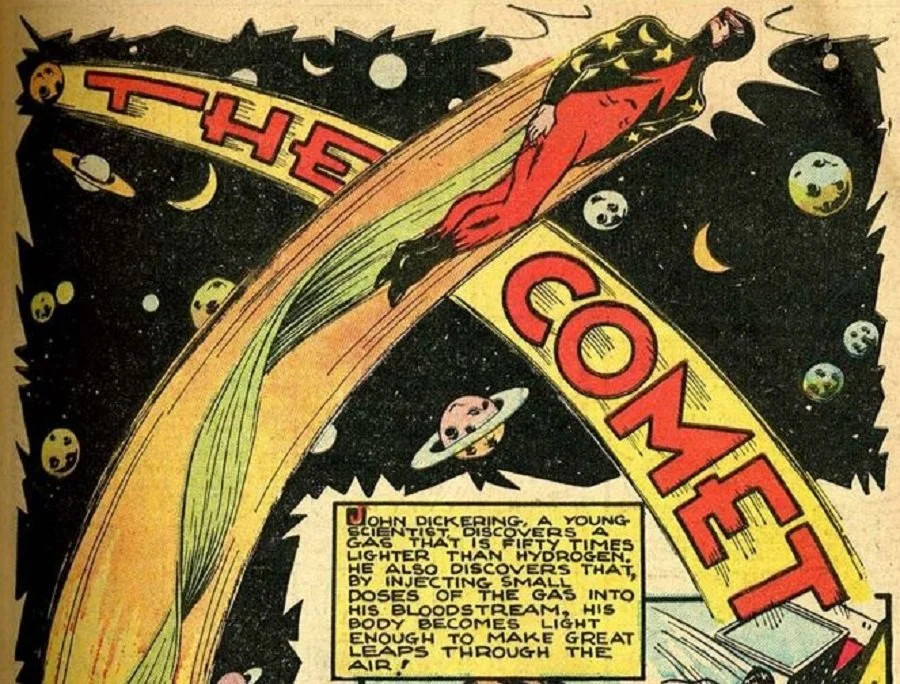
First appearance: Pep Comics #1 (1940)
The Comet deserves special recognition because his early adventures were considerably stranger—and often more violent—than those of many contemporary superheroes.
Created by Jack Cole, who would later become famous for Plastic Man, The Comet was originally John Dickering, a scientist whose experiments gave him remarkable powers.
He could fly and project destructive rays from his eyes.
Those abilities sound fairly conventional today, but The Comet's approach to fighting criminals was anything but conventional.
Rather than simply capture villains and deliver them to the police, The Comet frequently used deadly force. His early adventures were remarkably brutal by the standards that would eventually govern mainstream American superhero comics.
Even more unusual was his fate.
In Pep Comics #17, The Comet was killed.
Permanent superhero deaths were unusual, particularly for a prominent costumed character, and the decision created an unexpected opportunity for another MLJ hero.
The Comet's brother, Bob Dickering, would respond to the tragedy by becoming The Hangman.
This gave MLJ something resembling an early superhero family legacy, with one hero's death directly inspiring the creation of another.
Naturally, comic book death rarely remains uncomplicated forever.
When Archie revived its superhero properties in later decades, The Comet returned through various revisions of his history, including a resurrection during the 1960s.
The 1980s Red Circle stories also explored his altered powers and place among the Mighty Crusaders.
By the time DC Comics reimagined the property for Impact Comics in the early 1990s, The Comet had undergone another substantial reinvention.
His career is a perfect illustration of how Archie repeatedly rebuilt its superheroes while retaining recognizable names, visual designs, and selected elements of their original mythology.
The Hangman: From Vengeance to Supernatural Horror
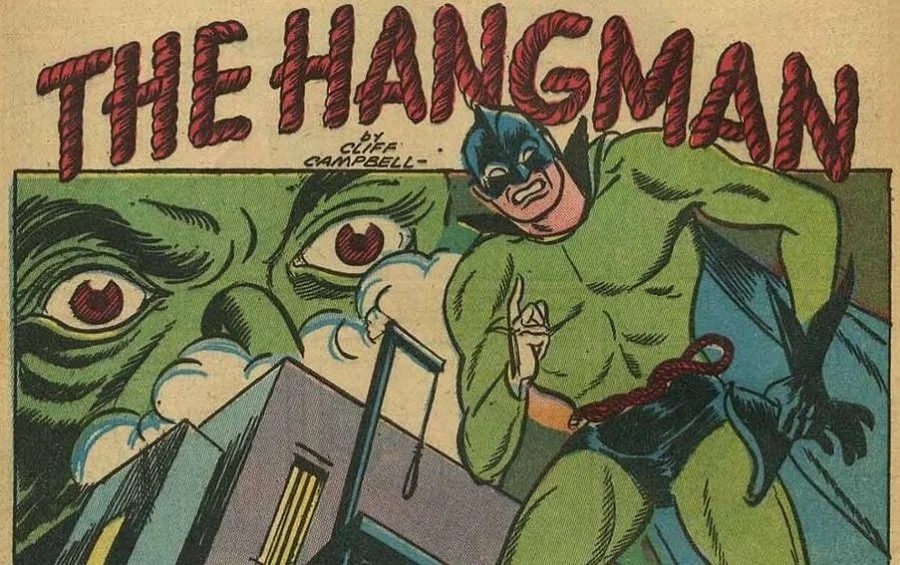
First appearance: Pep Comics #17 (1941)
The Hangman was one of the most intimidating heroes of the entire MLJ lineup.
The original Hangman was Bob Dickering, brother of The Comet.
Following his brother's murder, Bob adopted a terrifying costumed identity and began dispensing justice against criminals.
Unlike the brightly colored patriotic Shield, The Hangman was designed to frighten the very people he pursued.
His ominous appearance, intimidating methods, and revenge-driven motivation placed him closer to pulp vigilantes such as The Shadow than the optimistic superheroes who eventually dominated the genre.
The Hangman became popular enough to receive his own comic book, Hangman Comics, in the early 1940s.
His publication history illustrates the rougher atmosphere of early superhero comics, before the Comics Code Authority imposed far stricter restrictions during the 1950s.
Later interpretations expanded the character's possibilities.
Instead of treating The Hangman exclusively as an ordinary costumed vigilante, some modern stories incorporated supernatural elements and an almost mythological approach to his mission.
This became particularly evident during DC's 2009 Red Circle revival and Archie's subsequent Dark Circle Comics period.
The 2009 DC version presented a Hangman whose existence was tied to a supernatural bargain and an ongoing obligation to confront evil.
The Dark Circle interpretation pushed the material even further toward horror, emphasizing the frightening implications of a mysterious executioner who operates beyond ordinary human law.
Of all the original MLJ characters, The Hangman may have been especially well suited to the darker storytelling trends of modern comics.
After all, his original concept was already built around violence, vengeance, and fear.
The Black Hood: The Superhero Who Became a Crime-Noir Legend
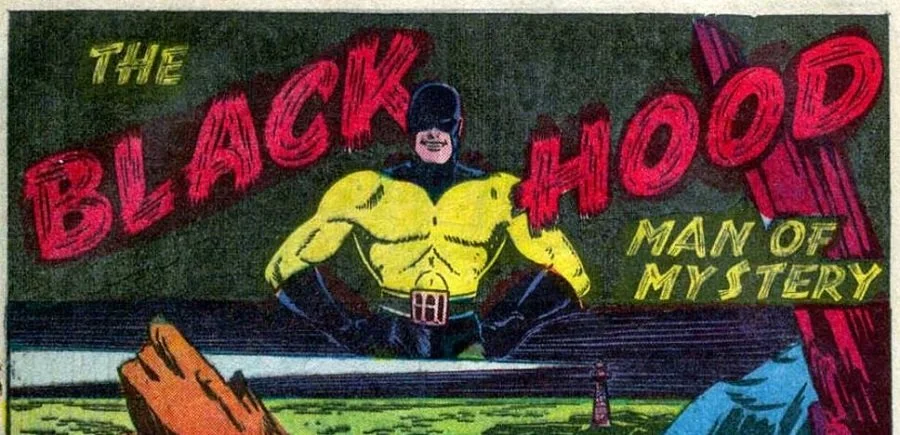
First appearance: Top-Notch Comics #9 (1940)
The Black Hood became one of MLJ's greatest early successes.
His original identity was Kip Burland, a police officer who was framed and nearly destroyed by criminal enemies before adopting a masked identity to fight crime.
The character wore a distinctive black hood and a costume that made him immediately recognizable.
Unlike The Shield, The Black Hood was fundamentally a street-level crimefighter.
He did not need world-shaking powers or elaborate science-fiction abilities to be effective. His appeal came from detective work, physical courage, and the ability to confront the criminal underworld on its own terms.
The character became sufficiently popular to transcend comic books.
During the 1940s, The Black Hood appeared in a radio program and a series of pulp-magazine adventures, giving him a multimedia presence that many modern comic book fans may not realize existed.
This is an important historical distinction.
The Black Hood was not merely an obscure Golden Age character who occasionally appeared in anthology comics. At his peak, he was one of MLJ's most recognizable properties.
The Black Hood in the 1980s
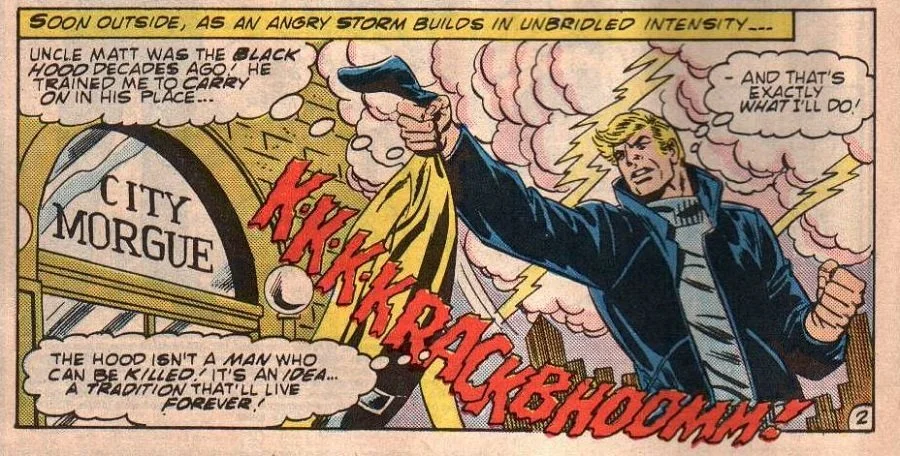
When Archie revived its superheroes under the Red Circle banner, The Black Hood received a new generation of stories.
The 1980s version prominently featured Kip Burland's nephew, Matthew Burland, continuing the family tradition.
The new Black Hood was equipped with modern crimefighting equipment and operated in a world considerably different from that of his Golden Age predecessor.
This continuation of a heroic identity through different generations became a recurring device throughout the Archie superhero universe.
The Impact Comics and Dark Circle Versions
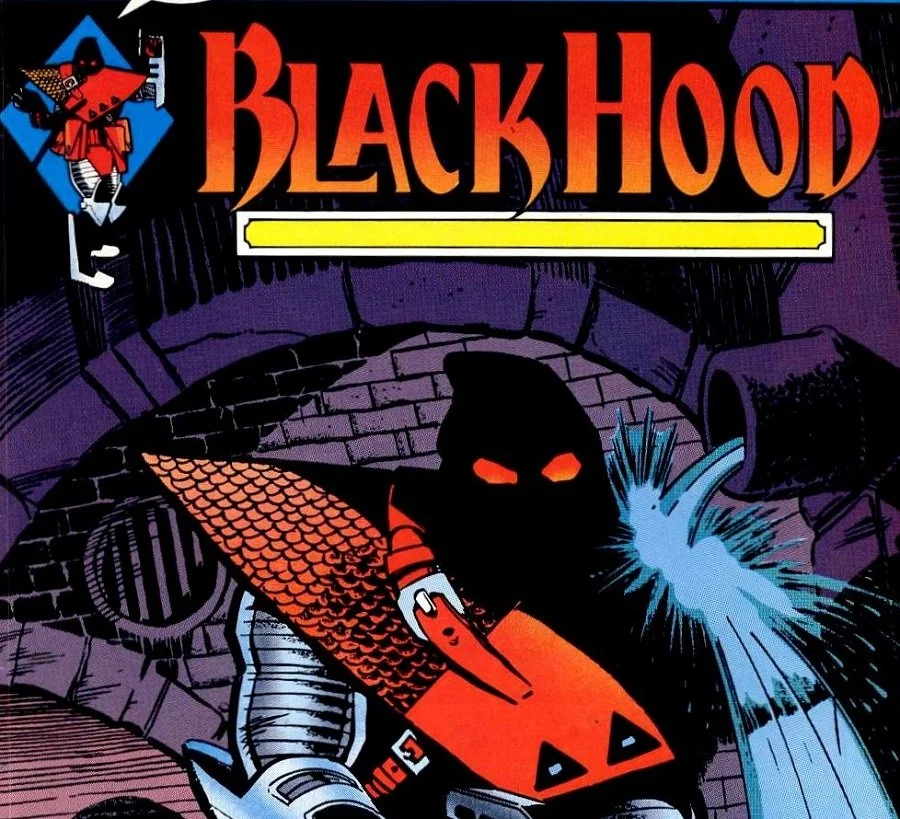
DC's 1990s Impact Comics line approached The Black Hood as a heroic identity that could pass between different people.
This concept emphasized the mythology surrounding the hood itself and the individuals who chose—or were compelled—to wear it.
However, the most dramatic reinvention arrived in 2015.
Archie's Dark Circle series The Black Hood, written by Duane Swierczynski with artwork by Michael Gaydos, featured Philadelphia police officer Gregory Hettinger.
After a traumatic shooting left him disfigured, Hettinger struggled with painkiller addiction, corruption, and increasingly dangerous circumstances.
The result was a gritty, mature crime series that was almost unrecognizable in tone compared with the hero's early adventures.
Yet the essential concept remained: a troubled man concealing his identity beneath a black hood while confronting the criminal world.
Few comic book characters demonstrate the transition from Golden Age superhero adventure to modern crime noir quite as clearly.
Remember When Comic Books and Toy Stores Were Magical?
Obscure superhero figures to forgotten comic book treasures, When It Was Cool keeps the nostalgia alive! Join us on Patreon for even more retro pop culture entertainment while helping us continue exploring the things we grew up loving.
The Fly: The Joe Simon and Jack Kirby Superhero Who Helped Launch a Revival
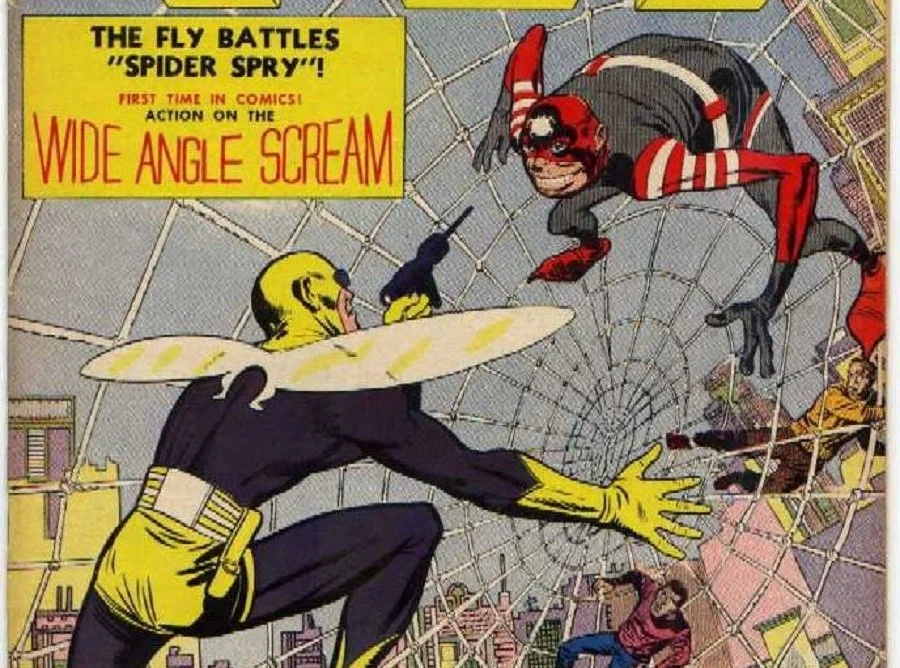
First appearance: The Adventures of the Fly #1 (1959)
By the late 1950s, the American comic book industry was undergoing a superhero revival.
DC Comics had successfully reinvented characters such as The Flash and Green Lantern, and other publishers were beginning to recognize renewed interest in costumed adventure heroes.
Archie joined the movement in 1959 with The Adventures of the Fly.
The character was created by Joe Simon and Jack Kirby, one of the most important creative partnerships in comic book history.
Their previous accomplishments included creating Captain America, making their involvement with Archie's new superhero particularly significant.
The original Fly was Tommy Troy, a young boy whose adventures began with a magical ring connected to an extraordinary insect kingdom.
By activating the ring, Tommy could transform into an adult superhero possessing insect-inspired powers.
These included flight, extraordinary physical abilities, and other powers derived from the insect world.
The concept combined traditional superhero action with elements of childhood fantasy, making it especially appropriate for Archie's younger readership.
The Fly quickly became one of the publisher's most important superheroes of the Silver Age.
From The Fly to Fly-Man
During the 1960s, Archie attempted to expand its superhero business and compete more directly with the increasingly successful Marvel Comics.
The Fly was renamed Fly-Man, reflecting the period's fascination with superhero names such as Spider-Man and Ant-Man.
The change also coincided with a greater emphasis on superhero team-ups, shared continuity, and an energetic storytelling style influenced by Marvel's success.
Fly-Man became central to the formation of the Mighty Crusaders.
He was joined by Fly-Girl, another insect-powered superhero who became an important part of the Archie lineup.
The characters later returned to their more traditional identities during the Red Circle revival.
The Fly is especially important because he helped connect two very different eras of Archie superhero publishing: the original Golden Age characters and the new superhero concepts of the late 1950s.
In many respects, he was the bridge between MLJ's past and the Mighty Crusaders' future.
The Web: A Superhero With an Unusual Domestic Problem
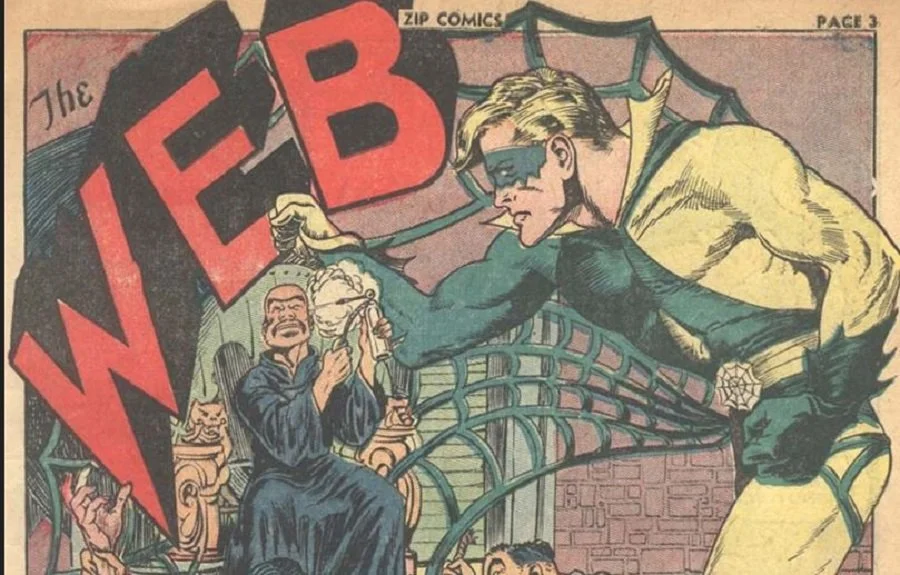
First appearance: Zip Comics #27 (1942)
Among the original MLJ heroes, The Web possessed one of the more entertaining concepts.
His original identity was John Raymond, a criminologist who adopted a colorful superhero costume to combat criminals.
Unlike Superman or The Shield, The Web did not possess extraordinary superhuman abilities.
He relied on intelligence, athleticism, training, and equipment.
One of the character's most memorable elements was his relationship with his wife, Rose.
Rose strongly disapproved of her husband's dangerous crimefighting activities, leading to stories in which domestic disagreements became almost as important as the criminals The Web was supposed to capture.
This comedic aspect gave the character an unusual personality in a field crowded with grim, determined crimefighters.
During the 1960s, Archie revived The Web, including stories in which his earlier career and marital circumstances figured into the plot.
The character returned again during the 1980s Red Circle period.
DC Comics Reinvents The Web
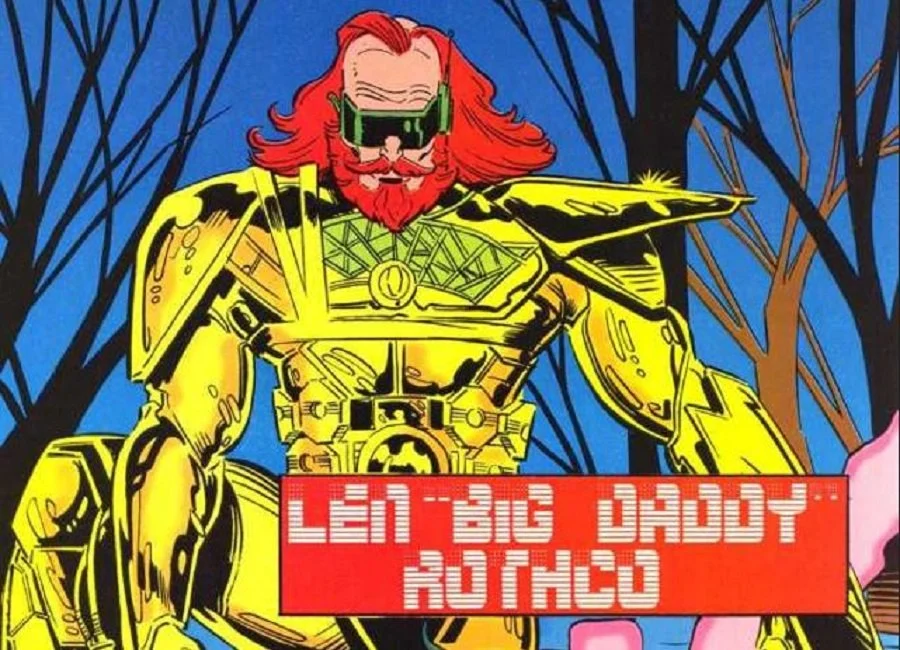
During the 1990s Impact Comics revival, The Web became a more technologically sophisticated concept.
The modernized approach emphasized a superhero operation that could be expanded beyond one traditional masked adventurer.
DC pushed the concept further during its 2009 revival.
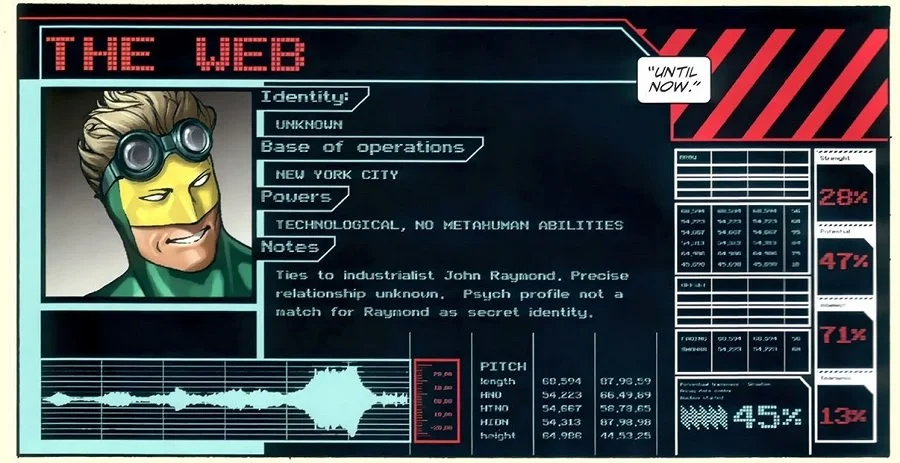
The new Web was Raymond "Ray" Coltan, a wealthy man whose resources allowed him to develop an elaborate crimefighting network.
One of the most intriguing aspects of this incarnation was the idea that ordinary people could request superhero assistance through an organized technological system.
Essentially, The Web became a superhero whose mission could be supported by a network of other people.
This represented a dramatic departure from the Golden Age criminologist whose greatest obstacle occasionally seemed to be explaining his late-night adventures to his wife.
The Web's history demonstrates how even relatively obscure superhero concepts can be reinterpreted to reflect changing technology and society.
The Mighty Crusaders: Archie's Answer to the Justice League and Avengers
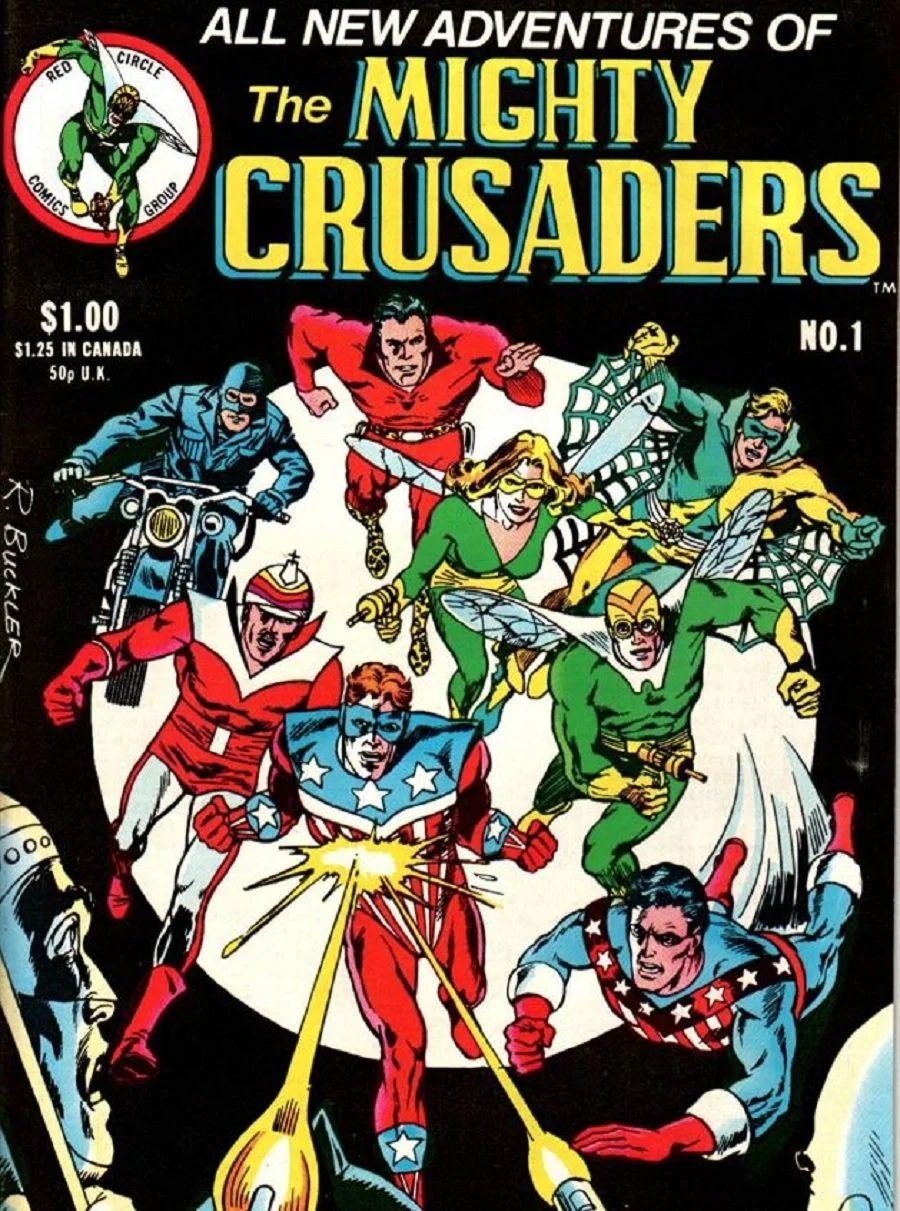
The concept of combining several established superheroes into one team was already familiar by the early 1960s.
DC Comics had the Justice League of America, while Marvel Comics had introduced the Avengers.
Archie wanted its own superhero team.
The Mighty Crusaders first assembled in Fly-Man #31, published in 1965.
The original group included:
Fly-Man
The Shield
The Black Hood
The Comet
Fly-Girl
The team's popularity led to its own Mighty Crusaders comic book series.
This was an important turning point for the Archie superheroes because it helped establish them as members of a shared universe rather than simply a collection of unrelated comic book features.
The publisher could now bring together characters originating in different decades and explain their relationships within a broader continuity.
The team eventually expanded its connections to other MLJ and Archie heroes, including The Web, The Jaguar, The Wizard, and Steel Sterling.
However, these stories were also notable for their unusual tone.
Mighty Comics: When Archie Tried to Out-Marvel Marvel (1965–1967)
If you have never read the Archie superhero comics of the mid-1960s, they can be quite an experience.
Marvel Comics had revolutionized superhero storytelling through Stan Lee, Jack Kirby, Steve Ditko, and other creators.
Marvel's heroes argued with each other, possessed complicated personalities, and frequently engaged in dramatic conflicts that stretched across multiple titles.
Archie recognized the popularity of this approach and attempted to develop its own version.
The publisher adopted the Mighty Comics branding and increasingly emphasized a fast-moving, exaggerated style of storytelling.
Jerry Siegel, one of Superman's original creators, contributed scripts to the line.
The books adopted an enthusiastic, self-conscious approach to superhero storytelling that sometimes approached outright parody.
Characters made dramatic declarations, fought bizarre villains, and participated in adventures filled with the breathless excitement associated with 1960s comic books.
The problem was that Archie never quite matched Marvel's distinctive combination of character development, continuity, and melodrama.
Nevertheless, the Mighty Comics era remains fascinating.
These books capture a very specific moment when superhero publishers were desperately attempting to understand what made Marvel successful.
The original Mighty Crusaders series lasted seven issues, with the broader Mighty Comics experiment disappearing by 1967.
Archie's superheroes once again retreated into publishing obscurity.
But they would return.
And for many longtime comic book collectors, their next major revival remains the most memorable.
Red Circle Comics: The Great Archie Superhero Revival of the 1980s
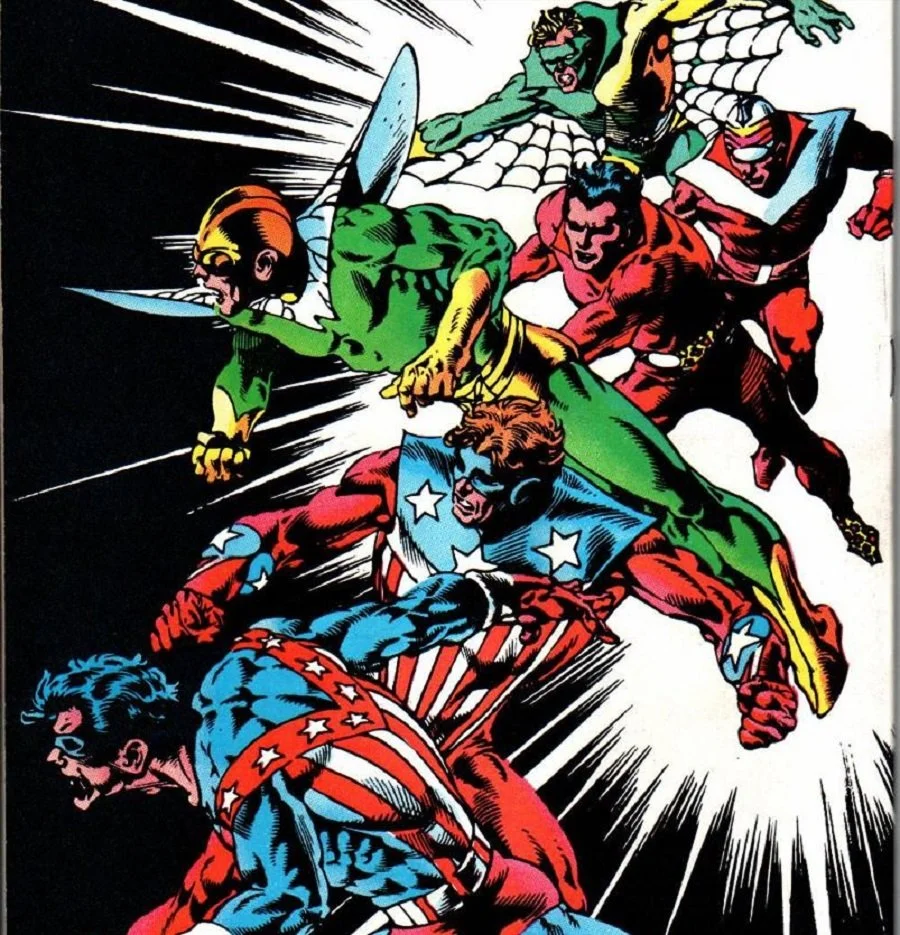
By the early 1980s, the comic book industry had changed dramatically.
Comic book specialty shops were becoming increasingly important, collectors were taking superhero continuity more seriously, and publishers were experimenting with material aimed at older readers.
Archie recognized another opportunity.
The company revived its long-dormant superhero properties under the Red Circle Comics name.
The Red Circle name had previously been used for Archie's short-lived horror and suspense publishing line during the 1970s. It was now repurposed for a superhero revival.
Beginning in earnest in 1983, Red Circle brought back the Mighty Crusaders and several individual heroes in new comic books.
The revival included titles such as:
The Mighty Crusaders
The Shield
The Fly
The Black Hood
The Comet
Blue Ribbon Comics
Original Shield
The company also experimented with different art styles, creative teams, and approaches to continuity.
One of the most important creators associated with this period was Rich Buckler, whose work helped shape the revival's visual identity.
The Red Circle books generally treated the superheroes more seriously than the exaggerated Mighty Comics versions of the 1960s.
There was greater interest in connecting the characters to their Golden Age origins while updating them for contemporary readers.
This created some fascinating continuity problems.
What should happen to Joe Higgins, who had originally fought criminals during World War II?
How could The Comet return after his famous Golden Age death?
What relationship should exist between the original Shield and Lancelot Strong?
Should The Black Hood remain Kip Burland, or should another family member inherit the identity?
Red Circle attempted to answer these questions through a combination of legacy heroes, revised origins, resurrections, and expanded family histories.
The result was not always perfectly consistent, but it made for an intriguing superhero universe.
For readers who enjoyed Marvel's complicated continuity or DC's multiple generations of superheroes, the Red Circle universe offered something surprisingly similar on a smaller scale.
And in 1984, the characters reached beyond comic books and into toy stores.
Remco's 1984 Mighty Crusaders Action Figures: The Forgotten Superhero Toy Line
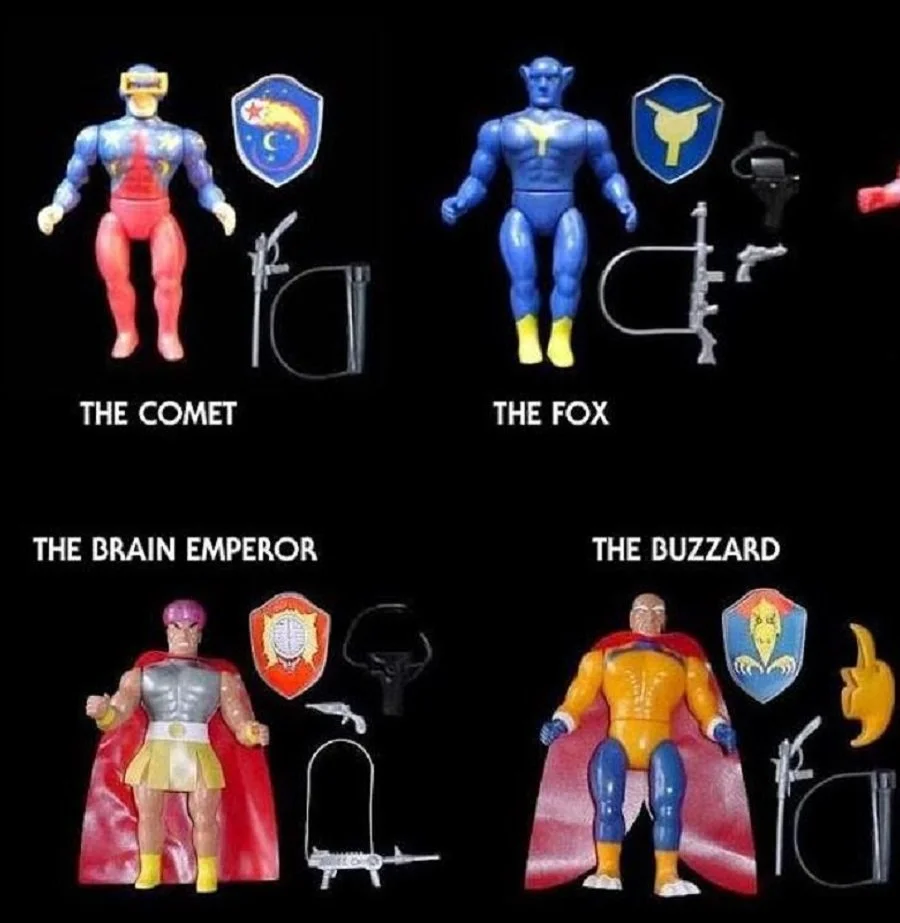
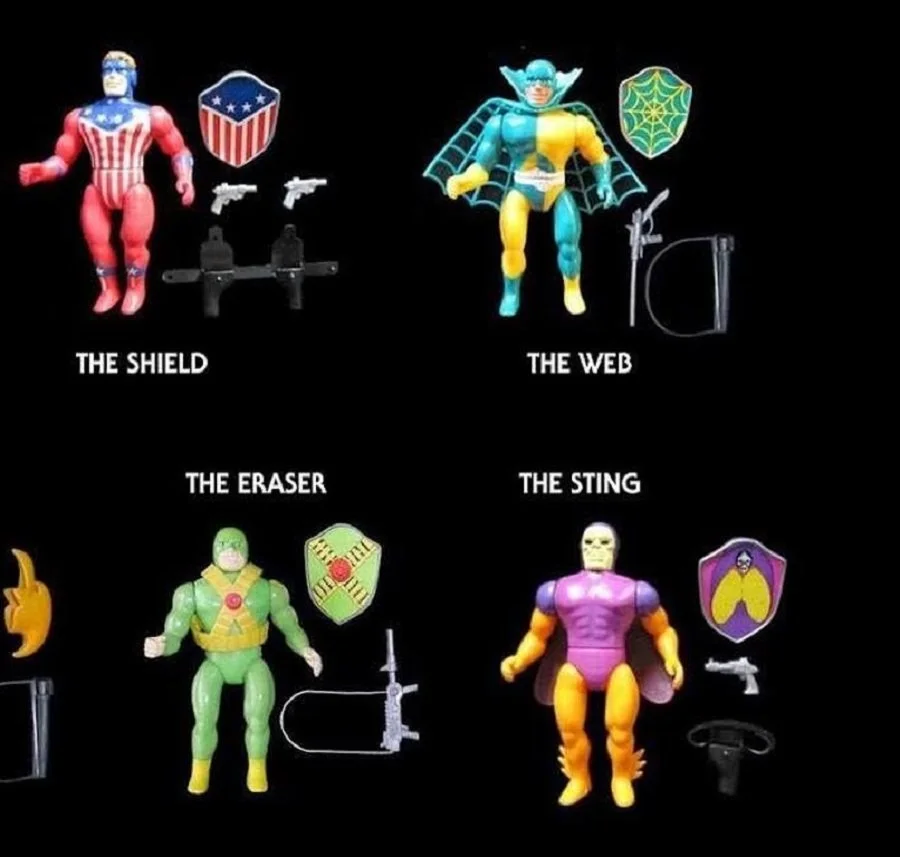
For collectors of 1980s action figures, the Remco Mighty Crusaders line is one of the more interesting superhero toy collections of the decade.
In 1984, Remco released a small series of action figures based on the Archie/Red Circle superhero universe.
This was an extraordinary time for superhero toys.
Kenner was producing its famous DC Comics Superpowers Collection, while Mattel had introduced Marvel's Secret Wars action figures.
Remco entered the superhero market with characters who were considerably less familiar to mainstream toy buyers.
The Mighty Crusaders action figure collection consisted of eight released characters.
The Shield
Brain Emperor
The Comet
The Eraser
The Web
The Buzzard
The Fox
Sting
Perhaps surprisingly, The Fly and The Black Hood were absent from the released lineup.
The figures featured colorful packaging, including artwork associated with legendary comic book artist Steve Ditko.
Each figure was sold with a Secret Sonic Signaling shield accessory, and the figures incorporated action-oriented play features.
From a modern perspective, the toy line seems like an unlikely competitor to the enormous marketing machines surrounding DC and Marvel.
The Shield, The Web, and The Comet had historical significance, but they lacked the widespread recognition of Superman, Batman, or Spider-Man.
Nevertheless, the figures offered collectors something genuinely different.
They represented superhero characters whose origins stretched back to the earliest days of American comics.
For a brief moment in 1984, The Shield could stand on a toy-store shelf alongside Batman and Captain America.
The line was short-lived, and the characters never established themselves as major toy-market competitors.
Today, however, the Remco Mighty Crusaders figures represent an appealing intersection of comic book history and 1980s toy nostalgia.
Finding a complete collection, particularly with original packaging and accessories, is an interesting challenge for vintage action figure collectors.
The fact that Remco produced figures based on such comparatively obscure superheroes also demonstrates the tremendous commercial excitement surrounding the superhero genre during the mid-1980s.
The End of Red Circle and Another Superhero Disappearance
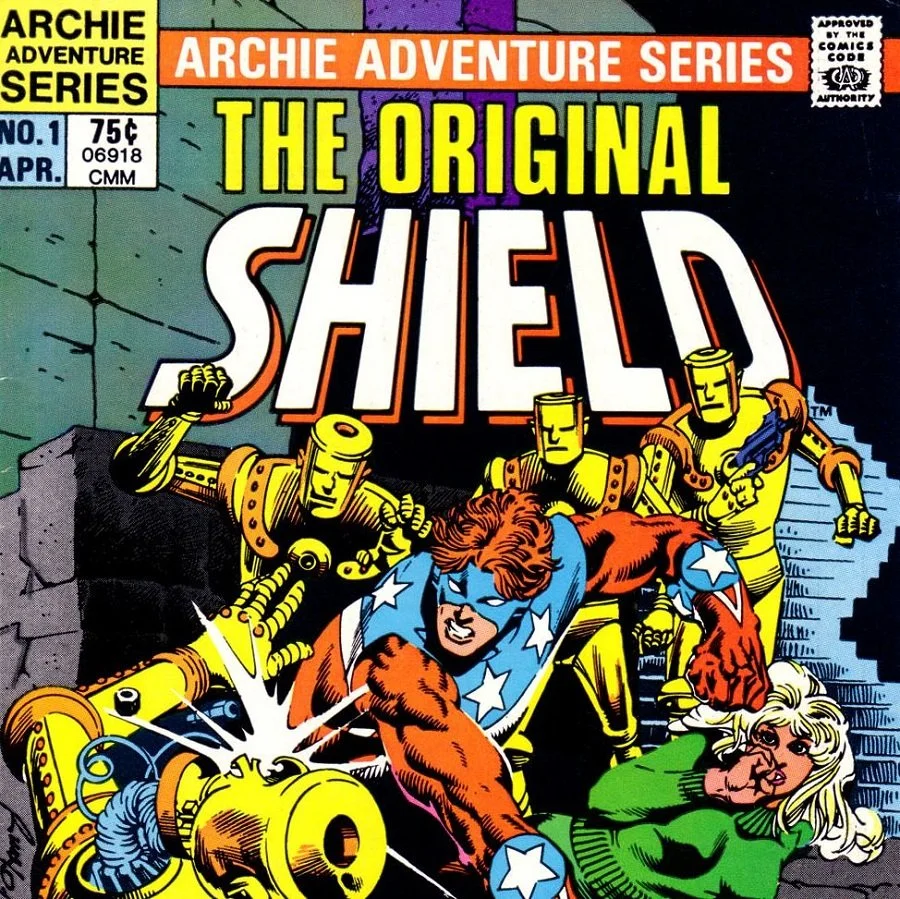
Despite the enthusiasm surrounding the revival, Red Circle did not become a lasting commercial success.
By the middle of the 1980s, the superhero titles had largely disappeared again.
The publisher experimented with additional relaunch plans later in the decade, but the characters struggled to establish a permanent place in comic book shops.
This recurring pattern would become a defining feature of the Archie superhero universe.
A revival would begin with enthusiasm, introduce new interpretations of familiar characters, and attempt to build a substantial shared universe.
Then the books would disappear.
Several years later, the process would begin again.
But the next major attempt came from an unexpected source.
DC Comics.
Impact Comics: When DC Took Over Archie's Superheroes (1991–1993)
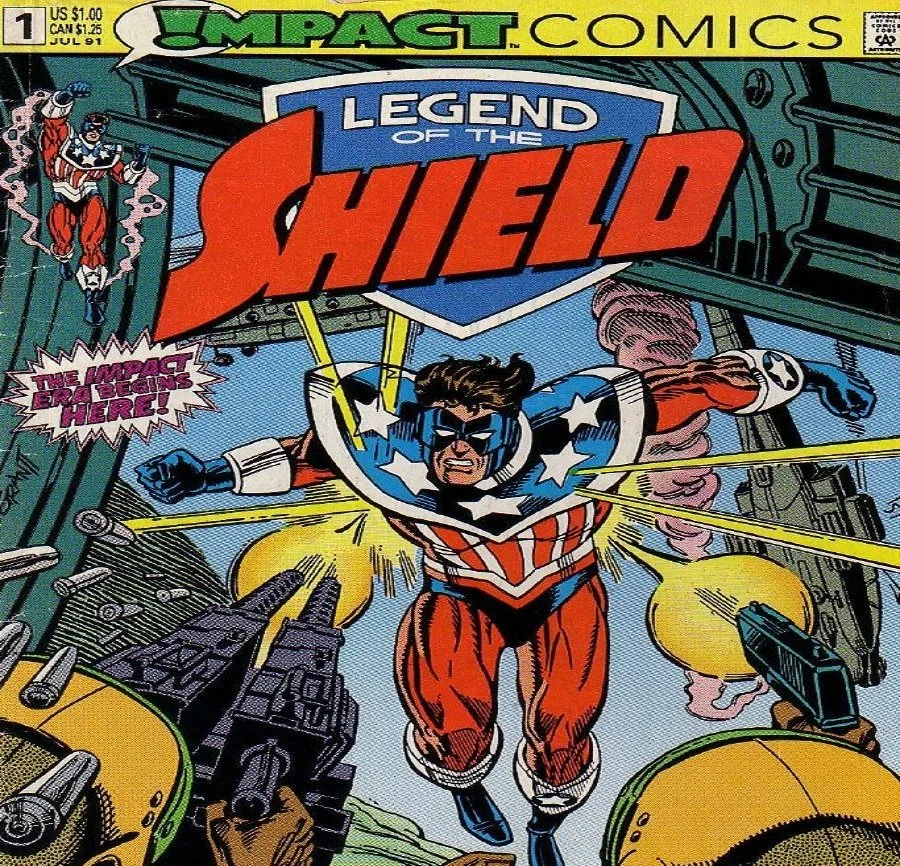
In 1991, DC Comics licensed Archie's superhero characters and launched an entirely new publishing line called Impact Comics, often stylized as !mpact.
The concept was intriguing.
Rather than insert the Archie superheroes directly into the established DC Universe, Impact Comics created a separate continuity with reimagined versions of the characters.
The line was intended to attract younger readers and provide accessible superhero adventures without requiring decades of familiarity with DC continuity.
Impact titles included:
The Legend of the Shield
The Fly
The Black Hood
The Comet
The Web
The Jaguar
The Crusaders
DC also published related projects such as Crucible.
The approach was more comprehensive than simply reprinting old Archie stories.
The characters were redesigned, given revised backgrounds, and placed into a coherent new superhero setting.
The Legend of the Shield
Impact's Shield was Roger Higgins, a new character connected to the Shield legacy.
His adventures emphasized military action and modern superhero storytelling, establishing a different identity from Joe Higgins and Lancelot Strong.
The Comet
Impact reinvented The Comet as Martin "Mark" Phaizer, whose story involved a significantly revised origin and a different approach to his powers.
The Fly
The Fly also received a substantially revised background, though the character retained the general visual identity and insect-inspired superhero concept.
The Black Hood and The Web
The Black Hood became a legacy identity associated with multiple people, while The Web received a modernized treatment that moved away from some of the original character's more whimsical Golden Age qualities.
The Crusaders
Impact brought the characters together in a team called the Crusaders, essentially its version of the Mighty Crusaders.
Dropping the word "Mighty" helped distinguish the new interpretation from the earlier Archie team.
The Impact line featured talented creators, including Mark Waid, Tom Lyle, Mark Wheatley, and others.
The books were colorful, energetic, and generally accessible.
Unfortunately, Impact Comics struggled commercially.
By 1993, the experiment had ended.
However, Impact remains a particularly interesting chapter because it was the first major attempt by DC Comics to develop Archie's superheroes into an independent publishing franchise.
And it would not be the last.
DC's Red Circle Revival: The Mighty Crusaders Enter the DC Universe (2009–2010)
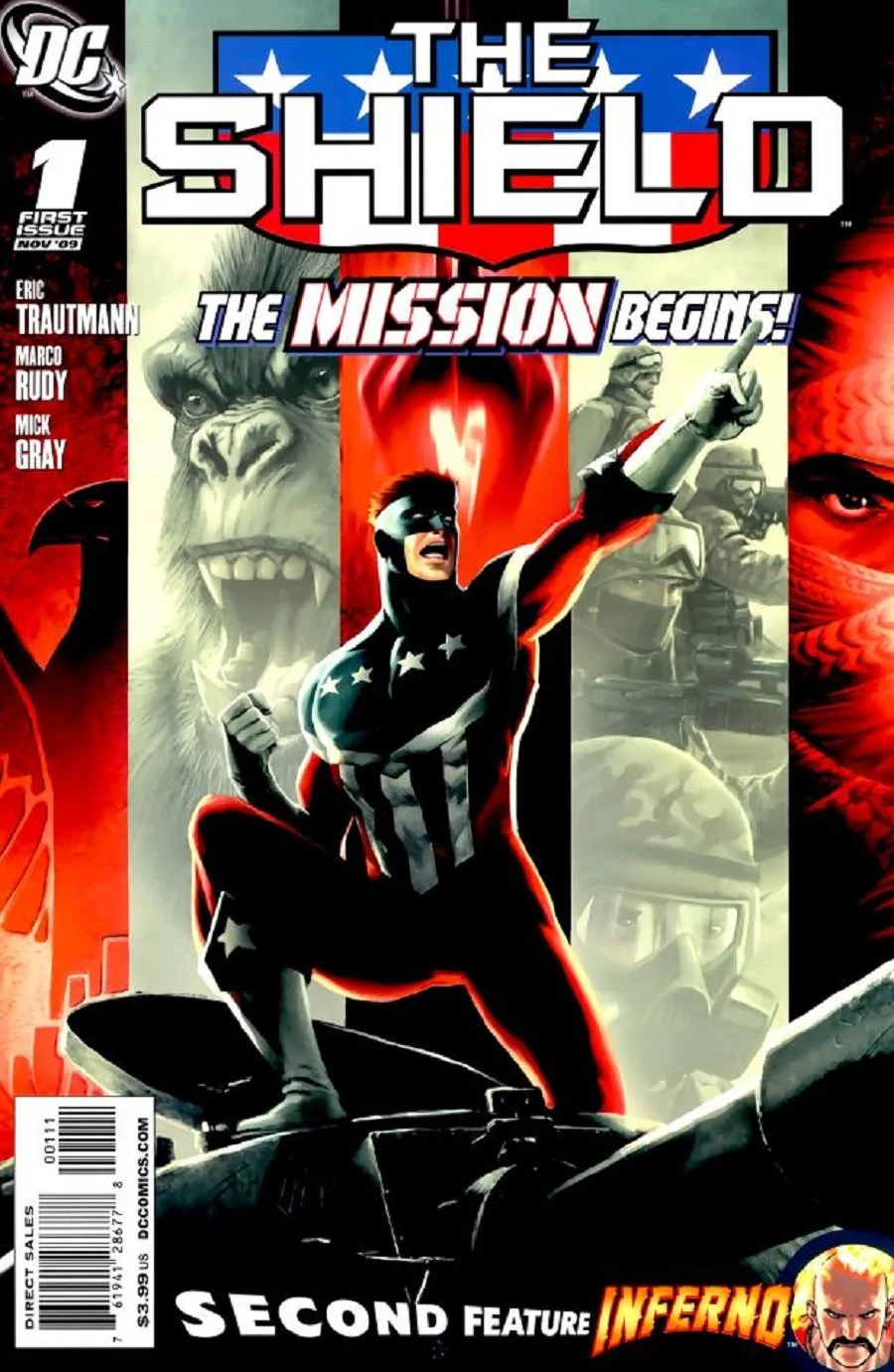
One of the strangest developments in Archie superhero history occurred in 2009.
DC Comics once again obtained a license to publish the characters, but this time the company attempted something different.
Instead of creating a separate Impact-style universe, DC introduced reimagined versions of the heroes into its established superhero continuity.
For a brief period, the Mighty Crusaders became part of the same fictional world inhabited by Superman, Batman, Wonder Woman, and the Justice League.
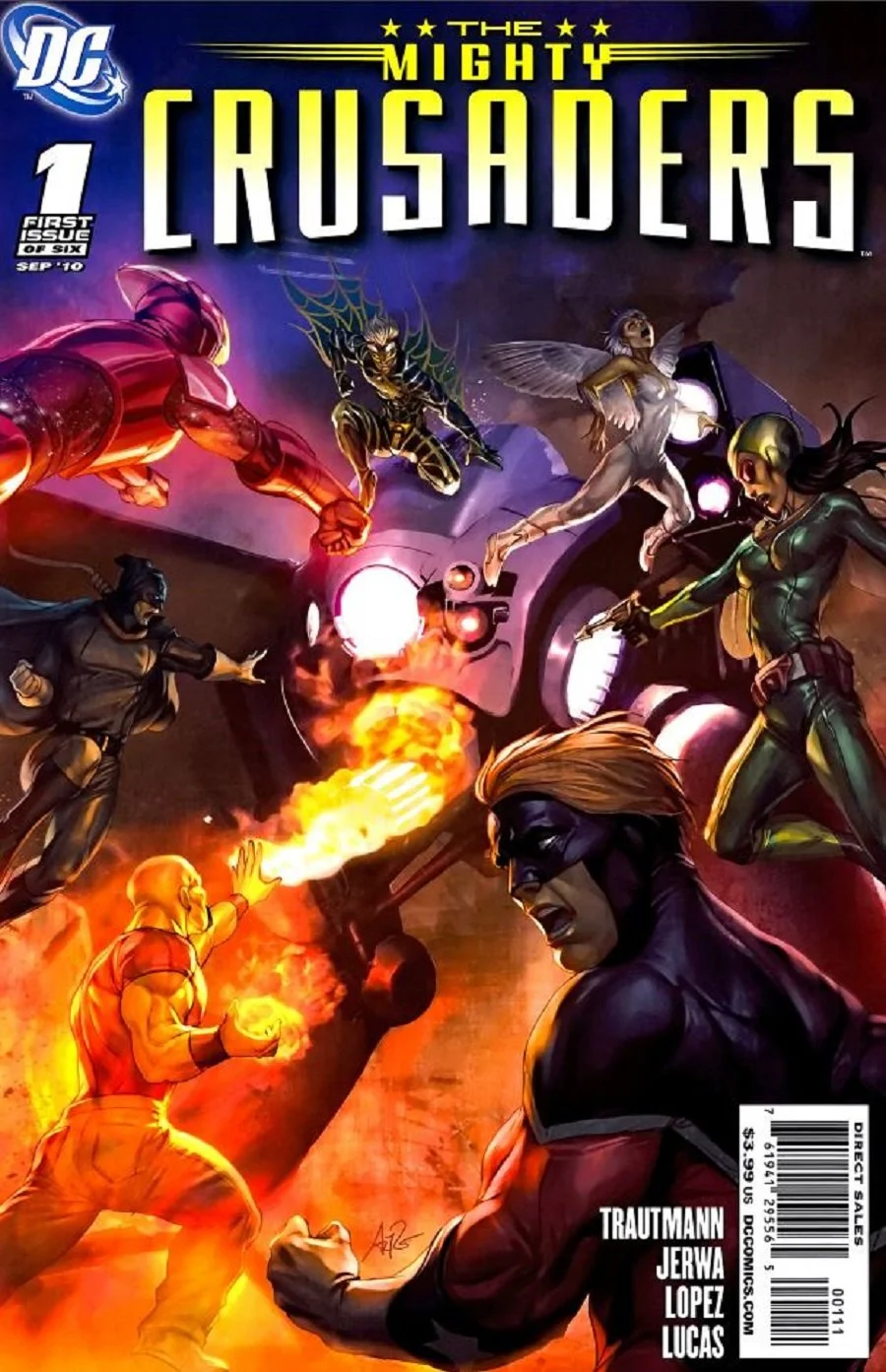
The project began with four Red Circle one-shot comic books written by J. Michael Straczynski.
The featured characters were:
The Shield
The Web
The Hangman
Inferno
The characters received substantially modernized origins.
The Shield became connected to a government-backed security program.
The Web was reinterpreted as a wealthy technological crimefighter.
The Hangman acquired a supernatural origin involving an extraordinary obligation to fight evil.
Inferno became a mysterious, flame-powered hero suffering from amnesia.
These were not simply the original MLJ superheroes continuing their Golden Age adventures.
They were new interpretations designed to operate in DC's contemporary superhero world.
The initial one-shots led to ongoing The Shield and The Web comics, followed by The Mighty Crusaders Special and a new Mighty Crusaders series in 2010.
The 2010 team included The Shield, The Web, The Comet, Inferno, Fly-Girl, and War Eagle.
The series explicitly presented the characters as part of the DC Universe.
For longtime fans, the concept was remarkable.
A collection of superheroes created by the company that gave the world Archie Andrews was briefly sharing the same continuity as DC's most famous characters.
However, the experiment was short-lived.
The line ended, and DC's rights to publish the characters subsequently expired.
By 2011, the characters were once again outside DC's active publishing universe.
Help Us Preserve Pop Culture History!
The Mighty Crusaders may have been forgotten but their stories are worth telling. If you appreciate independent research, comic book history, and nostalgic entertainment, please consider becoming a Patreon supporter. Every subscription helps us keep looking back at the things that made yesterday great!
New Crusaders: A New Generation Takes Over (2012)
With the DC licensing experiment completed, Archie again began developing its superhero properties independently.
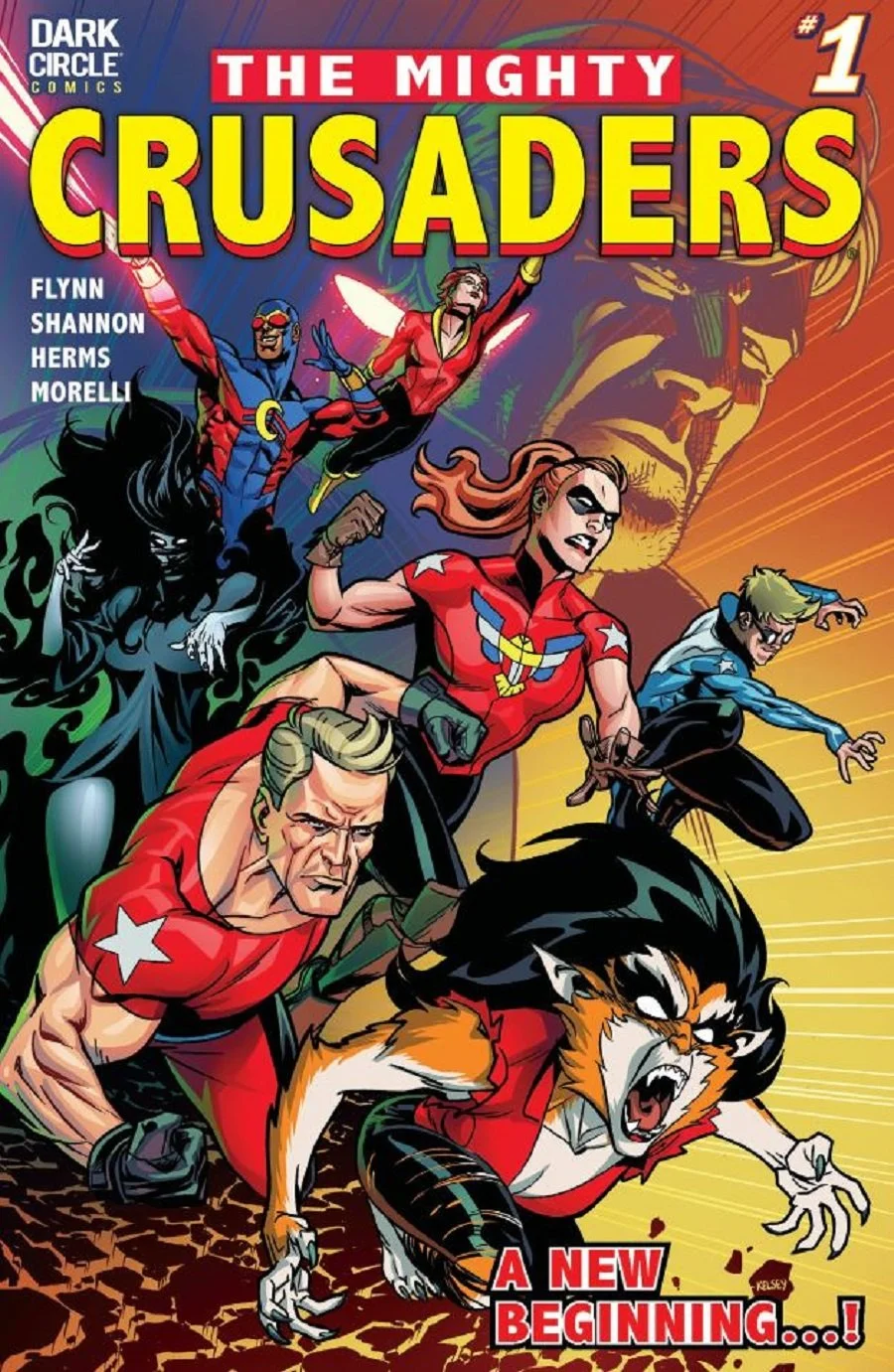
In 2012, the company launched New Crusaders, written by Ian Flynn with artwork by Ben Bates.
This revival attempted to solve one of the recurring problems facing the franchise.
How could Archie celebrate characters whose histories stretched back more than seventy years while simultaneously attracting younger readers?
The solution was to introduce a new generation of heroes.
The story featured younger characters connected to the established superhero legacy, with familiar names, costumes, and powers passed to successors.
The Brain Emperor, one of the franchise's recurring villains, played an important role in the story.
The new team operated in Impact City, a location whose name also served as a reminder of the franchise's publishing history.
Archie initially emphasized digital distribution, with print editions following.
The series presented the history of the Mighty Crusaders as something valuable rather than an inconvenience to be discarded.
For longtime readers, that was an encouraging approach.
Rather than another complete reboot, New Crusaders attempted to make the passage of time and the existence of multiple heroic generations central to its storytelling.
The line nevertheless struggled to achieve lasting commercial momentum.
Dark Circle Comics: The Superheroes Become Darker (2015–2017)
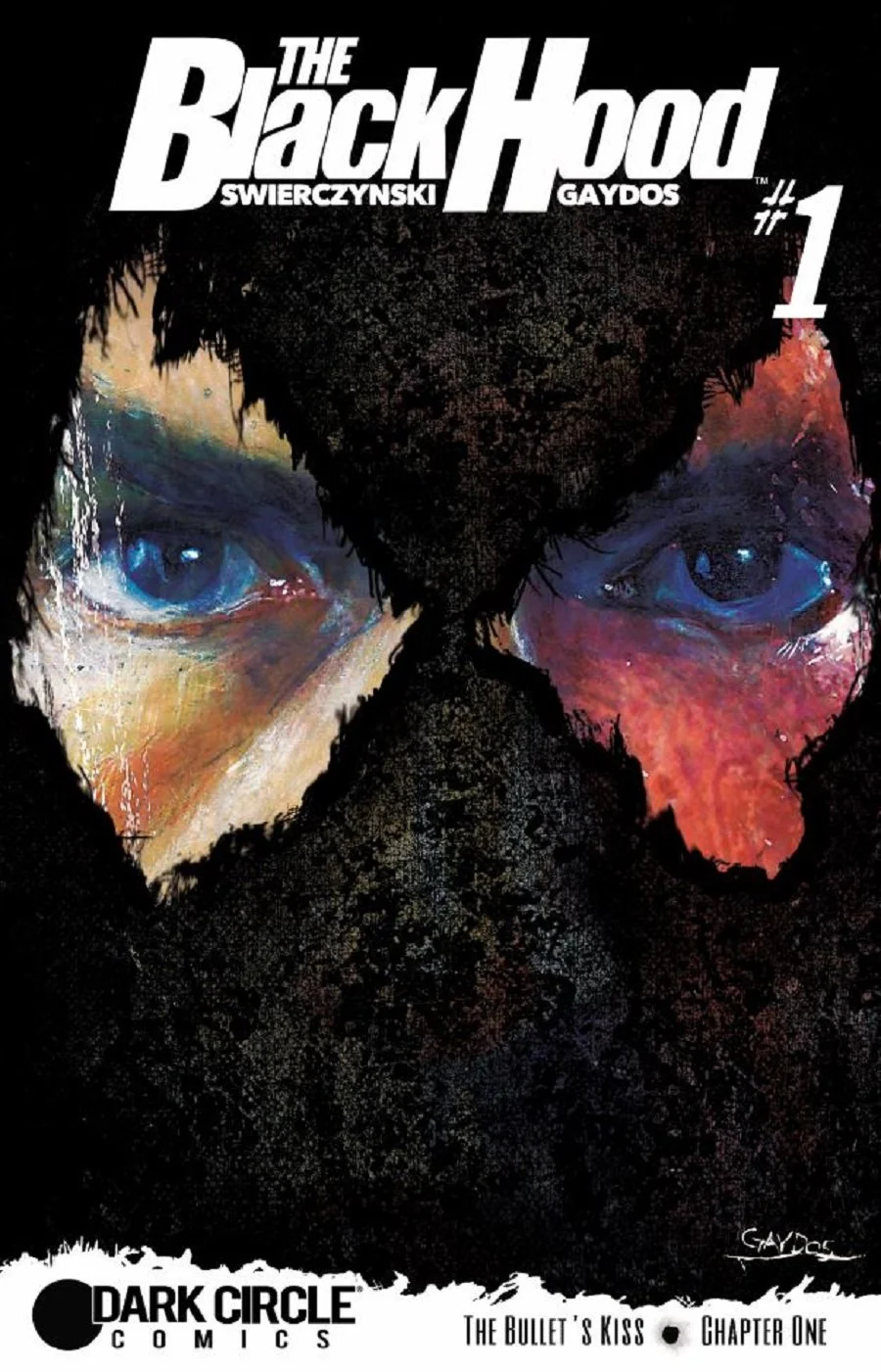
In 2015, Archie relaunched its superhero properties again, this time under the Dark Circle Comics banner.
The name announced a significant change in direction.
While earlier revivals frequently attempted to compete with Marvel and DC through colorful mainstream superhero adventures, Dark Circle placed greater emphasis on mature storytelling, crime fiction, psychological drama, and horror.
The most prominent titles included The Black Hood, The Shield, The Hangman, and The Fox.
The Black Hood became a gritty crime drama involving police corruption, injury, addiction, and personal desperation.
The Hangman moved further into supernatural horror.
The Shield introduced a new female incarnation connected to the nation's history.
The Fox, meanwhile, provided a somewhat different approach through stories associated with creators Dean Haspiel and Mark Waid.
The result was one of the most distinctive reinventions in the franchise's history.
These were no longer simply old-fashioned superheroes attempting to compete with Superman and Spider-Man.
They were established concepts being adapted to genres that had become increasingly popular among independent and mature-readership comic books.
The Dark Circle approach received attention for its creative ambition, particularly the Black Hood material.
However, the line once again failed to establish a permanent, high-volume superhero publishing operation.
The characters remained part of Archie's intellectual property library, awaiting another opportunity.
The Mighty Crusaders in the 2020s: Another Attempt at Resurrection
Even after more than eighty years, Archie Comics has continued exploring ways to bring its superheroes back.
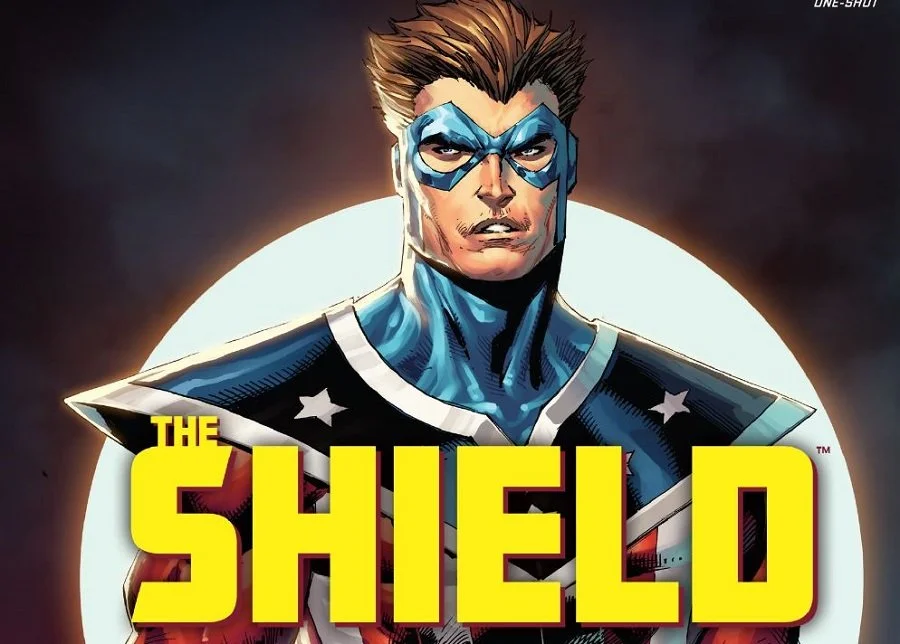
In December 2020, Archie announced a new Mighty Crusaders project involving Rob Liefeld, the artist and writer closely associated with Marvel's X-Force and the creation of Deadpool.
The proposed four-issue series was intended to introduce modern interpretations of characters such as The Shield, The Comet, The Jaguar, and Fly-Girl.
The announcement demonstrated that Archie still considered its superhero library an important potential franchise.
However, the planned larger Liefeld series did not materialize as originally announced.
Instead, Archie released The Mighty Crusaders: The Shield one-shot in 2021, featuring Joe Higgins, with contributions from Liefeld and writer David Gallaher.
The project was another reminder of The Shield's extraordinary staying power.
A patriotic superhero created before America's entry into World War II was still receiving new comic book stories more than eighty years later.
It also illustrated the continuing challenge facing these characters.
They possess tremendous historical significance, recognizable superhero designs, and an enormous backlog of stories.
What they have never quite achieved is the consistent publishing presence enjoyed by their counterparts at Marvel and DC.
As of the mid-2020s, the Mighty Crusaders remain an intriguing and periodically revived part of Archie Comics history rather than a continuously published superhero universe.
A Publishing History That Spans More Than Eight Decades
For collectors attempting to follow these characters, the changing publishers and imprints can become confusing.
The following timeline provides a general guide.
1939–1940s: MLJ Comics (Golden Age debuts of The Shield, Comet, Hangman, Black Hood, Web, and others)
1940s–1950s: Archie Comics (The company's humorous teen characters increasingly dominate its publishing)
1959–early 1960s: Archie Adventure Series (Introduction of The Fly and Lancelot Strong's Shield)
1965–1967: Mighty Comics (Formation of the Mighty Crusaders and Marvel-influenced superhero revival)
1970s: Red Circle (Brief horror/suspense imprint, with some interest in reviving older heroes)
1983–1985: Red Circle Comics (Major superhero revival, including Mighty Crusaders and individual titles)
1984: Remco (Eight-figure Mighty Crusaders action figure line)
1991–1993: DC's Impact Comics (Reimagined superheroes in a separate continuity, including the Crusaders)
2009–2010: DC's Red Circle (Modernized heroes briefly integrated into the mainstream DC Universe)
2012–2014: Archie/Red Circle (New Crusaders and renewed interest in legacy superheroes)
2015–2017: Dark Circle Comics (Mature crime, horror, and superhero reinventions)
2020–2021: Archie Comics (New revival announcement and The Mighty Crusaders: The Shield one-shot)
One important point about this timeline is that MLJ, Archie Adventure Series, Mighty Comics, Red Circle, and Dark Circle are not five entirely independent companies.
They represent different corporate names, publishing banners, or imprints associated with Archie Comics and its predecessors.
Impact Comics and DC's later Red Circle titles, by contrast, were published by DC under licensing arrangements involving Archie's characters.
Understanding this distinction makes the franchise's sometimes confusing publishing history much easier to follow.
Why Have the Archie Superheroes Never Become Major Stars?
This is perhaps the most interesting question surrounding the entire franchise.
Consider what Archie Comics possesses.
The Shield is one of the earliest patriotic superheroes.
The Black Hood was successful enough to appear in comics, pulp magazines, and radio.
The Comet featured one of the most shocking deaths of the Golden Age.
The Fly was created by Joe Simon and Jack Kirby.
The Hangman was a remarkably dark superhero decades before violent vigilantes became fashionable.
The Web combined detective adventure, superhero action, and domestic comedy.
And the Mighty Crusaders formed during the same decade that the Avengers and Justice League were establishing superhero teams as one of the industry's most successful concepts.
These characters were not lacking in originality, historical importance, or recognizable visual identities.
Their greatest problem may have been consistency.
DC and Marvel spent decades continually publishing their most important superheroes.
Archie repeatedly abandoned and revived its superhero line.
Each revival brought new costumes, new origins, new continuity decisions, and occasionally entirely different personalities.
This made the characters difficult to establish in the minds of casual readers.
Someone who discovered The Shield in 1940 might encounter a substantially different Shield in 1959, another interpretation in 1983, another in 1991, and still another in 2009.
By comparison, Superman and Batman maintained relatively recognizable identities even through multiple continuity changes.
Archie's superheroes also suffered from the extraordinary success of Archie Andrews himself. Once Archie, Betty, Veronica, Jughead, and the rest of the Riverdale cast became enormously popular, the company's publishing identity was increasingly associated with teenage humor and romance.
The superhero characters became secondary properties belonging to a company whose greatest commercial strength was something entirely different.
There is also the question of timing.
The Mighty Crusaders frequently entered the market just as an established competitor was enjoying enormous success.
The 1960s revival followed Marvel's breakthrough.
The 1980s Red Circle revival arrived during a period when Marvel and DC were expanding their offerings and independent publishers were entering the direct market.
Impact Comics attempted to launch a younger-reader superhero universe during a period of increasing industry competition.
The 2009 DC revival entered an already crowded superhero publishing landscape.
Each time, the characters faced the difficult task of convincing readers to try an unfamiliar superhero universe instead of purchasing the established titles they already followed.
It was never an easy proposition.
The Lasting Legacy of the MLJ and Mighty Crusaders Superheroes
For all their commercial struggles, the Archie superheroes occupy a remarkable place in comic book history. They represent almost the entire evolution of the American superhero genre.
The Shield and The Comet emerged during the earliest Golden Age boom. The Hangman and Black Hood reflected the violent crimefighting traditions of pulp fiction. The Fly and Lancelot Strong arrived during the Silver Age revival. The Mighty Crusaders and Mighty Comics reflected the industry's attempt to imitate Marvel's increasingly successful approach to superhero storytelling.
Red Circle brought the characters into the specialty comic book marketplace of the 1980s.
Remco briefly transformed them into action figures during one of the greatest decades in toy history.
Impact Comics introduced them to a new generation through DC Comics.
The 2009 revival placed them within DC's established superhero universe.
New Crusaders embraced the concept of inherited superhero identities.
Dark Circle explored how the same basic characters might operate within modern crime and horror storytelling.
Few superhero collections have undergone so many different reinventions while retaining such direct connections to the earliest days of comic books.
And perhaps that is precisely what makes them interesting.
The Mighty Crusaders never became the Avengers.
The Shield never achieved the worldwide fame of Captain America.
The Black Hood never developed the cultural recognition of Batman.
But these characters were there near the beginning, helping establish the storytelling traditions that countless later superheroes would follow.
For comic book historians and collectors, that makes them worth remembering.
And for readers of When It Was Cool who grew up with the Red Circle comics of the 1980s, the Impact Comics revival of the 1990s, or even the obscure Remco action figures, the Mighty Crusaders remain a wonderful reminder that the history of superheroes extends far beyond the familiar names of Marvel and DC.
Sometimes the most fascinating comic book history belongs to the superheroes who almost became household names.
And few groups illustrate that better than The Mighty Crusaders.
When It Was Cool celebrates the history of comic books, superheroes, vintage toys, classic television, movies, music, professional wrestling, and the popular culture of yesterday.
Explore more comic book history, retro pop culture features, and nostalgic entertainment at WhenItWasCool.com.

If you found this article interesting, please consider becoming a Patreon supporter. That is how When It Was Cool keeps our website and podcasts online, plus you get lots of bonus content including extra podcasts, articles, ebooks, and much more. Check out our Patreon Page to see what's up!