Special to When It Was Cool By: Ethan Tyler
Professional Wrestling Historian

Overlooked and out of time? The Observer Hall of Fame case for Dominic DeNucci
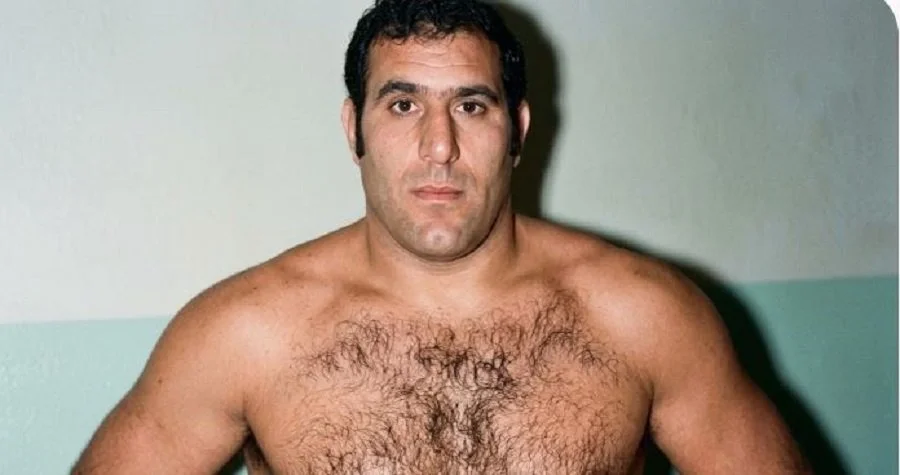
Dominic DeNucci enters year 15 on the ballot needing 50% of the votes just to survive. Last year he got 32.1%, which means things are looking bleak.
DeNucci was one of the top-10 draws in the world for 3 years. A Hall of Fame (HOF) level draw by Dave Meltzer’s definition. At his peak, only Bruno Sammartino eclipsed him. More importantly, he was the top babyface for World Championship Wrestling (WCW) in Australia, at a time when it was the most successful promotion in the world. In pro wrestling history nobody, outside of Mexico at certain points, was drawing the crowds these guys were. Wrestling has never been, before or since, as popular in Australia as it was during those years. An incredible success story for this business.
I looked at the list of Hall of Famers who have already been inducted to represent this success story. Jim Barnett & Johnny Doyle, the promoters, are in. Killer Kowalski & Mark Lewin, the bookers during the boom years, are in. Kowalski was also the top heel during this time, so we have that angle covered. Spiros Arion, the number 2 babyface, is in. Dominic DeNucci, the top babyface, is not. I began to feel uncomfortable.
I then looked at the full list of wrestlers who’ve been on the ballot but weren’t inducted. 222 of them. I couldn’t see anyone who could be classified as the top long-term babyface of the top promotion in the world. I became even more uncomfortable. Unsettled, you might say.
Here is the Observer Hall of Fame criteria as written on the ballot:
“The criteria for the Hall of Fame is a combination of drawing power, being a great in-ring performer or excelling in ones field in pro wrestling, as well as having historical significance in a positive manner. A candidate should either have something to offer in all three categories, or be someone so outstanding in one or two of those categories that they deserve inclusion…
Longevity should be a prime consideration rather than a hot two or three year run, unless someone is so significant as a trend-setter or a historical figure in the business, or valuable to the industry, that they need to be included. However, just longevity without being either a long-term main eventer, a top draw and/or a top caliber in-ring performer should be seen as relatively meaningless.”
DeNucci’s strengths will be his peak drawing power, and his positive historical significance. His weaknesses are perceived to be his “limited” longevity as a main eventer and his performing ability. Are his weaknesses strong enough for us to dismiss his strengths? I decided to write this and find out for myself. Maybe I’ll convince other voters to support him, or maybe I’ll convince myself that his omission is just fine.
Lets go with peak drawing power > “limited” longevity as a main eventer > performing ability > positive historical significance as the order of discussion, and see what happens.
Peak drawing power
Well, this is easy. Dominic DeNucci was one of the top-10 draws in the business, HOF-level as defined by Dave, from 1964-66. We’ll start from the beginning of his San Francisco run in 1963, for the sake of context.
Don DeNucci, as he was known in San Fran, was highly touted by Roy Shire from the beginning in April 1963. Using the “Italian backbreaker” and airplane spin as finishing moves, he was praised as a future great and went undefeated, beating a variety of talent (Pampero Firpo, Ciclon Negro, Luis Martinez, etc), usually under 10 minutes, for months.
Eventually, on an Oakland TV episode, he had his first major confrontation with the top star of the territory, Ray Stevens. According to Jim Scott of the Berkeley Gazette on February 28 1964:
“One of his early assignments was a TV station bout at Oakland’s KTVU. Stevens was to have gone on earlier but his opponent had neglected to appear. Impatient DeNucci now stepped into the ring for his match. Stevens bristled at the intrusion. “Get out of here, you foreigner,” yelled Ray. When DeNucci held his ground, Stevens swung on him. “Now beat it, bum”, he ordered.
Infuriated, DeNucci picked up Ray like a baby then threw him completely over the ring. Stevens lit flat on his stomach on the concrete floor. Unable to rise, he was carted out. Seldom before have wrestling aficionados seen such an awesome exhibition of raw strength. Immediately, they, as well as DeNucci, began to demand that he be given a chance at Stevens’ title.”
This led to the first Cow Palace main event between DeNucci & Stevens on September 14 in front of 8,365 fans. The match, 2/3 falls, went to a 1-1 no contest with both wrestlers disqualified for continuing to fight on the outside.
A rematch was booked on November 9. This time, as a result of the previous finish, it was a “wire match” designed to prevent the wrestlers from fighting on the outside. It was a bloody war that drew 13,648. Once again it ended in a 1-1 no-contest, this time due to both wrestlers losing too much blood.
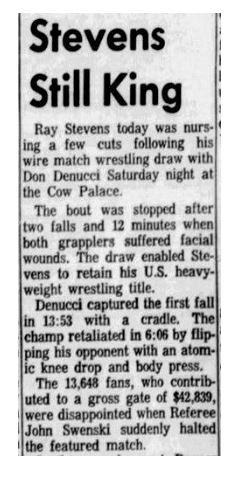
The story was that the “AWA” (Jim Barnet & Johnny Doyle’s promotion in the Mid-West, more on them later but they set Roy Shire up in San Fran) was reluctant to grant another match because of the dangerous level of animosity between the two wrestlers. Begrudgingly, they booked a Texas Death match, where the referee couldn’t take things into his own hands, for January 25 1964. In a Texas Death match, you have to pin your opponent and then ensure they cannot recover to beat the referee’s count in order to win.
They drew 13,506 fans. Amusingly, Roy Shire was slightly disappointed because he felt that had the weather been more accommodating (heavy rain) they would’ve sold the place out (14,906 capacity). DeNucci defeated Stevens this time to win the US title (San Fran’s version of the world title) after 40 mins. Stevens led 3 falls to 2 and hit DeNucci with the “bombs away” top rope knee drop during the intermission. This angered DeNucci, motivating him to recover and repeatedly bang Stevens’ head against the ringpost on the outside. Stevens couldn’t recover. New champion. A great “donnybrook” according to the press.
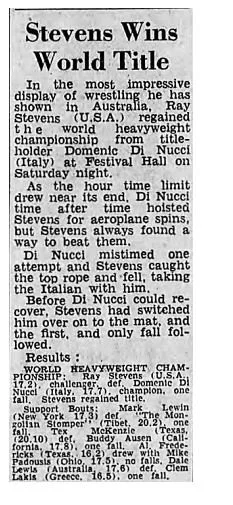
DeNucci had his final Cow Palace main event against Stevens on February 29, drawing 10,043. Stevens regained the title, pinning DeNucci clean in the third fall. This was DeNucci’s first loss in the territory, and Stevens would remain the only person to beat him at the Cow Palace all the way until he left the promotion in July.
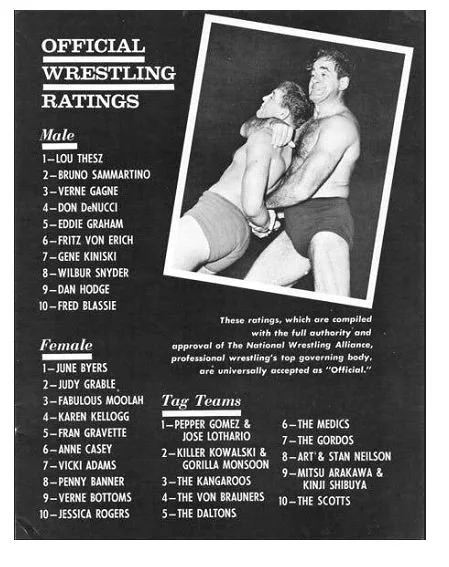
This strong 5-month run in San Fran made DeNucci a top star. He was ranked as the number 4 contender for the NWA title by the wrestling media. Taken from the Wrestling Revue magazine October 1964 issue (they were always months behind real time), here are the top 5: Lou Thesz, Bruno Sammartino, Verne Gagne, Don DeNucci, and Eddie Graham. All HOFers, except DeNucci.
This run solidified DeNucci as one of Stevens’ greatest ever opponents at the Cow Palace, based on 10,000+ attendance. This has historic value, because Stevens was the top star in San Fran’s history, and is one of the greatest wrestlers of all time. The top 5:
1) Pepper Gomez (73,048 fans drawn in 5 matches, 14,610 average), 2) Pat Patterson (70,268 in 6 matches, 11,712 average), 3) Wilbur Snyder (43,214 in 3 matches, 14,405 average), 4) Bill Miller (41,366 in 4 matches, 10,342 average), and 5) Don DeNucci (37,197 in 3 matches, 12,399 average).
In September DeNucci was set to start for Jim Barnett & Johnny Doyle in Australia. Before I continue with his drawing case I feel obliged to provide context. It will seem bizarre to a lot of readers that Australia had such a major promotion once upon a time, and that warrants an explanation. I also feel it is my duty to help do what history, most of the time, has not - remember the top promotion in the world from the mid-to-late 1960s.
Jim Barnett & Johnny Doyle ran the AWA (American Wrestling Alliance) promotion in the US from 1959 to early 1964. The promotion was the largest geographically in the country, spanning across the Mid-West - Cincinnati, Detroit, Denver, Indianapolis, etc. The promotion was pioneering when it came to studio wrestling and paying TV stations to air their shows rather than the other way round. You could argue it was the most successful promotion in the country from 1959-61, but business slowed down in 62, and again in 63, with the feeling that this was going to continue moving forward.
Jack Little was an announcer who worked with Johnny Doyle in the late 1940s-early 1950s when they were both in Los Angeles. He announced out of Hollywood Legion Stadium, while Doyle ran the show in LA (matchmaker & controlled talent via his booking office). This was the era of Gorgeous George, of the $100,000 Lou Thesz vs Baron Michele Leone stadium match, etc. Anyway, Little had moved to live in Australia during the early 50s. He had kept in touch with Doyle, and in January 1964 suggested to him that a move to Australia could be prosperous.
Australia had major wrestling shows, drawing 10,000+, dating back to the 1920s with different promoters but it was never consistent on a week-to-week basis. At the time, early 1960s, wrestling on TV was undeveloped so Barnett & Doyle had a chance to get in from the start, so to speak, and finally achieve what they couldn’t in the US - a nationwide promotion.
They started selling off pieces of the AWA to different people in early 1964. The Sheik bought Detroit and its surrounding area, having been the booker there since 1962. Denver went to Dory Funk Sr out of Amarillo before quickly moving to Verne Gagne and his AWA by June. Indianapolis was taken forcefully from Jim Barnett, with no money exchanging hands, by Dick the Bruiser & Wilbur Snyder in March.
World Championship Wrestling debuted on Australian TV on September 26, with its first house show on October 23 at Sydney Stadium. Headlined by the top drawing heel in the promotion’s history Killer Kowalski, and its top drawing babyface, Dominic DeNucci.
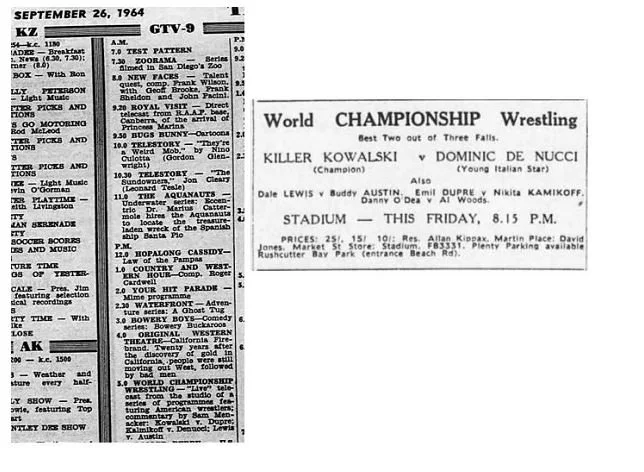
They were on the strongest station, Channel 9, at noon Saturdays & Sundays. They typically ran Sydney on Friday night, TV taping Saturday morning, Melbourne Saturday night, TV taping Sunday morning, Perth on Monday, Adelaide Tuesday, Brisbane Wednesday, TV taping for Brisbane Thursday, and back to Sydney Friday. In the early 1970s they had TV & ran shows in New Zealand, Hong Kong, Singapore, Malaysia, etc too.
The promotion was completely different for any other in that era. Decades ahead of its time. The pay for foreign wrestlers was the highest in the world. They flew first class from town-to-town, thanks to discounted travel from airline sponsors, and stayed in the nicest hotels across the country, costs covered by the promotion.
The foreign stars were usually rotated every 6 weeks with top guys staying for as long as they wanted or could draw. The undercard consisted of local wrestlers. The key was catering to Australians, Greeks and Italians with babyfaces to represent them. Sydney had more Italians than Greeks, and it was the opposite for Melbourne - these were the largest cities. For heels, they brought in the top available US stars because antagonizing is a universal language. It was Dick Lean, a local promoter who managed Stadiums Limited and controlled the major arenas including Sydney Stadium, who told Barnett & Doyle to build around a good-looking real Italian to cater to the huge Italian community in Sydney and Melbourne. With Bruno Sammartino unavailable, the best choice was DeNucci. Tall, good-looking, coming off a major run for Roy Shire, he clicked immediately with the Aussies. He drew with everyone, not just the Italian fans.
Barnett & Doyle paid most of the foreign crew a guarantee of $500-800 a week, which was what headliners in good territories were making in the US. Top stars made $1,000-2,000 per week. The original big stars who kicked off the promotion in its first year - DeNucci, Kowalski, and Ray Stevens - were likely the highest paid wrestlers of that era, legitimately earning 3,000 per week. Only the NWA and WWWF world champions, along with wrestlers who owned their promotions, could make more. Keep in mind that at the time very few athletes made six figures a year. Mickey Mantle, Willie Mays, Bill Russell, Wilt Chamberlain, and maybe the heavyweight boxing champion (Ali, Frazier). That’s it. It’s a strong indicator, in the face of limited attendance data, of how well WCW was doing at the box office. The promotion offered more money, more exposure and a better lifestyle than the dozens of other full-time territories existing at the time.
As Terry Funk said: “It was the center of the business. Japan couldn’t compare with it at the time. He (Barnett) was plucking all the best talent from the US and taking them to Australia.”
For DeNucci, we’ll be focusing only on the major arena main events here. On a weekly basis, that’s Sydney Stadium with a capacity of 12-12,500, and Melbourne Festival Hall with a capacity of 8,000. From October-March every year, that’s Perry Lake Stadium in Perth with a capacity of 30,000. I’ll mention others that appear more sporadically when appropriate.
Also, keep in mind that we don’t have a complete dataset. The real number of main events is certainly higher, and a degree of cautious presumption is required when assuming what the attendance figures could be. You’ll find plenty of context clues here. Although the paychecks of the wrestlers should be enough of a hint.
From October 23, the inaugural show in Sydney, to December 18, he headlines:
- Sydney Stadium 6 times (2 singles for the IWA - International Wrestling Alliance - World title against Killer Kowalski, 3 tags, and a 6-man)
- Melbourne Festival Hall 5 times (3 singles against Kowalski for the IWA title, 2 tags)
- Perry Lake Stadium once.
For the shows with attendance figures, we have:
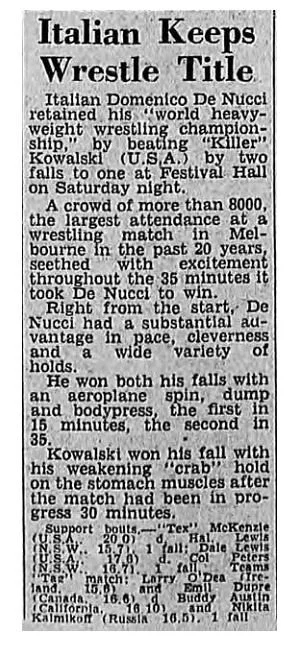
November 7 in Melbourne: DeNucci defeated Kowalski in a no disqualification rematch to retain the IWA title. An 8,000+ sellout, the highest attendance in 20 years for the city.
December 11 in Sydney: DeNucci & Tex McKenzie defeated Kowalski & Buddy Austin. 12,500 sellout.
December 14 at Perry Lakes Stadium in Perth: DeNucci defeated Austin in 2/3 falls via dq to retain the title. 10,000 fans. The West Australian (Perth) newspaper on 15 December 1964: “During the (main event) bout the crowd of about 10,000 pelted (Austin in) the ring with pennies, sweets and pieces of wood.”
Thanks to the DeNucci vs Kowalski feud the promotion was off to a strong start. In order to compensate slightly for the limited attendance data, we’ll be tracking longevity-on-top. In other words, who is headlining most of the major shows.
The scoring system is simple: 1 point for singles main events, 0.5 point for tags, 0.3 for 6-man tags, 0.25 for 8-man tags. Here is the state of play for October 23- December 18 1964:
1) Kowalski 11.3, 2) DeNucci 8.3, 3) Buddy Austin 4.3, 4) Dale Lewis & Tex McKenzie 3.8
Overall for 1964, DeNucci had 4 10,000+ shows (3 singles, 1 tag) with cautious presumption that his Sydney main events mean the total is likely to be higher. How does this stack up compared to others in the same year?
Here is the August 5 2009 Observer list of top draws in 1964:
1. Bruno Sammartino; 2. Fritz Von Erich; 3. Lou Thesz; 4. Dick the Bruiser; 5. Freddie Blassie and Gene Kiniski; 7. Ray Stevens, Johnny Valentine, Giant Baba, Waldo Von Erich and Gorilla Monsoon
Updating the attendance records for all of these wrestlers, because of course we have more data today vs 16 years ago, and using the same cautious presumption for shows with the potential to draw 10,000+ (based on arena capacity, how the promotion was doing overall at the time, the strength of the main event, the strength of the card overall, etc), we end up with DeNucci slotting in just behind Ray Stevens, ~8th.
To keep the momentum going in 1965, in January they brought Stevens in to reprise his San Fran program with DeNucci. They were both offered more than double what they were earning as headliners in the hot San Fran territory. Kowalski, I think, was the booker at this time.
From January 8 - September 3, DeNucci headlines:
- Sydney Stadium 16 times (9 singles, 7 tags)
- Melbourne Festival Hall 18 times (13 singles, 4 tags, 1 6-man)
- Perry Lake Stadium 5 times (3 singles, 2 tags)
- Wollongong Showground (10,000+ capacity) twice (1 single, 1 tag)
The limited attendance figures for this year along with other interesting evidence:
January 11 Perry Lakes Stadium: DeNucci defeated Kowalski in front of 10,000 fans. The West Australian (Perth) newspaper on 12 January, page 23:
“Some 10,000 people” attended the main event match in which Dominic DeNucci defeated Killer Kowalski by two falls to one. ”The stadium gate was the biggest (for any event) since the (Commonwealth) Games (in 1962).”
January 15 Sydney Stadium: DeNucci defeated Stevens via disqualification, which meant Stevens kept the title. 10,000+ fans.
January 25 Perry Lakes Stadium: DeNucci defeated Stevens via dq in front of 10,000 fans. The West Australian (Perth) newspaper dated 26 January 1965:
“Italian wrestling star Dominic DeNucci was mobbed by hundreds of cheering supporters after American Ray Stevens had been disqualified in their main bout at Perry Lakes Stadium last night. Tension which had built up among supporters in the crowd of 10,000 during the bout reached a climax when referee Cliff Strickland disqualified Stevens for refusing to release a stranglehold on DeNucci.”
February 8 Perry Lakes Stadium: DeNucci defeated Stevens in a no-dq match in front of 8,000. The West Australian (Perth) newspaper dated 9 February:
“Italian champion Dominic DeNucci took only three minutes to obtain the decisive fall against American Ray Stevens in the main professional wrestling bout at Perry Lakes Stadium (in Perth) last night (Monday 8 February 1965). The end surprised the crowd of about 8,000 who earlier had seen Stevens even the match at one fall all.”
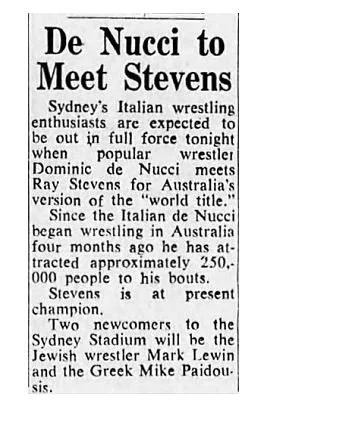
DeNucci would defeat Stevens again on February 19 in Sydney. From the Sydney Morning Herald on that day:
“Since the Italian DeNucci began wrestling in Australia four months ago he has attracted approximately 250,000 people to his bouts.”
That number refers only to Sydney, and is certainly exaggerated, but it suggests a close to 12-12,500 sellout every Friday night.
March 22 Perry Lakes Stadium: DeNucci & Mark Lewin defeated Stevens & Kowalski. 9,000 fans. The West Australian (Perth) newspaper dated 23 March:
“An overjoyed DeNucci carried a battle-weary Mark Lewin from the ring after they had beaten “Killer” Kowalski and his partner Ray Stevens in a tag team wrestling bout in Perry Lakes Stadium last night. A crowd of about 9,000 screamed approval after DeNucci and Lewin gained the winning fall after 55 minutes of hectic and entertaining wrestling.”
Johnny Doyle wrote to St. Louis promoter Sam Muchnick, on March 27 about Denucci:
“In the next month we should let Kowalski and DeNucci take some time off. They have been here six months now and we agreed that would be the longest we would keep any one. Both are red hot here and we want them back but they should stay out six months. DeNucci is real good. He topped everything we had and you may remember he drew a number of gates around 40,000.00 for Shire.”
On August 27 in Sydney, DeNucci & Red Bastien defeated Bruiser Bob Baker (Bobby Graham) & Roy Heffernan, with Arion vs Kowalski for the IWA title in the semi-main. This is what I would call a “signal”. It’s not an isolated incident, as we’ll see later.
DeNucci vs Stevens main evented Melbourne 7 times, Sydney 3 times, Perry Lake twice, and Wollongong once. Barnett always said it was the most successful feud in the promotion’s short history (1964-74 under his reign), and the data supports that.
The top 5 headliners for the entire year in Australia: 1) DeNucci 32.05, 2) Stevens 27, 3) Kowalski 20.6, 4) Lewin 14.8, 5) Arion 14.65
In the first full year running weekly at Sydney Stadium, the total attendance in just that arena was 450,000, a number it’s doubtful any promotion anywhere has ever hit in one arena except in Mexico City. Very quickly, due to this success, Australia became the place to be. Wrestlers were part of the culture and were treated like major league sports stars.
DeNucci was the top star for the top promotion in the world during a boom period. No other promotion was posting the weekly numbers WCW was, and DeNucci headlined far more of those shows than anyone else.
He returned to San Fran at the end of September, headlining the Cow Palace twice:
December 4: DeNucci vs Shibuya for the US title ended as a 1-1 no contest due to both men bleeding from head injuries. Patterson & Stevens vs Pepper Gomez & Luis Martinez co-main. 7,229 fans.
December 26: Shibuya defeated DeNucci via countout to retain his title in this rematch. This show also featured the return of women’s wrestling, Bette Boucher defeating Judy Grable, after a state ban dating back to 1944 was overturned by the Superior court. 9,235 fans, strongest December turnout since 1962.
1965 was his best drawing year. His true peak. Using the same methodology as before, how does he compare to the top draws from the August 5 Observer issue?
1. Bruno Sammartino; 2. Cowboy Bill Watts; 3. Fritz Von Erich, Dick the Bruiser, Bill Miller; 6. Lou Thesz, Johnny Valentine, Kinji Shibuya, Toyonobori, Rene Guajardo, Karloff Lagarde, Ray Mendoza
The answer: 2nd.
Bruno is the strongest draw for the year by a distance, DeNucci has a slight edge on Bill Watts for 2nd, and then it’s everybody else. You could argue his 8th place in 1964 is vulnerable, you cannot argue anything about his 1965.
He returned to Australia in January 1966. Arion, who was the IWA world champion, jumped to George Gardiner’s rival promotion at this time. He was unhappy that even though he was the champion, Mark Lewin, the booker, didn’t headline enough with him and instead pushed himself, DeNucci and Kowalski. I won’t speculate as to why Lewin did this, beyond the obvious business reasons. Arion would return to the promotion later.
Barnett relied on DeNucci vs Kowalski to save the day, announcing on TV that Kowalski had beaten Arion in Honolulu (fictitious) and was the new champion. They faced each other in a series of tag & 6-man main events in Sydney and Melbourne, leading to a title switch on February 12 TV for DeNucci’s third IWA title reign.
From February 4 to July 15, he headlines:
- Sydney Stadium 16 times (5 singles, 9 tags, 2 6-mans)
- Melbourne Festival Hall 13 times (4 singles, 5 tags, 4 6-mans)
On March 19 in Melbourne, DeNucci defeated Kowalski to retain the title in a match that was built as the final title match between the two. A legendary feud that laid the groundwork for the success of WCW. Kowalski would turn babyface soon after.
DeNucci’s run as the top babyface came to a brief end when Bruno Sammartino arrived in April. Barnett said Bruno, the WWWF champion, was the best short-term draw he ever had, responsible for the best month of business they ever had in April. He was the most expensive talent he ever used, paying him $15,000 for 3 weeks, more than what he was making as WWWF champion, and Vince McMahon Sr a booking fee. He felt DeNucci was the biggest draw in WCW history as far as a regular. Both guys were already friends dating back to the early 60s, and would be lifelong friends. Bruno’s April run was so successful that Barnett brought him back again in September.
April 22 Sydney: Bruno & DeNucci defeated Kowalski & Art Nelson
April 23 Melbourne: DeNucci defeated Waldo Von Erich to retain the title (Bruno vs Kowalski semi-main)
April 29 Sydney: Bruno & DeNucci defeated Kowalski, Waldo & Nelson (special referee Roy Heffernan)
April 30 Melbourne: Bruno & DeNucci defeated Waldo & Nelson
June 11 in Melbourne: DeNucci, Lewin & Kowalski defeated Mitsu Arakawa, Professor Tanaka & Bruiser Bob Baker in the first (for Australia) 4/7 falls match
The IWA tag team titles were created in June. Harley Race & Larry Hennig, fresh off a long run as AWA tag champions, came to Australia billed as the IWA tag team champions. They were brought in as the first IWA champions with the idea they were current champions in the US (they weren’t, losing the AWA titles on May 28 to Crusher & Dick the Bruiser). They were immediately put in a three-way program with the top heel team, Tanaka & Arakawa, and the top babyface team of DeNucci & Lewin.
June 18 Melbourne: Larry Hennig & Race defeated DeNucci & Lewin to “retain” the tag titles
On June 24 in Sydney, Kowalski & Lewin defeated Hennig & Race via disqualification with DeNucci as the special referee. Hennig & Race retained the titles.
This led to a no disqualification match the following week, July 1, when DeNucci & Lewin defeated Hennig & Race to win the titles. This made DeNucci the first wrestler to win the promotion’s world & tag titles in Australia.
July 15 Sydney: Brute Bernard & Skull Murphy defeated DeNucci & Lewin to win the titles. This was DeNucci’s final match of the tour. Bernard & Murphy would go on to become the most successful tag team in WCW history, holding the belts 7 times.
In October the press reported that the promotion’s business had been booming since its inception. Over one million customers in two years in Sydney, which translates to a rough 10,870 average per week and covers all of DeNucci’s run as the top babyface. You can see why he was labelled the “Bruno Sammartino of Australia”. The Daily Telegraph, Daily Mirror, and Sun (Sydney) between 24-27 October:
“A watch and two free season passes will be presented to a lucky patron at the Sydney Stadium wrestling on Friday night (28 October 1966). The gifts are for the attendance of over one million patrons to wrestling at Sydney Stadium since American Jim Barnett started promoting two years ago.”
In the December 12 issue of the Sydney Morning Herald, a 9,000 average every Friday night for Sydney is suggested. 10,870 or 9,000, either way it’s unmatched anywhere else in the world.
This is the final strong evidence of “boom period” attendance data in Australia, but based on the feedback from Australian historians, business remained strong until at least 1968. We’ll talk about this more later.
Longevity-on-top rankings for all of 1966 in Australia:
1) Kowalski 17.6, 2) DeNucci 17.55 (DeNucci is ahead of Kowalski if you focus just on Sydney - 10.35 vs 9.4), 3) Skull Murphy 15.15, 4) Mark Lewin 11.45, 5) Arion 10
DeNucci returned to San Fran briefly in August before moving over to work for Rod Fenton in Vancouver. This was during a promotional war, and Fenton was promising guys paydays that he wouldn’t be able to deliver as time went on.
The top 1966 draws listed in the Observer:
1. Lou Thesz; 2. Gene Kiniski; 3. Bruno Sammartino; 4. Fritz Von Erich; 5. Dick the Bruiser; 6. Giant Baba and Johnny Valentine; 8. Ernie Ladd, Dory Funk Jr., The Crusher
DeNucci would place 5th, behind Bruno, Kiniski, Thesz & Mark Lewin (in order). Lewin’s not on the original list, but should be if the LA attendance figures are credible).
To summarize, DeNucci has 3 years as a HOF-level draw. For me, that’s enough to classify him as a HOF-level draw overall but others might be concerned about how limited his longevity as a headliner is. Let’s dive into that next.
“Limited” longevity as a main eventer
First, it’s important to define how methodical we want to be here. For example, does the above 1964-66 period count as 3 years to you? Or 5 months + 10 months + 6 months = 21 months?
For me personally, so long as a wrestler is active all year it’s hard to suggest a top-10 draw doesn’t have 1 year of longevity-on-top if he doesn’t wrestle in major main events every month. That seems silly, but I’ll try to cater to both types of voters - the methodical & practical.
Continuing our cautious approach by focusing on realistic 5,000+ attendance possibilities, alongside the 1964-66 data above, we have:
November - December 1958
Having made his wrestling debut in October, Dominic, as The Masked Marvel (heel), headlined the famous Montreal Forum 3 times in a row in tag matches.
November 24: The Masked Marvel (DeNucci), “Masked Manager” & Killer Kowalski defeated Edouard Carpentier, Pat O’Connor & Larry Moquin. 7,000 fans.
December 1: Carpentier, O’Connor & Paul Baillargeon defeated The Masked Marvel, Masked Manager & Kowalski with Joe Louis as the special referee. After the match, Joe Louis knocked out the Masked Marvels, to the delight of 7,500 fans.
December 8: Masked Marvel & Manager went to a time limit draw with Carpentier & O’Connor with Joe Louis once again the special referee.
He lost his mask on the January 21 1959 Forum undercard to Bernard Vignal. He then left the territory and, as Dominic Bravo, went to gain experience working for other promotions.
February 1961
On February 1 1961, he returned to the Montreal Forum main event scene as Dominic DeNucci. Teaming with Carpentier, they lost to Ivan Kalmikoff & Al Costello in front of 8,000.
March 1962
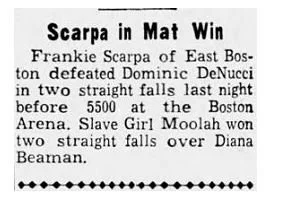
As a non-masked wrestler, Boston promoter Tony Santos was the first to push him from November 1961 - March 1962. Known as Dominic “Bravo” DeNucci, he was the East Coast Heavyweight champion and headlined the Boston Arena a few times. This included a couple of main events against local star Frank Scarpa in front of 5,500 fans on March 15 & 22. The first match ended as a 60-minute draw with Scarpa winning the rematch in 2/3 falls. These were very good crowds for Tony Santos, a non-NWA local promoter.
January 1967
DeNucci was an important second tier guy during the promotional war in Vancouver from late 1966-January 1967. The top guys were soon-to-be NWA champion Gene Kiniski and Don Leo Jonathan, with John Tolos, DeNucci, Don Jardine, and Dutch Savage as the second tier.
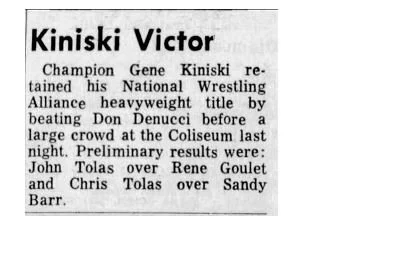
Attendance was strong, but capacity was an issue for the shows DeNucci headlines. The only main event I feel safe including as part of this analysis is from January 11 1967, when he challenged Gene Kiniski for the NWA title at the ~5,400 capacity Spokane Coliseum and drew a “large crowd” (Spokane Chronicle, January 12).
February - March 1968
DeNucci went to work for Vince McMahon Sr in the WWWF in October 1967. The promotion wasn’t doing great at this time due to the volatile TV situation they faced. They had two shows, one airing out of Washington, the other Bridgeport. The Washington show was cancelled in 1964, the Bridgeport show in 1966. This led to them having no TV at all for roughly 6 months, which made running Madison Square Garden financially unwise. The Washington show did return at the end of 1966, but was then moved into a death slot (12.30am Sundays) in 1967 before being cancelled for a second time. This, once again, meant no TV for three months. To illustrate the impact on business, Sammartino vs Hans Mortier only drew 6,662 on October 23 at MSG. Baltimore Civic Center shows, once drawing over 10,000 regularly, were now averaging 5,000. Willie Gilzenberg would eventually secure a new deal and, with the addition of Philadelphia TV in 1969, the WWWF would be back running at full power.
For DeNucci, in this territory if he was only headlining when he tagged with Bruno. It is interesting to note that he tagged with Bruno more than anybody else in the latter’s career.
On December 27 he headlined the first ever 3/5 falls 8-man tag with Bruno at the Baltimore Civic Center (capacity ~13,000 but no TV means ~5,000 average), the first ever 8-man in Hershey history at the Sports Arena (~8,000 capacity) on January 8 1968, and another 8-man main on February 5 at Washington Coliseum, (~8,000 capacity). I won’t be including any of these in this analysis.
I will include the Valentine’s day tag at the Baltimore Civic Center, when Hans Mortier pinned Bruno to set himself up for a title shot and two other main event tags with Bruno at the Philadelphia Arena (~7,000 capacity) on February 17 & March 9.
April-May 1968
DeNucci flew out for his first Japan tour with the JWA. He main events only in tags. Some select examples from arenas with reported 5,000+ capacity include: April 8 at Tochigi Gym, April 14 at Welfare Pension Hall in Kushiro, April 18 at City Gym in Akita, April 25 at Sunpu Park Volleyball Court, May 7 at City Gym in Kumamoto, where Kim Il (Kintaro Oki) & Michiaki Yoshimura defeated DeNucci & Ortega to retain the All Asia tag titles, and May 13 at the Prefectural Gym in Hiroshima.
June-August 1968 Australia
He returned to Australia for the May 24 Sydney show. This was the only time the top 3 babyfaces in WCW’s history - DeNucci, Arion & Mario Milano - were all here at the same time. Milano became a top Italian babyface in DeNucci’s absence in 1967 thanks to a feud with Killer Kowalski. Jim Barnett was exclusively in charge now, since Johnny Doyle left in 1967 before passing away in the US in 1969.
From June 7 - August 10, DeNucci headlined:
- At Sydney Stadium 7 times (2 singles, 5 tags)
- At Melbourne Festival Hall 3 times (1 single, 1 tag, 1 6-man)
DeNucci & Milano vs Scicluna & Ciclone Negro headlined 4 shows (3 Sydney, 1 Melbourne) so, that was probably a pretty hot feud. It’s interesting to note the continued pattern of DeNucci headlining ahead of the IWA world title matches:
June 7 Sydney: DeNucci & Antonio Pugliese defeated Kowalski & Skull Murphy to win the tag titles. Ahead of Arion vs Bill Miller for the IWA title.
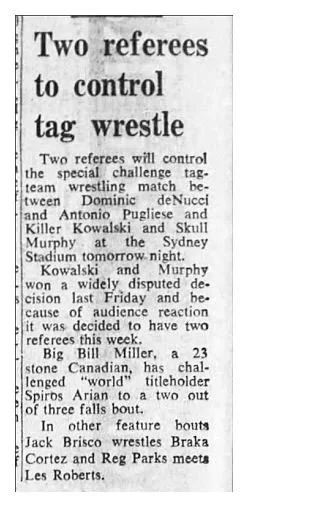
June 28 Sydney: Kowalski defeated DeNucci via count out. Arion defeated Scicluna via dq to retain the title in semi-main.
June 29 Melbourne: Scicluna defeated DeNucci. Arion defeated Kowalski in semi-main.
July 12 Sydney: With Arion vs Kowalski in the semi-main again, DeNucci & Mario Milano defeated Scicluna & Cyclone Negro via dq after Negro attacked the referee to prevent the Italians from winning the tag titles. This led to Scicluna & Negro defeating DeNucci & Milano to retain the titles in a no-dq match the following week, and the finale on July 26 in Sydney, with Scicluna & Negro winning once again in in a no-dq Texas Death match.
Despite only being here for 3 months, DeNucci was still a top-10 headliner for the year in Australia:
1) Milano 19.85, 2) Arion 16.35, 3) Killer Karl Kox 12.8, 4) Gorilla Monsoon 9.6, 5) TexMcKenzie 8, 6) Tanaka 7.75, 7) Scicluna 7.3, 8) Skull Murphy 7, 9) Kowalski & DeNucci 6.3
August-October 1969
In July DeNucci returned to Montreal for the first time since 1961. Working for Johnny Rougeau‘s All-Star Wrestling from August 9 - November 8, he headlined the Palais des Sports (~6,000 capacity) 10 times (1 single, 7 tags with Gino Brito, and 1 6-man), and the Paul Sauve Arena (~7,000 capacity) twice (both 6-man tags).
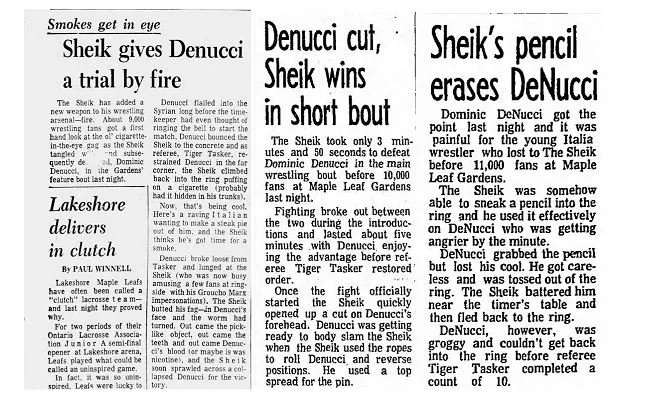
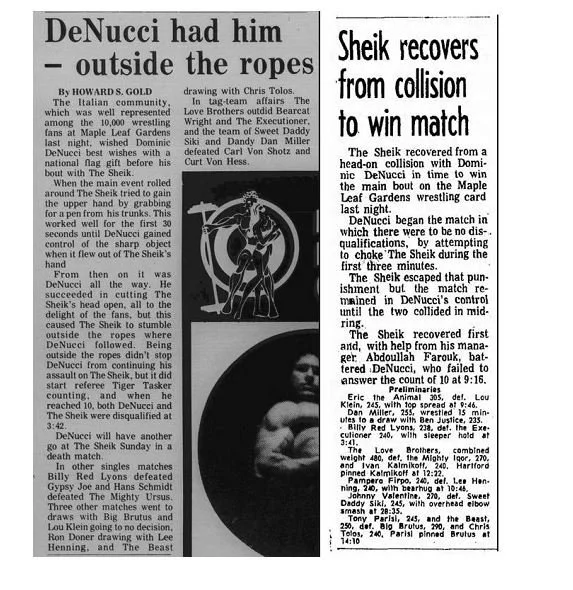
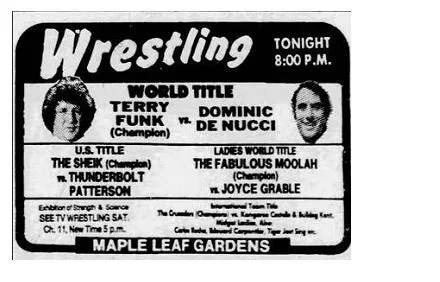
More importantly as far as we’re concerned, he headlined Toronto Maple Leaf Gardens twice with The Sheik. Once on August 10 in front of 9-10,000, and again on October 5 in front of 11,000.
January-March 1970 Australia
DeNucci returned to Australia for the final time from January - April 1970, and once again he was the top babyface going against King Curtis Iaukea for the IWA title.
Based on more restricted data, from January 12 to March 23 he headlined: 1 single at Sydney Stadium, 2 singles at Melbourne Festival Hall, 5 times at Perry Lake Stadium (3 singles, 2 tags) and once at the Manuka Oval in Canberra (~15,000 capacity). Restricted data is also the reason an overall longevity-on-top analysis isn’t viable for this year.
1970 was tough for the WCW promotion because Sydney Stadium was demolished in the middle of the year. I’ll talk more about this in the historical significance section, but suffice to say the first quarter of this year is the last time we could classify it as the top promotion in the world.
1971 (or 7 months for the methodical - February, April-July, November-December )
By the end of October 1970 DeNucci was working for The Sheik in Detroit & Toronto (Sheik was headlining & booking for Frank Tunney), the Rougeaus in Montreal, Bruno in Pittsburgh, and Pedro Martinez’s NWF in the Buffalo & Cleveland circuit. This is where I need to take a short detour in order to explain the territorial state of play.
At the time, Pedro Martinez, who ran the NWF with partner Johnny Powers, had a working relationship with these other promotions, which meant talent sharing was common. This is how DeNucci worked across all of these territories simultaneously. Martinez actually bought into the Pittsburgh and Montreal (via non-wrestling partner Jerry Jacobs) territories briefly, but that’s a story for another day.
The NWF title, born in 1970, was recognized as a major belt by some. This promotion was known as a “hot shot” territory, which means it had many aggressive ups & downs. The booker on the Cleveland side was Johnny Powers, and he had revitalized business in 1969 after it had entered a downturn around 1966. On the Buffalo side they relied on The Sheik headlining, but he had less success. His style got old here much quicker than it did in Detroit & Toronto. Business only started to recover when he was out of the way by early 1971.
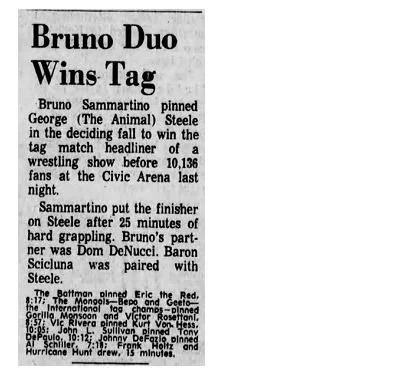
Back to DeNucci. In 1971 Pittsburgh he was positioned as the number 2 babyface to Bruno. They had a major headline program at the Civic Arena against The Mongols, where they traded the WWWF International tag team titles back-and-forth.
At the Pittsburgh Civic Arena (~15,000 capacity), DeNucci & Bruno headlined five times, including in front of 8,302 vs Scicluna & George Steele on April 16, 10,136 in a rematch on May 7, and 10,000+ against the Mongols but I’m unclear on whether it was June 18 or July 16 (they headlined on both dates).
In Buffalo, with the Sheik no longer headlining, he was positioned as an important second tier guy, the number 2 babyface at certain times, and roughly 4th overall (behind Waldo Von Erich, Johnny Powers and Ernie Ladd). He briefly held the NWF world title from Dec 71-Jan 72.
He headlined the Buffalo Memorial Auditorium (~14,000 capacity) five times, all singles matches. This included a pair of North American title matches against Waldo Von Erich and a trilogy against Ernie Ladd, the first of which on February 17 drew 7,583 fans - the highest recorded attendance figure for the arena in 8 years. They headlined a couple of times at the Troy Armory (~5,000 capacity) too. In Cleveland, DeNucci drew 10,029 on December 30 when he lost the NWF in a bloody, violent, barbed wire match to Waldo Von Erich.
Similar to what we saw before with WCW in Australia, this was a period where business in Buffalo & Cleveland was on the rise. The promotion was doing well, and DeNucci was a key part of it.
In November, DeNucci went on a 1 week JWA tour. He headlined twice. Once on November 24 at Welfare Hall in Himeji (~7,000 capacity) where Kintaro Oki successfully defended his All Asia title against him, and November 27 at Municipal Hall in Kawasaki (~6,500 capacity) where Baba & Inoki defeated DeNucci & Sammartino.
January, May, September-November 1972
In 1972 DeNucci continued to headline in Buffalo & Cleveland fairly frequently but we have to be cautious with the Buffalo data, minus attendance figures, once we get to May. I say that because Johnny Valentine became the booker around that time, and we’re told by Ron Martinez (son of promoter Pedro) that business went down with him at the helm. Buffalo was always a hot shot territory, and Valentine’s more conservative style didn’t work well here.
Pre-Valentine, the only DeNucci main event I’ll safely include as part of this analysis is when he headlined the Buffalo Memorial Auditorium against Waldo Von Erich on January 5.
DeNucci continues to headline with Bruno in Pittsburgh this year too. They defeated Angelo Mosca & Luke Graham in front of 6,830 fans on May 5, lost via dq to Don & Johnny Fargo (Greg Valentine) on September 29, and then won the rematch on November 10 in front of 7,200.
DeNucci also toured AJPW for 2 weeks, headlining a major arena only once on October 27 at Wakayama Prefectural Gym where he & Bruno lost to Baba & Thunder Sugiyama in front of 6,100 fans.
March, November-December 1973
In 1973 he returned to Montreal this time working for Rougeau rivals Grand Prix Wrestling (the Vachons promotion), and headlined the Verdun Auditorium (~8,000 capacity) in a 6-man tag on January 23.
In Pittsburgh, he & Bruno lost to Kowalski & George Steele on March 23 in front of 5,306.
From July-November he mostly worked in Toronto. This included two Maple Leaf Garden main events against The Sheik. A double count out in front of 10,000 fans on November 25, and a death match rematch on December 2 that Sheik won (obviously).
May-June 1974
With Pedro Martinez’s exit, Bruno took over and started running Buffalo, Rochester and other towns in March 1974. This gave DeNucci more opportunities to headline, and allowed him to have a short run with the North American title. I won’t count the Buffalo main events towards the total because I’m unsure how well Bruno’s promotion drew there.
DeNucci defended the NA title at the Buffalo Memorial Auditorium on May 8 & June 1 against George Steele. He also defended the title in the main event of the May 31 Pittsburgh Civic Arena show, drawing 7,000.
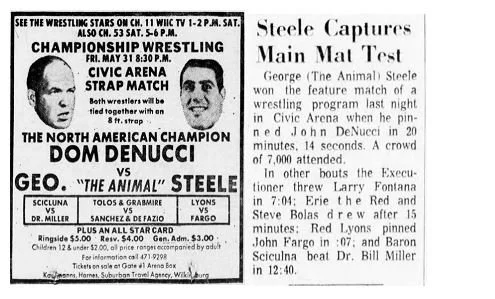
He headlined in Pittsburgh once again on June 28, teaming with Bruno to defeat Steele & Scicluna in a cage match in front of 8,200.
From July he started working across Canada. His most important match was a semi-main at the Maple Leaf Gardens on August 18 - challenging Jack Brisco for the NWA title (Sheik vs Andre headlined).
October, December 1975
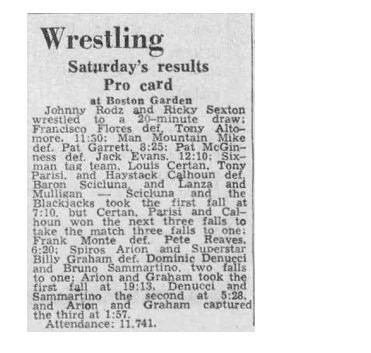
On October 25 at the Boston Garden, Arion & Billy Graham defeated DeNucci & Bruno two falls to one in front of 11,741 fans. The same result in the main event of the Pittsburgh Civic Arena on December 12.
January, February, July, November 1976
He headlines the Buffalo Memorial Auditorium again on January 22 with Ernie Ladd, but this time for the WWWF. On February 12 at the Providence Civic Center (~13,000 capacity) he, Bruno & Ivan Putski defeated Ladd, Graham & Ivan Koloff. On July 9 at the Pittsburgh Civic Arena, Koloff & Stan Hansen defeated him & Bruno.
On November 19 at the Maple Leaf Gardens: Terry Funk defeated DeNucci to retain the NWA title at the 45th wrestling at Maple Leaf Gardens anniversary show.
December 1977 and other stuff
Outside of the December 1977 Indianapolis tag, I won’t be counting these other matches towards his total because overall he was pretty much “just a guy” by 1978.
October 16 Maple Leaf Gardens: Nick Bockwinkel defeated DeNucci to retain the AWA title in the semi-main. The main event was Stan Stasiak vs Waldo Von Erich (Subbing for Billy Graham) for the WWWF title.
On December 10 at the Indiana Convention-Expo center (~12,000 capacity) DeNucci, & Dick the Bruiser defeated the Valiants in a “Cowards wave the flag” match.
In 1978 he headlines the Wheeling Civic Center in West Virginia (~7,500 capacity) on Jan 22 & Feb 26 against Billy Graham (pre & post WWWF title loss). It’s midcard stuff, but he also became a dual tag champion around this time, holding the WWWF titles with Dino Bravo and the WWA (Indianapolis) titles with Wilbur Snyder.
February 4 Indiana Convention-Expo center: The Valiants defeated Bruno & DeNucci to retain the tag titles (Bruiser vs Ladd in the main event).
May 18 War Memorial Coliseum, Fort Wayne Indiana (~9,500+ capacity): Crusher Verdu, Jimmy Valiant & Ivan Koloff defeated DeNucci, Snyder & Bruiser
The final match of his career was on April 24 1984 for his friend Gino Brito at the Montreal Forum. He challenged AWA champion Nick Bockwinkel in the main event.
January 1988 as a promoter
Outside the ring, DeNucci also successfully promoted Antonio Inoki’s New Japan tour of Italy in 1988. They were major TV stars there and drew very well:
Jan 23 in Milan drew 12,125 for Inoki vs Bad News Allen
Jan 24 in Roma drew 13,854 for Inoki vs Bad News Allen
So, what is the total score?
65 months if you’re being methodical. More if you’re being practical (treating 1964-66 & 71 as full years headlining, for example). Either way, over 5 years.
You can only get a lower total if you completely dismiss all the tags. That isn’t rational because in Pittsburgh for example, where the tags with Bruno do the heavy lifting, he was booked as the legitimate number 2 babyface.
5 years as a main eventer is not short enough for us to dismiss his 3 peak HOF-level years. This isn’t Danno O’Mahony, Batista, Goldberg, Ultimate Warrior, and other major stars who had severe longevity-on-top issues.
This is why I had to say “limited” in the title of this section. The data doesn’t support that description. It is clearly not just a “hot two-three year run” as discouraged on the Observer ballot. To dismiss this as too short would be to raise the standard expected.
Performing ability
The subjective category. It is not my place to tell others how good or bad any wrestler is. Ideally, you watch the footage, preferably in real time, and judge for yourself.
In this case, dealing with a historical figure, the footage can only help us so much because it’s mostly from the end of DeNucci’s career. With the exception of a short comeback in 1984, he was done full-time by 1982. Therefore, I’ll discuss what the anecdotal evidence says about what we cannot see, before offering my opinion on what we can.
The first reports about his ability came from Toronto in 1960. Less than 2 years into his career DeNucci, working as Dominic Bravo, teamed regularly with the original Dino Bravo. Hence, the Bravos. DeNucci himself always said this was the best tag team he was part of, and the newspaper reports do seem to support that during their run in Toronto from March - December.
The Globe and Mail is full of praise for the Bravos tag matches against Dan & Ed Miller on April 1, and again on May 6 against Ivan & Karol Kalmikoff. More praise follows in the July 12 Niagara Falls review for the Bravos vs Don Leo Jonathan & Fritz Von Erich. Dominic is described as a speedy heavyweight. He was a good looking, big guy - 6’2 235-240 - but he clearly wasn’t just a lumbering brawler.
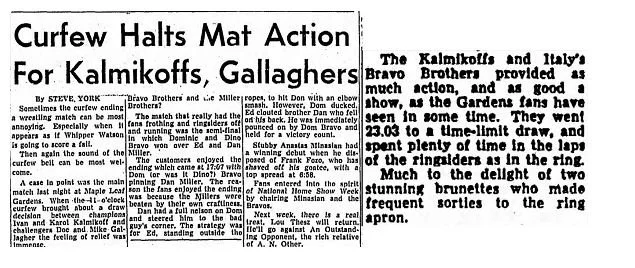
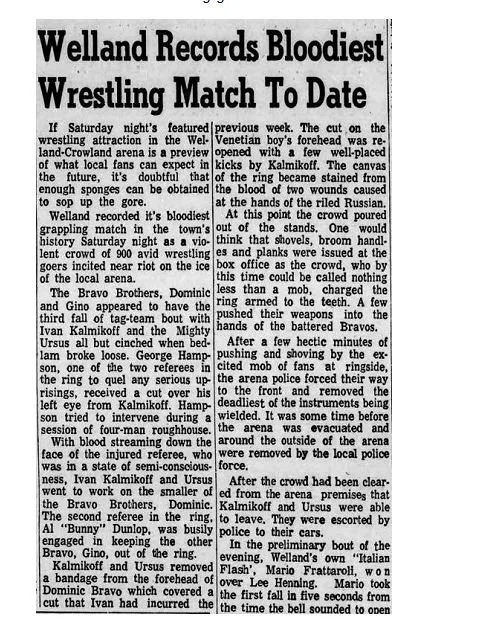
That didn’t mean he couldn’t brawl & bleed when he needed to. As was the case in a feud against Ivan Kalmikoff & the Mighty Ursus, which included a match described by the Welland Evening Tribune on September 19:
“Welland recorded its bloodiest grappling match in the town’s Saturday night as a violent crowd of 900 avid wrestling goers incited near riot on the ice of the local arena.”
The Hamilton Spectator, on June 29, describes an excellent singles match between NWA champion Pat O’Connor and Dominic (subbing for Ilio DiPaolo). This will be a pattern moving forward - put Dominic with a great worker and you’ll get a great match.
Crowd pleasing singles matches in Michigan are described by the Lansing State Journal on April 18 1962 against La Bestia, and by the Battle Creek Enquirer on April 29 against Ricki Cortez. An “exciting” tag match between the Bravos and Tolos brothers (Chris & John) according to the Ottawa Citizen on July 25.
He starts working in Stampede towards the end of 1962, and the press consistently describe him as a “speedster” who’s willing to bleed. This fits what we know about his work in Toronto 1960, and explains his “Dynamite” nickname years later.
DeNucci’s series of matches against Ray Stevens in San Fran from September 1963 - July 1964, based on the press reports, sound consistently awesome. Up against one of the best wrestlers in the world at the time, DeNucci was having great matches across the territory. Some violent brawls, others technical clinics. They seem to have different finishes for different towns too, with no match exactly the same. I have more press clippings that I’m happy to share with anyone interested. It’s great stuff.
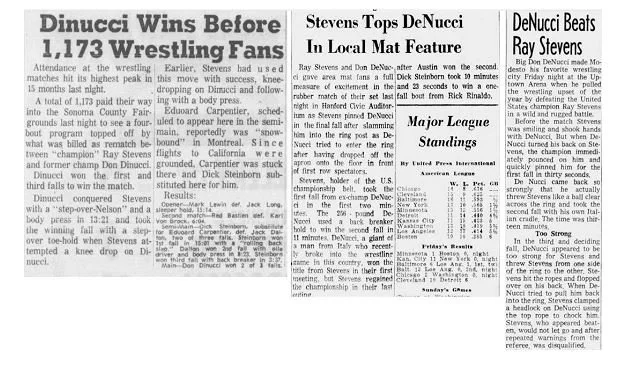
Roy Shire had a well earned reputation as a “work rate” promoter. He generally wanted the top guys to be good wrestlers bell-to-bell. He greatly valued DeNucci from the latter’s first day in the territory, but the key signal for us here is that even after DeNucci was no longer a top draw for him - for example during his full time return in 1967 - Shire continued to protect him. Why? May I suggest, it’s because Shire rated him as a worker?
During DeNucci’s San Fran and Australia runs, at the peak of his drawing success, is where we find most anecdotal reports of him being a good worker. The Aussies who were around at the time have always described DeNucci to be a good, not the best in the world, but good. A dynamic heavyweight, a babyface who appealed to everyone. I’ve never heard him depicted as anything else in these territories.
The Australia newspaper reports are less descriptive in general, but we find some examples of praise here & there. For example, The Age newspaper in Melbourne held his feuds with Killer Kowalski in late 1964 and Ray Stevens in early 1965 in high regard. This fits the consensus of these being the two most important feuds in WCW’s history.
The only footage of DeNucci in his prime comes from 1965 Australia. Here he is against WCW enhancement talent George Lackey. He looks pretty competent to me, but judge for yourselves:
During his run in Vancouver at the end of 1966, The Province newspaper on November 8 and December 6 praised his tag matches with Don Leo Jonathan vs Don Jardine & Dutch Savage. The Nanaimo Daily News on December 5 also praised his wild brawl with John Tolos.
He transitioned into more of a brawler by the late 1960s but even in the WWWF, which didn’t have a reputation for “work rate”, we find praise for his matches. From the Republican and Herald on January 22 1968 for his match with Bull Ramos (“the wildest match of the evening”), in the February 28 Evening Express (vs Hans Mortier) and the March 7 Philadelphia Daily News (vs Bill Miller).
His series with Kowalski in May-June 1969 also went down well. For example, from the May 28 Portland Press Herald: “Ex-champion Killer Kowalski won by disqualification in 16:55 over Dom DeNucci in the program’s show stealer.”
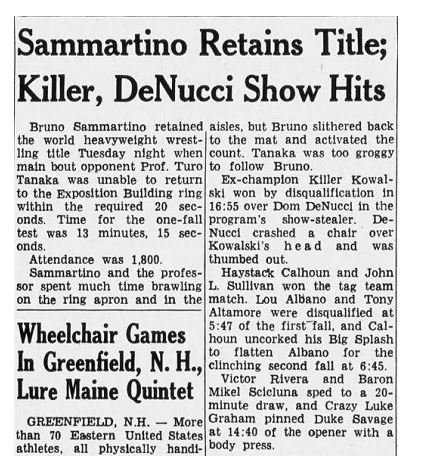
The final credible positive reviews come from 1971, where DeNucci’s main event matches with Ernie Ladd, who called him one of his favorite opponents, and Waldo Von Erich in Cleveland were well received. His barbed wire match with Waldo on December 30, in particular, got a lot of coverage.
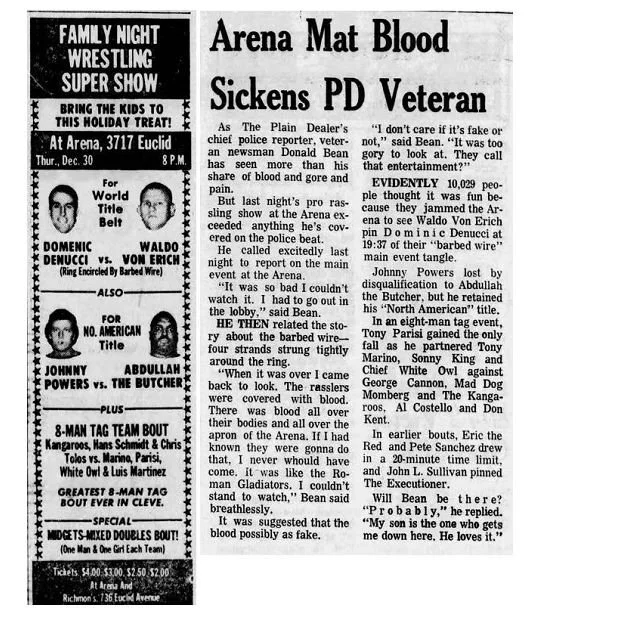
Advertised as a “family night” wrestling show, “bring the kids to this holiday treat”, and ended up as a bloody, violent match in front of 10,029 fans. An article in The Plain Dealer on December 31 is headlined “Arena mat blood sickens PD veteran”. By the end of the article that veteran assures the reporter that he’ll be back for more because “his son loves it”.
I think it’s interesting that the positive anecdotal reports on DeNucci’s ability end roughly at the same time as most of the footage, which isn’t as positive, begins. This could be a coincidence, or it could be a signal that he was a good wrestler for a few years in his prime and faded with time. I will say that even into the 1970s he had a strong emotional connection with Italian fans in Pittsburgh, Toronto, etc. They loved his promos in Italian, and saw him as family - celebrating as if it was their own victories, mourning as if it was their own losses.
In my opinion, he’s just a guy - average - in most of the 1970s footage until he transitions into a jobber at the end of the decade. At that point, he’s pretty bad. It’s worth remembering that he was born in 1932, so he’s in his 40s for what we can see.
I know some smart people who saw him in real time, and think he sucked throughout the 1970s, while acknowledging his connection with Italian fans. That’s fine. Again, it’s a subjective category. The key point is that the evidence suggests a difference between pre-1971 DeNucci and post. It’s up to each voter to determine how strong that evidence is, but I will point out that the footage, newspaper evidence and anecdotal reports from fans & wrestlers seem to match up pretty well.
Overall, I think he was fine. This is problematic for me, because it means I can’t be comfortable with his potential elimination. His drawing record combined with the historical value that comes with it suggests he needs to be inducted, and the work isn’t bad enough to move me from that position.
Speaking of historical value…
Positive Historical Significance
Top long-term babyface for the top promotion in the world during a boom period. Let us be precise with these terms.
“Boom period”
The WCW promotion under Jim Barnett existed from October 1964-1974. There is no such thing as a 10 year “boom” in pro wrestling so we need to narrow the scope here.
Well, we know that Sydney Stadium (12-12,500 capacity) was demolished in August 1970, temporarily replaced by White City Stadium (~8,000 capacity) until February 1971, when the locals complained about the noise level. Capitol Theatre (~3,500 capacity) was next, and finally the newly built Hordern Pavilion in 1972 (~5,500 capacity). This means after 1970, WCW did not have the capacity to draw 10,000+ fans on a weekly basis. This hurt profit margins dramatically since Sydney was the number one city, and it could no longer be classified as the top promotion in the world based on attendance figures. The impact on profit margins was actually one of the main reasons it took Barnett 2 years to sell the promotion (he wanted to get out in 1972 due to political changes from a general election leading to increased expenses).
That narrows it down to 1964-1970. The newspaper evidence, posted in the drawing section, makes it clear that the boom was active from October 1964 to the end of 1966. I have found no evidence to suggest business slowed down in 1967-68.
1969 is problematic based on anecdotal reports. This was the first year where it could be argued they were moving away from the boom period. They started off strong as usual, with a hot Killer Karl Kox vs Bob Ellis feud, but then they booked an hypnosis angle with Mario Milano turning heel. Based on feedback I’ve received from Australian historians, this didn’t go well. Based on the fact Milano was a babyface again a few months later, it clearly didn’t go well.
Milano & Pugliese had lost a match against champions Bernard & Murphy on February 14 in Sydney and Milano turned on Pugliese. The next day in Melbourne Milano defeated Bastien by sucker punching him on a rope break. A few days later in Brisbane, Milano & Pugliese faced Gary Hart’s team of The Spoiler & Kox. Pugliese was in trouble and Milano refused to tag in. Then, as Pugliese came to bounce off the ropes for a tackle, Milano pulled down the top rope and Pugliese took a bump to the floor and was counted out. Milano then shook hands with Hart. Footage of this is available. On April 10 in Brisbane, during Milano vs Billy White Wolf (Sheik Adnan), Milano collided with Hart on the apron and lost. Hart slapped him in the face, and he “came to his senses.”
This was also the first year they had no wrestling shows from June-August. I would argue that, combined with the WWWF recovery & Toronto boom led by The Sheik, makes it unlikely for them to be labelled the top promotion in the world anymore.
Taking the cautious approach as we have done throughout this article, I suggest 1964-1968 is the boom period.
“Top promotion in the world”
The evidence tells us that WCW was averaging 9,000-10,870 per week in Sydney alone from October 1964-December 1966. No other promotion at the time was doing this. Melbourne, based on weaker evidence, was close to 8,000 sellouts every week. Add the Perry Lake Stadium shows from October-March every year, plus others.
Then consider the pay checks of the wrestlers, which is perhaps the strongest evidence of just how profitable the promotion was. Mid card guys getting paid like US main eventers and, as I said before, top guys getting paid more than anyone except the NWA & WWWF champions plus those who owned their own territories (Verne Gagne, etc).
“Top long-term babyface”
This is where the longevity-on-top analysis proves useful when attendance data is limited. Here are the top headliners per year in Australia from 1964-68 for the major arenas, with the cumulative score at the end. A reminder that singles main event = 1 point, tag = 0.5, 6-man = 0.3, etc:
1964 (from October 23)
1) Killer Kowalski 11.3, 2) Dom DeNucci 8.3, 3) Buddy Austin 4.3, 4) Dale Lewis, Tex McKenzie 3.8
1965
1) DeNucci 32.05, 2) Ray Stevens 27, 3) Kowalski 20.6, 4) Mark Lewin 14.8, 5) Spiros Arion 14.65, 6) Mitsu Arakawa 12.35
1966
1) Kowalski 17.6, 2) DeNucci 17.55 (ahead of Kowalski in Sydney), 3) Skull Murphy 15.15, 4) Lewin 11.45, 5) Arion 10, 6) Waldo Von Erich 9.65, 7) Professor Tanaka 8.2, 8) Art Nelson 8.15, 9) Bruno Sammartino 8, 10) The Destroyer (Guy Mitchell) 7.6
1967
1) Kowalski 22.25, 2) Mario Milano 12.8, 3) Billy White Wolf (Sheik Adnan) 12.35, 4) Hercules Cortez 9.1, 5) McKenzie 8.5, 6) The Beast (Yvon Cormier) 7.05, 7) Skull Murphy 5.75
1968
1) Milano 19.85, 2) Arion 16.35, 3) Killer Karl Kox 12.8, 4) Gorilla Monsoon 9.6, 5) McKenzie 8, 6) Tanaka 7.75, 7) Baron Scicluna 7.3, 8) Skull Murphy 7, 9) Kowalski, DeNucci 6.3
1964-68 total
1) Kowalski 78.05
2) DeNucci 64.65
3) Milano 32.65
4) Arion 31
5) Skull Murphy 28
6) Stevens 27
7) Lewin 26.25
8) Tex McKenzie 20.3
9) Tanaka 15.95
10) Kox 12.8
11) Arakawa, Billy White Wolf 12.35
Top long-term babyface for the top promotion in the world during a boom period.
Barnett always said that DeNucci was his best long-term draw. The peak years of the promotion are 1965-66 - DeNucci years. The most successful feuds were DeNucci vs Kowalski and DeNucci vs Stevens in 64 & 65. The data supports that view.
A primary representative for one of the most incredible success stories in pro wrestling history. The only primary representative not in the HOF yet.
In terms of title credentials: 5x IWA champion, San Fran US champion, NWF champion.
I’ll add that he also trained some pretty good wrestlers. Shane Douglas, HOFer Mick Foley and perhaps the best worker of the three - Brian Hildebrand.
The words of Mick Foley after DeNucci passed away in 2021:
“Some of the guys I trained with are no longer with us — Ray Miller, Tony Nardo, my dear friend Brian Hildebrand. But many others turned up from all around to pay their final respects to a man who was so much more than a trainer to us. He was a valued friend, a father figure. In a business where so many get taken advantage of, I placed my faith in Dominic and had that faith rewarded so many times over.”
Conclusion
Based on his drawing credentials and critical historical importance, not just to Australian wrestling but the business as a whole, I strongly believe Dominic DeNucci needs to be inducted into this Hall of Fame. The data doesn’t justify the longevity concerns, and the ability concerns are insufficient.
This Hall, at its core, is supposed to represent the best the business has to offer.
WCW, the miracle of Australia, deserves to be represented. It was the top promotion in the world in the mid 60s. We need the top babyface in order to fully represent it. It’s the only missing piece to this puzzle.
Top long-term babyface for the top promotion during a boom period. I can’t name any candidates who fell off the ballot that fit this description. I can only name a few that we voted for - Stone Cold Steve Austin, Konnan, Cody Rhodes. The rest were automatics.
“Maybe I’ll convince other voters to support him, or maybe I’ll convince myself that his omission is just fine.“
I have failed to convince myself that his omission is just fine. I think it’s a major oversight. I don’t know if I can convince others to support him, but in DeNucci’s potentially final year at least I tried.
With thanks to Dave Meltzer, Ed Locke, Graeme Cameron, Greg Oliver, Kirk Beattie, Libnan Ayoub, Pat Laprade, Steve Johnson, and Tim Hornbaker. This article wouldn’t be possible without their tremendous work.

If you found this article interesting, please consider becoming a Patreon supporter. That is how When It Was Cool keeps our website and podcasts online, plus you get lots of bonus content including extra podcasts, articles, ebooks, and much more. Check out our Patreon Page to see what's up!