Frankenstein's First Appearance in DC Comics: Batman, Robin, and Detective Comics #135 (1948)

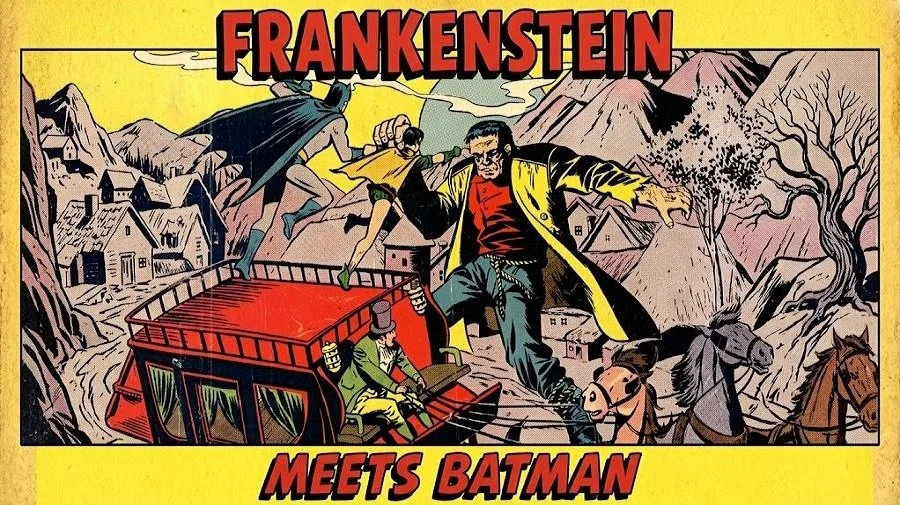
Long before Frankenstein became a regular part of the DC Comics Universe, Batman and Robin encountered a bizarre version of the legendary monster in the pages of Detective Comics #135, published in 1948. This unusual Golden Age Batman adventure combined time travel, scientific experiments, murder, and one of the most famous monsters in literary history.
Today, Frankenstein's Monster is an instantly recognizable figure in popular culture. From Mary Shelley's original novel to the classic Universal horror films starring Boris Karloff, the creature has become one of the most enduring characters in horror history. But Frankenstein also has a surprisingly long history in comic books, including appearances in both DC Comics and Marvel Comics.
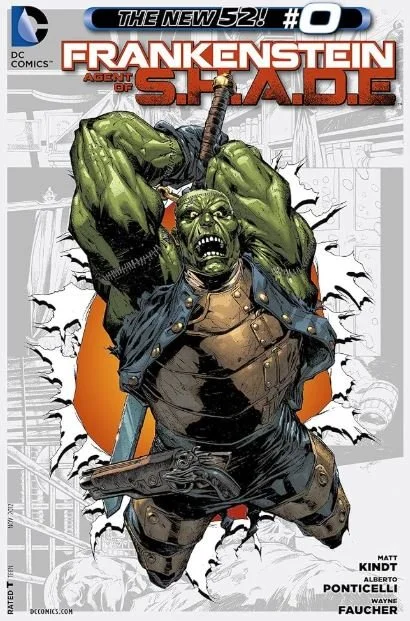
While modern comic book fans might associate DC's Frankenstein with supernatural adventures, monster-hunting teams, and the New 52 series Frankenstein, Agent of S.H.A.D.E., the character's early connection to Batman is a fascinating piece of comic book history.
Let's travel back to 1948 and revisit one of the strangest early encounters between the Dark Knight and Frankenstein's Monster.

Frankenstein Meets Batman in Detective Comics #135 (1948)
The story, titled "The True Story of Frankenstein!", appeared in Detective Comics #135, during an era when Batman adventures were often considerably different from the dark, psychologically driven stories familiar to modern readers.
In the Golden Age of comic books, Batman was certainly a brilliant detective and crime fighter, but he was also regularly portrayed as an accomplished scientist. Chemistry, medicine, experimental technology, and unusual scientific theories frequently played important roles in his adventures.
Comic books of the 1940s were primarily marketed to younger readers, and publishers often incorporated educational concepts, historical subjects, and scientific ideas into otherwise fantastic adventures.
Of course, these stories were rarely concerned with strict scientific accuracy. The science was frequently exaggerated to create exciting situations, and Detective Comics #135 certainly demonstrates that approach.
Rather than presenting the traditional Frankenstein story exactly as readers might expect, this Batman adventure offers an entirely different explanation for the origins of the famous monster.
And naturally, Batman and Robin become involved.

The Strange Origin of Frankenstein's Monster
Our story begins with a time-traveling professor who discovers that the familiar legend of Frankenstein isn't quite what history has led everyone to believe.
Using his knowledge of the past, the professor uncovers the supposed truth behind the monstrous figure and enlists the assistance of Batman and Robin.
In this version of the story, Frankenstein's Monster isn't the familiar patchwork creature assembled from the remains of the dead.
Instead, the monster is actually a gigantic assistant named Ivan, who works for Dr. Frankenstein.
The doctor is conducting experiments involving electricity when Ivan accidentally receives a powerful electrical shock that stops his heart.
Fortunately, the time-traveling professor happens to possess a syringe of adrenaline, which he uses to revive the enormous assistant.
Yes, even by Golden Age comic book standards, that's a rather convenient piece of medical equipment to have available.
The injection successfully restores Ivan to life, but it also produces an unexpected side effect. The giant enters a strange, trance-like condition, leaving him vulnerable to manipulation.
This opens the door for the story's true villain.
Like what you see so far? Keep reading! You can find even more comic book related stories and podcasts on our Patreon page! LOOK HERE!

The Villain Mettern Uses Frankenstein's Monster for Murder
With Ivan unable to think or act normally, a sinister character named Mettern discovers that the giant can be exploited for his own criminal purposes.
Mettern takes advantage of Ivan's altered mental state and manipulates him into becoming involved in a murder.
Suddenly, the legend of Frankenstein's Monster becomes much more complicated… perhaps even convoluted.
Rather than being an inherently evil creature, Ivan is essentially an innocent victim whose tremendous strength makes him a dangerous weapon in the hands of someone with criminal intentions.
This idea is particularly interesting because it echoes one of the central themes of Mary Shelley's original Frankenstein novel: the question of whether the monster is truly evil or whether the people around him are responsible for turning him into something frightening.
While the 1948 Batman story takes enormous liberties with Shelley's creation, it still incorporates the idea of a misunderstood creature suffering because of the actions of others.
With a murder to investigate and a giant potentially running out of control, the situation calls for the World's Greatest Detective.

Batman and Robin Travel Back in Time to Face Frankenstein
Batman and Robin enter the adventure through the professor's time-traveling scheme, bringing the Dynamic Duo face-to-face with the legendary monster.
For modern readers, the idea of Batman traveling through time to investigate the real origins of Frankenstein might seem unusual.
However, Golden Age Batman stories frequently embraced concepts that would seem wildly out of place in a conventional modern detective adventure.
Time travel, bizarre scientific inventions, mysterious transformations, and larger-than-life villains were all part of the fun.
Batman wasn't simply fighting organized crime in Gotham City. He was also exploring the possibilities of science fiction and fantasy.
As the confrontation with Ivan develops, Batman finds himself in serious trouble and suffers an injury that leaves him needing emergency medical attention.
Once again, adrenaline becomes a central part of the plot.
The same treatment that revived Ivan is used to save Batman, but the results raise a frightening possibility.
Could Batman himself become another Frankenstein-like monster?
For a moment, the story suggests that the Caped Crusader might suffer the same strange transformation as the giant assistant.
It's exactly the kind of dramatic cliffhanger that made Golden Age comic books so entertaining.

Robin Saves the Day in a Classic Golden Age Batman Adventure
One of the enjoyable aspects of reading early Batman comics is seeing how important Robin was to the stories.
In modern Batman media, Robin is sometimes treated as a secondary figure, but during the Golden Age, the Boy Wonder was regularly responsible for rescuing Batman, solving problems, and helping bring adventures to a successful conclusion.
That tradition continues in Detective Comics #135.
When Batman finds himself in danger, Robin plays a crucial role in helping his partner recover and confronting the strange circumstances surrounding Ivan.
Eventually, the truth about the giant and his manipulation becomes clear.
Ivan begins to understand what has happened to him and sets out to exact revenge against those responsible for his suffering.
Batman and Robin attempt to intervene, but the confrontation reaches its conclusion inside Frankenstein's castle.
There, the monster drags the villain into the building, where spilled chemicals create a dangerous reaction.
An explosion destroys the castle, apparently bringing the story of Ivan and the villain to a dramatic end.
It's a conclusion that feels right at home in a classic Frankenstein adventure.
The destruction of the castle also recalls the spectacular endings associated with monster movies of the 1930s and 1940s, where fire, destruction, and seemingly final confrontations frequently brought the creature's story to a close.
As was often the case in Golden Age comic books, everything is neatly resolved by the final pages.
Batman and Robin survive another impossible adventure, justice is served, and the monster apparently disappears into history.
But Frankenstein's association with DC Comics was far from finished.
Like what you see so far? Keep reading! You can find even more comic book related stories and podcasts on our Patreon page! LOOK HERE!
Frankenstein's Monster Returns in the DC Universe
Although Detective Comics #135 is an important early Frankenstein-themed Batman story, it should not be confused with the debut of the modern, established DC Comics version of Frankenstein.
The Ivan character was essentially created for a standalone Golden Age adventure.
Later DC stories would introduce other interpretations of Frankenstein's Monster, eventually incorporating the creature into the company's larger supernatural mythology.
One of the most important modern versions appeared in Seven Soldiers: Frankenstein #1 in 2005, written by Grant Morrison with artwork by Doug Mahnke.
This interpretation presented Frankenstein as a powerful, intelligent, and battle-hardened supernatural hero rather than simply a misunderstood laboratory creation.
He was still a monster in appearance, but he was also a formidable warrior capable of confronting supernatural threats that ordinary heroes might struggle to defeat.
This version of Frankenstein would become an increasingly recognizable character within DC Comics.
Frankenstein, Agent of S.H.A.D.E. and the New 52
In 2011, DC Comics launched its ambitious New 52 publishing initiative, which relaunched much of the company's superhero universe with new first issues and revised continuity.
One of the more unusual titles in that initiative was Frankenstein, Agent of S.H.A.D.E.
The series brought Frankenstein into a world of supernatural espionage, secret government organizations, and monstrous threats.
Frankenstein worked alongside an eccentric collection of creatures known as the Creature Commandos, operating under the mysterious organization S.H.A.D.E.
Rather than being hunted by frightened villagers carrying torches, Frankenstein had become a monster who fought other monsters.
The concept combined elements of superhero comics, military adventure, horror, and science fiction.
It was a natural evolution for a character whose origins had always blurred the boundaries between science and the supernatural.
Although the series lasted only 16 issues, it helped establish Frankenstein as more than just a recognizable literary monster making occasional guest appearances in superhero comics.
By this point, he had become a genuine DC Comics character with his own mythology, supporting cast, and adventures.
That's quite an evolution from the strange version of Frankenstein's Monster encountered by Batman and Robin back in 1948.

Frankenstein in DC Comics vs. Marvel Comics
[Read our separate Frankenstein in Marvel Comics article here.]
Frankenstein's Monster is especially interesting because the character isn't exclusive to one major comic book publisher.
The original creature comes from Mary Shelley's 1818 novel Frankenstein; or, The Modern Prometheus, a work that is in the public domain.
This means that both DC Comics and Marvel Comics have been free to develop their own versions of the character.
Marvel Comics notably published The Monster of Frankenstein beginning in 1973, offering a horror-oriented interpretation of the famous creature.
DC, meanwhile, eventually developed Frankenstein into a more prominent supernatural action character.
Both companies drew inspiration from the same classic literary source, but they took the concept in different directions.
Of course, neither version is identical to the original creature imagined by Mary Shelley, and that's part of what makes Frankenstein's history in comic books so fascinating.
The monster has proven remarkably adaptable across centuries of storytelling.
He can be tragic, terrifying, heroic, misunderstood, or even a time-traveling Batman adversary.
There are few classic horror characters capable of fitting into so many different genres.
Why Detective Comics #135 Is Worth Remembering
Reading Detective Comics #135 today provides an interesting glimpse into what Batman comics were like in 1948.
This wasn't the grim Batman of The Dark Knight Returns, nor was it the grounded detective popularized by later films and television adaptations.
Instead, it was a version of Batman who lived in a comic book universe where time travel, strange scientific discoveries, mysterious medical treatments, and legendary monsters were all perfectly reasonable ingredients for a single adventure.
The Frankenstein story is memorable not necessarily because it established decades of continuity, but because it illustrates the extraordinary freedom enjoyed by Golden Age comic book creators.
They could take an internationally famous monster, rewrite his origin, introduce a villain, bring Batman and Robin into the past, and wrap the entire adventure up with an exploding castle.
And they could do it all in one issue.
For fans of vintage Batman comics, classic horror monsters, and Golden Age comic book history, that's a big part of the appeal.
The story also serves as a reminder that the connections between horror and superhero comics stretch back much further than many readers might realize.
Long before modern supernatural superhero teams, crossover events, and elaborate comic book universes, Batman and Robin were already investigating the legend of Frankenstein.
Final Thoughts: A Classic Monster Meets the Dynamic Duo
Frankenstein's Monster has appeared in countless books, movies, television programs, and comic books over the last two centuries, but his early encounter with Batman and Robin remains a wonderfully strange chapter in comic book history.
Detective Comics #135 offers a fascinating combination of Golden Age superhero storytelling and classic monster movie atmosphere.
It also demonstrates how differently established characters could be interpreted during the early years of the comic book industry.
The Frankenstein of this 1948 story isn't the same creature who would eventually become an established member of the DC Universe, but his appearance is still an entertaining historical curiosity.
From a gigantic assistant named Ivan to a monster-hunting government operative, Frankenstein's journey through DC Comics shows just how much the character has evolved.
And for those of us who enjoy vintage comics, classic monsters, and the wonderfully imaginative stories of the Golden Age, it's another reminder of why looking back at comic book history is so much fun.
At When It Was Cool, classic comic books and vintage horror are always worth revisiting, especially when two legendary characters like Batman and Frankenstein cross paths in such an unexpected way.
If you found this article interesting, consider becoming a Patreon supporter. That is how When It Was Cool keeps our website and podcasts online, plus you get lots of bonus content including extra and extended podcasts, articles, digital comics, ebooks, and much more. Check out our Patreon Page to see what's up!
If you don't want to use Patreon but still want to support When It Was Cool then how about a onetime $5 PayPal donation? Thank you!