

By: “DragonKingKarl” Karl Stern (Patreon)
Professional Wrestling Historian: Author of DragonKingKarl's Pioneer Era Pro Wrestling Omnibus

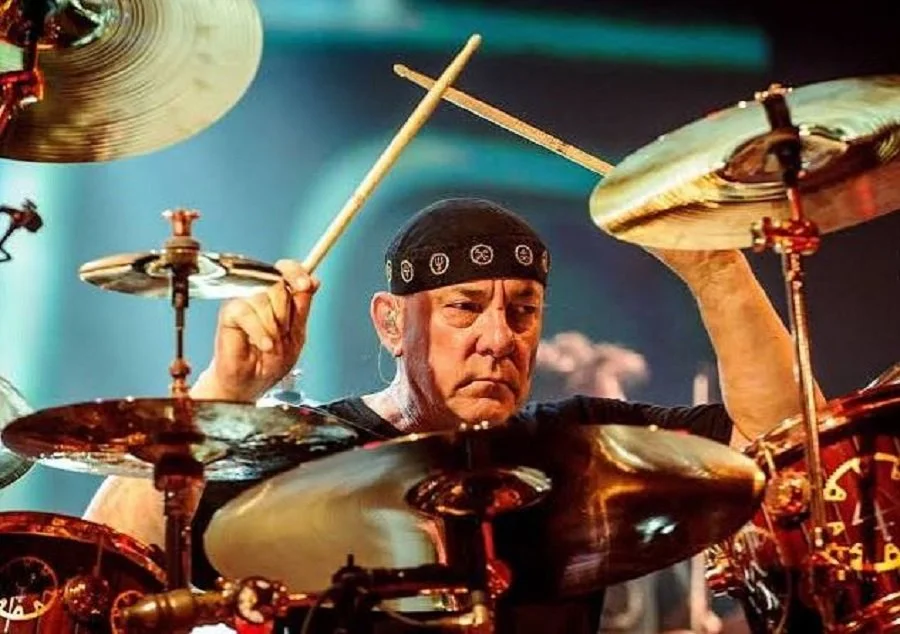
Neil Peart: No One’s Disciple Review – Remembering the Brilliant, Complicated Heart of Rush
There is a moment that eventually comes for every Rush fan when Neil Peart stops being simply the drummer.
At first, perhaps, that is how you discover him. You hear the impossible precision of “Tom Sawyer.” You encounter the sprawling instrumental passages of “La Villa Strangiato.” You try to comprehend what is happening during “YYZ.” Maybe you watch one of his enormous drum solos and wonder how a single human being can simultaneously possess that much power, coordination, memory, and control.
Then you begin reading the lyrics. Then perhaps you read the books. And eventually you discover Neil Peart the man. That is where things become considerably more complicated.
The new documentary Neil Peart: No One’s Disciple, directed by Sam Dunn and Scot McFadyen—the filmmakers behind the excellent Rush: Beyond the Lighted Stage—understands that distinction. This is not merely a documentary about one of the greatest drummers who ever lived. It is about an intensely thoughtful, private, sometimes contradictory human being who spent much of his life trying to understand the world, himself, and his place within it.
For me, that makes the film far more meaningful than another collection of musicians telling us how great Neil Peart was. I already know that. I have been a massive Rush fan for many years, and Neil Peart in particular has fascinated me. In my personal estimation, he was the greatest drummer in modern popular music history. I also believe he was an exceptionally intelligent lyricist and a genuinely talented author.
But Neil Peart was not a superhero. He was a man. And life was often extraordinarily cruel to him. That is the Neil Peart whom No One’s Disciple ultimately asks us to remember.
“No One’s Disciple” Is the Perfect Title
Even the title tells us something important. Neil Peart was a voracious reader and an independent thinker whose ideas changed throughout his life. As a younger man, he was famously influenced by Ayn Rand, something that became particularly associated with Rush after 2112. But Peart's thinking continued to evolve, and in a 1993 interview he pushed back against attempts to neatly categorize him, saying that the extent of Rand's influence had been overstated and declaring, appropriately enough:
“I am no one’s disciple.”
That sentence seems almost tailor-made as an epitaph for the intellectual side of Neil Peart. He read. He traveled. He questioned. He changed his mind. Most importantly, he seemed to believe that a person should continue learning. That philosophy also defined him as a musician.
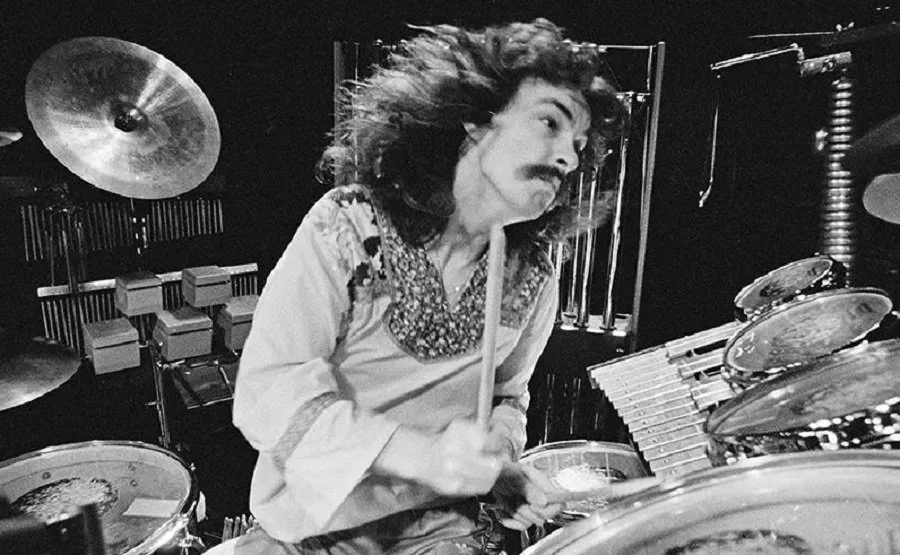
Imagine reaching the level Neil Peart had reached—being regarded by countless musicians and fans as perhaps the finest rock drummer alive—and deciding that you still needed lessons. Peart did exactly that. He famously studied with jazz drummer and teacher Freddie Gruber during the 1990s, substantially reconsidering aspects of his technique long after he had already become a drumming legend. Later he continued studying with Peter Erskine.
That tells you almost everything you need to know about Neil Peart. Being great wasn't sufficient. He wanted to understand why. And then he wanted to become better.
The Brilliant Idea at the Center of the Documentary
The most inspired element of No One’s Disciple is that the filmmakers do not merely tell us Neil Peart was an extraordinary drummer. They demonstrate it.
Geddy Lee and Alex Lifeson are joined by four world-class drummers who knew Peart personally: Stewart Copeland of The Police, Danny Carey of Tool, Chad Smith of Red Hot Chili Peppers, and Gavin Harrison of Porcupine Tree and King Crimson.
These are not amateurs attempting Rush songs in their basements. These are elite professional drummers. And watching them confront Neil Peart's drum parts may be the greatest testimony to his musicianship that the documentary could possibly provide.
There is something wonderfully revealing about watching an accomplished musician approach a piece of Rush music and realize that knowing the song and actually reproducing what Neil Peart played are two entirely different propositions.
Peart's parts were not simply complicated for the sake of being complicated. They were composed. His drum parts became part of the identity of the songs themselves. Strip away the guitars, bass, keyboards and vocals from many Rush recordings and longtime fans can still recognize the song from Peart's drums.
The documentary lets us experience this through musicians who actually understand the difficulty involved. The guest drummers tackle Rush material alongside Lee and Lifeson, including songs such as “Tom Sawyer,” “New World Man” and the “2112 Overture.” Their approaches differ because each is an extraordinary musician with an identity of his own. And that may be the greatest compliment to Peart of all. They don't magically become Neil Peart. Nobody does.
Watching these enormously talented drummers work through his parts demonstrates something Rush fans have understood intuitively for decades: Peart wasn't merely keeping time behind Geddy Lee and Alex Lifeson. He was the third instrumental voice in Rush.
Neil Peart Didn't Simply Play the Song
There are plenty of technically gifted musicians who can play an astonishing number of notes. Technical ability alone does not make someone great. Neil Peart understood architecture.
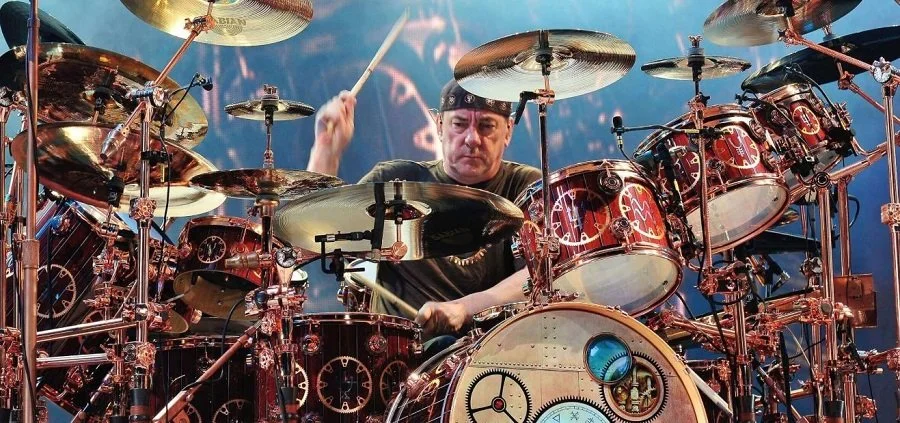
Listen closely to a classic Rush song and notice how often his drumming is helping tell the story. His fills are transitions. His cymbal choices create punctuation. His dynamics establish tension and release. His enormous drum kits were not merely impressive collections of percussion instruments assembled for visual effect. Peart actually found uses for those sounds.
There was also remarkable discipline involved. He could unleash something spectacular, but he also understood structure. This is one reason watching other great drummers play Rush music is so fascinating. They naturally bring themselves into it. Stewart Copeland sounds like Stewart Copeland. Chad Smith possesses his own enormous personality behind a kit. Danny Carey is one of the most technically formidable drummers of his generation. Gavin Harrison is astonishingly precise. Yet the shadow of Peart remains.
Not because these musicians are inferior. Because Neil's musical vocabulary belonged specifically to Neil. That is ultimately what separates influential musicians from merely proficient ones. You can imitate technique. It is much harder to imitate a voice. Neil Peart had a voice.
More Than a Drummer
Had Neil Peart never written a single lyric, his place in music history would still be secure, but imagine Rush without his words. There is no “2112” as we know it. No “The Trees.” No “Subdivisions.” No “Limelight.” No “Freewill.” No “The Spirit of Radio” in the form generations of Rush fans know. And perhaps most poignantly, no “Time Stand Still.”
Neil Peart brought literature, philosophy, science fiction, social observation, individualism, skepticism, compassion, travel and introspection into Rush's music. Some of his lyrics were cerebral. Some were awkward. Some were intentionally grandiose. And some were devastatingly human.
As he aged, I believe Peart became particularly effective when writing about mortality, relationships, memory and the passage of time. That is why listening to certain Rush songs after his death can be difficult. Words written decades earlier suddenly seem to be speaking directly back to us. “Time Stand Still”, “The Garden” and “Losing It” are probably the most obvious examples. What began as a meditation on recognizing life's fleeting moments became, after Peart's death, something approaching an elegy. Time does not stand still and Neil knew that. Eventually, tragically, he knew it better than most.
When the Unthinkable Happened
For all of Neil Peart's accomplishments, no discussion of his life can avoid 1997 and 1998. In August 1997, Peart's 19-year-old daughter, Selena Taylor, was killed in a single-car accident. Only months later, his wife and partner of more than two decades, Jacqueline Taylor, was diagnosed with terminal cancer. She died in 1998. Within less than a year, Neil Peart lost his daughter and his wife. There are events for which language is inadequate, and this is one of them.
Peart told Geddy Lee and Alex Lifeson to consider him retired. And who could have blamed him? Rush suddenly ceased to matter. Drum kits ceased to matter. Records, arenas, applause, awards—all of the things that seem enormously important within the strange artificial universe of celebrity—became irrelevant beside incomprehensible personal grief.
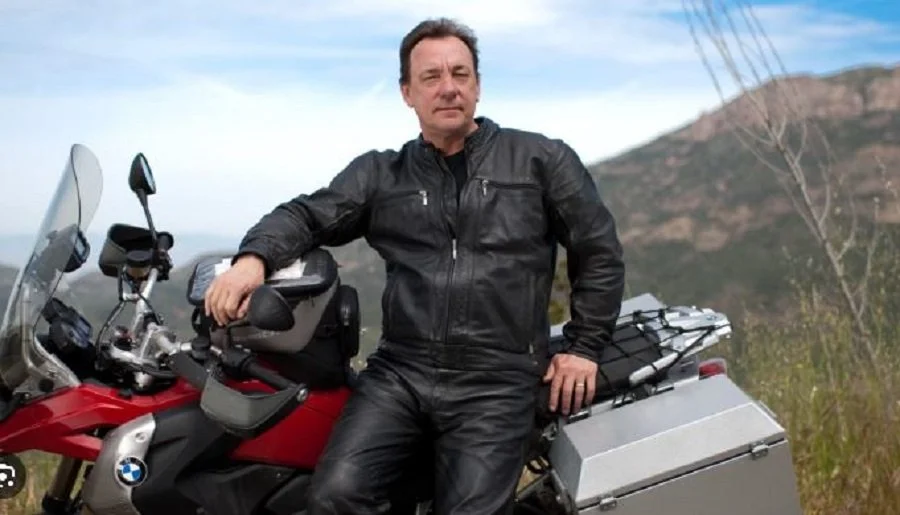
Peart got on his motorcycle and traveled. Thousands upon thousands of miles. The journey eventually became the foundation for his remarkable book Ghost Rider: Travels on the Healing Road. The title says everything. It was not the road of forgetting. It was the road of healing.
He could never undo what happened. There was no philosophical insight brilliant enough to solve grief. No amount of intelligence could explain away the loss. He simply had to find a way to continue living. Eventually, somehow, he did.
Peart later married photographer Carrie Nuttall, and they had a daughter, Olivia. He returned to Rush with the 2002 album Vapor Trails, and the band entered another remarkable chapter. For those of us who saw Rush during those later years, it is easy in retrospect to forget how unlikely any of it once seemed. We almost didn't get that era at all.
The Body Eventually Says No
There is another aspect of Neil Peart's story that No One’s Disciple makes particularly poignant. Drumming at his level was an athletic endeavor.
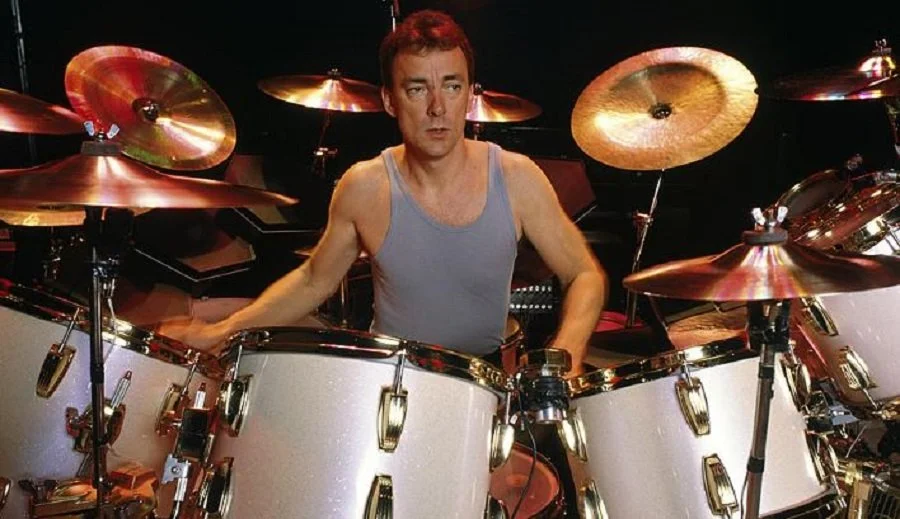
Fans sometimes speak about musicians as though their abilities exist independently of their bodies, but Peart's playing demanded extraordinary endurance and physical precision. By the time Rush completed its R40 tour in 2015, Neil was in his early 60s and dealing with chronic tendinitis and shoulder problems. The machine was wearing down.
That seems unfair in a uniquely painful way. Here was a man whose mind could still understand the parts, whose musical instincts remained intact, but whose body was increasingly reminding him that human beings have limits. Peart himself understood the analogy to an athlete. There comes a point when the body simply cannot continue doing what it once did.
For an ordinary drummer, accommodations might be possible. Neil Peart wasn't an ordinary drummer. Rush's music required Neil Peart to play Neil Peart parts night after night for hours with precision.
The final Rush concert with Peart took place at the Forum in Los Angeles on August 1, 2015. At the time, fans hoped it wasn't really the end, but it was. Rush's touring career had effectively concluded. In retrospect, we were extraordinarily fortunate to have gotten as much as we did.
Then Came the Cruelest Irony
If the deterioration of Peart's body seems cruel, what happened next seems almost impossibly so. Neil Peart was diagnosed with glioblastoma, an aggressive form of brain cancer. The diagnosis remained private outside his family and close circle. He battled the disease for approximately three and a half years before dying on January 7, 2020. He was only 67.
There is something particularly difficult to process about that ending. Neil Peart had built an extraordinary life around the interaction of body and mind. His body possessed an almost freakish ability to execute complicated musical ideas. His mind devoured books, constructed lyrics, documented travels, questioned assumptions and seemingly never stopped analyzing the world around him and eventually the body could no longer endure the demands of Rush. Then disease attacked the brain itself. There is no lesson that makes that fair. There is no clever lyric that resolves it. Sometimes tragedy is simply tragedy.
For someone who spent so much of his life searching for meaning, perhaps the most difficult reality is that some things do not arrive with meaning attached. They simply happen. And those left behind must somehow continue.
Geddy Lee and Alex Lifeson Without Neil
Some of the documentary's most affecting moments involve Geddy Lee and Alex Lifeson remembering their friend. This is important because Neil Peart's public image could sometimes become distorted. He was famously uncomfortable with celebrity. He did not always enjoy fan interactions. He could be intensely private.
The Neil described by his friends is consequently more interesting than the distant “Professor” mythology. He could be funny. He could be stubborn. He could be intensely loyal. He could be obsessive. He could be generous. He could be difficult. He could be warm. In other words, he was human and that is where No One’s Disciple succeeds. It allows the legend to remain legendary without requiring the man to become a saint.
The Complicated Price of Fame
One of the more revealing—and, frankly, refreshing—elements of No One’s Disciple is its willingness to challenge the explanation Rush fans heard for years concerning Peart's discomfort with fame. We were often told that Neil was simply shy, intensely private or introverted, and there was certainly truth in all of those descriptions. But the documentary allows those who actually knew him, including Geddy Lee, to acknowledge something more complicated: there was a contradiction in wanting your work to be recognized as exceptional while sometimes resenting the people whose admiration made that recognition possible.
Neil Peart understandably disliked the assumption that a fan who knew his lyrics and music therefore knew him, and nobody—famous or otherwise—owes strangers unlimited access to their private life. Yet No One’s Disciple also permits the uncomfortable counterargument to finally be heard, Neil wanted to be taken seriously as an artist, wanted his work to reach people and devoted extraordinary effort to achieving excellence, but could sometimes be dismissive of the very people who wanted simply to tell him how much that work meant to them.
In essence, there was occasionally an element of wanting to have his cake and eat it too. That does not diminish Peart's accomplishments, nor does it make him a bad person. It makes him a more complicated one—and the documentary is better for trusting its audience enough to admit that.
The Drummers Provide the Evidence
I especially enjoyed the documentary's use of Copeland, Carey, Smith and Harrison because their involvement prevents the film from becoming merely sentimental.
We can cry over Neil Peart. We can miss Neil Peart. But put the music on the stand and let it testify. Give four brilliant drummers the sticks. Give them Geddy Lee and Alex Lifeson. Give them the Rush catalog. Now play. Suddenly all the praise becomes tangible.
Watching another elite drummer concentrate on a Neil Peart part tells you more than someone simply saying, “Neil was great.” Of course he was great. Look at what it takes to play this stuff. And even then, something fascinating happens. The songs change depending upon who is sitting behind the kit. That illustrates an important point about Rush. Neil Peart was not interchangeable. Neither are Geddy Lee or Alex Lifeson. The chemistry of Rush resulted from three highly individual musicians occupying the same musical space. Remove one element and you may still produce wonderful music, but it will inevitably become something different.
A Personal Reflection
As a longtime Rush fan, I found Neil Peart: No One’s Disciple moving in ways I did not entirely expect. I have spent years listening to this music. I have analyzed it. I have discussed it. I have ranked albums and songs, admired drum fills, contemplated lyrics and watched concert footage. But eventually a fan reaches an age when the music begins to mean something different.
When you're young, Rush can sound like possibility. Intelligence. Rebellion. Individualism. Discovery. As you grow older, different songs begin speaking louder. Mortality enters the room. So does loss. Memory. Regret. Gratitude. Suddenly a song about time passing does not sound philosophical anymore. It sounds literal.
Neil Peart understood that evolution because his writing evolved alongside his life. The young man who wrote sprawling science-fiction epics eventually became the older man writing about faith, grief, relationships, experience and time. He never stopped searching. Perhaps that is what I admire most about him. Not the drum solos or even the lyrics, rather, the curiosity. Neil Peart seemed perpetually unwilling to declare himself finished. There was always another book. Another road. Another technique. Another place. Another idea. Another question.
The Greatest?
Arguments about “the greatest drummer of all time” are ultimately impossible to settle. Buddy Rich existed. Gene Krupa existed. John Bonham existed. Keith Moon existed. Stewart Copeland exists. Danny Carey exists. There are jazz drummers whose technical sophistication reaches into another universe entirely.
Music isn't a sporting event, and greatness cannot be calculated on a spreadsheet. So I will not pretend this is an objective declaration. It is personal. Neil Peart is the greatest drummer in modern popular music history to me.
Not merely because he could play difficult things. Because his playing had identity. Because he composed drum parts people remember. Because generations of kids air-drummed his fills on steering wheels, school desks and their own knees. Because professional drummers still study what he did. Because some of the finest drummers alive can sit down with Geddy Lee and Alex Lifeson and discover that playing a Rush song convincingly is considerably harder than Neil Peart made it appear. And because he never seemed satisfied with greatness. He kept working.
A Documentary About Absence
Ultimately, Neil Peart: No One’s Disciple is as much about absence as presence. Neil is everywhere in this film, yet he isn't there. Geddy Lee is there. Alex Lifeson is there. The drum kit is there. The songs are there. Other extraordinary drummers sit behind the kit. And still there is an empty space. That may be the documentary's most powerful accomplishment.
It does not need to tell us that Neil Peart cannot be replaced. It shows us. The guest drummers do not fail by sounding like themselves. Quite the opposite. Their individuality reminds us that Peart had one too.
There was only one Neil Peart.
Final Thoughts: No One's Disciple, Still Everyone's Teacher
Neil Peart lived a remarkable life. It was triumphant. It was intellectually restless. It was sometimes difficult. And it contained more tragedy than anyone should reasonably be asked to endure.
He became enormously successful while remaining suspicious if not resentful of celebrity. He became one of the world's most celebrated drummers and then went back to being a student.
He wrote lyrics about individuality while continually revising his own beliefs. He lost almost everything, traveled into the wilderness of grief, somehow rebuilt a life, returned to music, became a husband and father again, and continued creating. Then his body began telling him it was time to stop. Finally, an aggressive cancer took him at only 67 years old. That is not the ending Rush fans wanted.
But Neil Peart: No One’s Disciple reminds us that perhaps we should concentrate less on the ending and more on the extraordinary journey that preceded it. There are millions of us who never met Neil Peart but nevertheless found something useful in something he created.
Neil Peart insisted that he was no one's disciple. Fair enough. But whether he intended it or not, he became a teacher to an extraordinary number of people, and six years after his death, class is still very much in session.
Rating: Highly Recommended
Neil Peart: No One’s Disciple is directed by Sam Dunn and Scot McFadyen and features Geddy Lee and Alex Lifeson alongside drummers Stewart Copeland, Danny Carey, Chad Smith and Gavin Harrison. The documentary premiered at the 2026 Toronto International Film Festival and debuted on CBC and CBC Gem on September 23, 2026.

If you found this article interesting, please consider becoming a Patreon supporter. That is how When It Was Cool keeps our website and podcasts online, plus you get lots of bonus content including extra podcasts, articles, ebooks, and much more. Check out our Patreon Page to see what's up!